
Font size
 Worksheets
Liquid & Solids Review
Total questions: 66
Worksheet time: 1hrs 5mins
What phase change occurs with the addition of heat to a substance.
Freezing
Evaporation
Melting
Condensation
Phase change going from a Solid to a Gas...
Deposition
Sublimation
Condensation
Recombination
Phase change going from a Gas to a Solid...
Deposition
Sublimation
Condensation
Vaporization
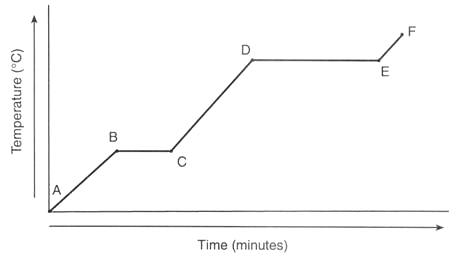
Is the substance gaining or losing energy?
Gaining
Losing
Are the particles moving faster or slower as time goes on?
Faster
Slower

Is the substance gaining or losing energy?
Gaining
Losing

Where on the graph are phase changes taking place?
1
2
3
4
5

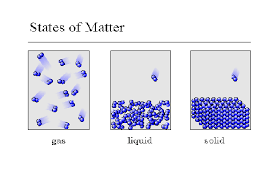
What state of matter is pictured?
Solid
Liquid
Gas
Plasma


A phase change is a chemical or physical change?
Physical
Chemical
When an object undergoes phase change, its mass
increases
stays the same
decreases


Which substance has the weakest intermolecular forces?
Substance A, boiling point of 75 °C
Substance B, boiling point of 105 °C
Substance C, boiling point of 25 °C
Substance d, boiling point of 45 °C
The weaker the intermolecular forces of a substance the _____________ the boiling point
higher
lower

According to the reference table, what is the boiling point of ethanoic acid at 80 kPa?
28 oC
100oC
111oC
125oC

Which liquid has the highest vapor pressure at 75oC?
ethanoic acid
ethanol
propanone
water

At which temperature is the vapor pressure of ethanol equal to the vapor pressure of propanone at 35oC?
35oC
60oC
82oC
95oC
Which model represents a HIGHER vapor pressure?

A

B
Which particle level model represents the pure substance with STRONGER intermolecular attractions?
A
B
What is vapor pressure?
the force of the gas above a liquid
the force of a gas below a liquid
the force of a liquid below a gas
boiling point
evaporation

Why do sealed jars with liquid in them reach equilibrium?
evaporation rates equal condensation rates
all the liquid evaporates
all the liquid condenses
there is an equal amount of liquid and gas
they do no not reach equilibrium

Do unsealed jars with liquid in them reach equilibrium?
evaporation rates equal condensation rates
all the liquid evaporates
all the liquid condenses
there is an equal amount of liquid and gas
they do no not reach equilibrium

