Wayground logo

Free Printable Worksheets

Font size

S
M
L
XL
Worksheets

Cells and Cell Theory

Total questions: 58

Worksheet time: 51mins

Name
Class
Date
1.
Sac within the cytoplasm that is full of fluid; plants have one large; stores food, water, etc.
a)
vacuole
b)
cell wall
c)
lysosome
d)
ribosome
2.
Gives the cell a rigid, box-like shape; outside of the cell membrane; in plants.
a)
cytoplasm
b)
chromatin
c)
cell wall
d)
cell membrane
3.
Consists of a jellylike substance that contains many organelles.
a)
ribosomes
b)
cytoplasm
c)
chloroplasts
d)
cell wall
4.
Which organelle uses energy from sunlight to make sugar?
a)
mitochondria
b)
nucleus
c)
chloroplasts
d)
vacuoles
5.
Which part of the cell is often called "the brain of the cell"?
a)
nuclear membrane
b)
endoplasmic reticulum
c)
nucleus
d)
ribosomes
6.
I am the outer most layer of an animal cell. What am I?
a)
cell wall
b)
nucleus
c)
cell membrane 
d)
cell skin
7.
I make proteins for the cell. What am I?
a)
ribosome
b)
mitochondria
c)
chloroplast
d)
lysosome
8.
I store water in both plant and animal cells. What am I?
a)
cytoplasm
b)
ribosomes
c)
vacuole
d)
lysosomes
9.
I am only found in a plant cell. What am I?
a)
cell wall
b)
mitochondria
c)
cytoplasm
d)
chloroplast
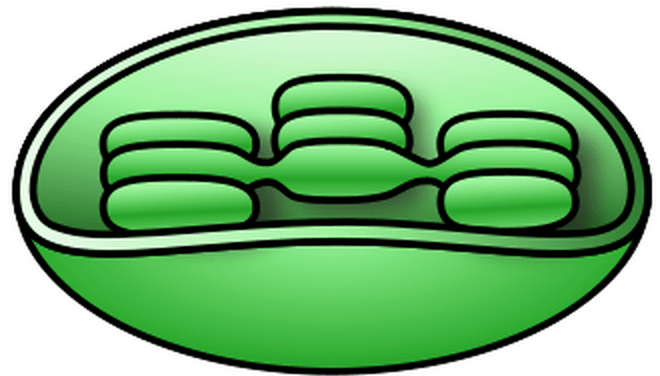
10.
What is this?
a)
mitochondria
b)
lysosomes
c)
chloroplast
d)
endoplasmic reticulum
11.
What does this structure do?
a)
supports the cell
b)
cell's control center
c)
converts energy to food
d)
makes proteins
12.
What is the picture
a)
ribosome
b)
nucleus
c)
cell wall
d)
mitochondrion
13.
All living things are made of...
a)
atoms 
b)
cells 
c)
bacteria 
d)
plants 
14.
Controls what enters/leaves a cell
a)
cell membrane
b)
Nuclear membrane
c)
cell wall
d)
cytoplasm
15.
releases energy for cells to use, most common in animal cells
a)
mitochondria
b)
ribosomes
c)
lysosomes
d)
nucleolus
16.

In which organelle is most of the genetic material (or DNA) of the cell is stored?

a)

mitochondria

b)

lysosome

c)

nucleus

d)

ribosomes

17.

Where are proteins made in the cell?

a)

Golgi Apparatus

b)

ribosome

c)

chloroplast

d)

mitosis

18.
Cells are the base unit and function of living things.
a)
True
b)
False
19.
what is the control center in a cell
a)
mitochondria
b)
DNA
c)
nucleus
d)
movement
20.
also known as the "powerhouse" 
a)
cell membrane
b)
storage
c)
cytoskeleton
d)
mitochondria
21.
Controls what enters and leaves the cell
a)
Mitochondria
b)
Cell Membrane
c)
Cell Wall
d)
Nucleus
22.
Stores food and water for the cell.
a)
Cytoplasm
b)
Cell Wall
c)
Vacuole
d)
Nucleus
23.
This organelle helps plants keep their rigid structure. 
a)
Cell wall
b)
Cell membrane
c)
Chloroplast
d)
Nucleus
24.
Every living organism is made up of one or more cells
a)
True
b)
False
25.
A cell is...
a)
the basic unit of structure and function in living organism
b)
an organism
c)
a basic part of everything that we see
d)
found only in animals, not plants
26.
Which of the following are NOT found in animal cells
a)
chloroplasts and cytoplasm
b)
chloroplasts and cell wall
c)
cell wall and cell membrane
d)
mitochondria and nucleus
27.
The nucleus is like the ____________ of the cell.
a)
foot
b)
hand
c)
stomach
d)
brain
28.

Which of the following converts food into energy for the cell?

a)

vacuole

b)

mitochondria

c)

cytoplasm

d)

cell membrane

29.
What do vacuoles do? 
a)
They actually do not have an important role
b)
They protect the cell
c)
They are the brain of the cell
d)
storage area for cells; water storage in plants 
30.

Which organelle takes in "sun showers" and helps plants with the process or photosynthesis?

a)

Vacuole

b)

Mitochondria

c)

Cytoplasm

d)

Chloroplast

31.
If you were some bad guy trying to sneak into an animal cell, who would be there to stop you?
a)
nucleus
b)
mitochondria
c)
cell membrane
d)
cell wall
32.
Which of the following, found ONLY in plant cells, provides structure?
a)
cell wall
b)
chloroplast
c)
mitochondria
d)
vacuole
33.
Which structures are found in every living cell?
a)
cell membrane and cytoplasm
b)
chloroplasts and mitochondria
c)
a cell wall and nucleus
d)
chloroplasts and cell wall
34.
What is one basic function of the vacuoles?
a)
circulating oxygen
b)
producing food
c)
controlling cell processes
d)
storing water
35.
All cells need energy to function.  Which cell organelle is responsible for producing energy in the cell?
a)
chloroplasts
b)
mitochondria
c)
nucleus
d)
vacuoles
36.
What is the function of a cell wall?
a)
to protect and support the cell
b)
to perform different functions in each cell
c)
to prevent water from passing through it
d)
to prevent oxygen from entering the cell
37.
In what part of the plant cell does the process of photosynthesis take place?
a)
nucleus
b)
mitochondria
c)
chloroplasts
d)
vacuoles
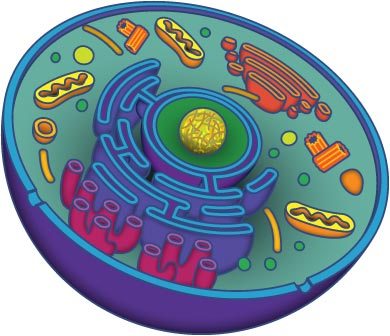
38.

These are

a)

plant cells

b)

animal cells

c)

bacteria cells

39.

These are

a)

plant cells

b)

animal cells

c)

bacteria cells

40.
What creates the protein for the cell?
a)
Cytoplasm
b)
Nucleus
c)
Golgi bodies
d)
Ribosomes
41.
Jelly-like substance found inside cell that acts as a medium for chemical reactions within the cell
a)
Nuclear Membrane
b)
Golgi Body
c)
Cytoplasm
d)
Ribosome
42.
"Storage tanks" Can hold food, water or waste for the cell
a)
Ribosomes
b)
Vacuole
c)
Chloroplast
d)
Nucleolus
43.
Makes proteins for the cell, can be found attached to the endoplasmic reticulum or free in the cytoplasm
a)
Cell Wall
b)
Golgi Body
c)
Ribosome
d)
Cytoplasm
44.
Transportation network for the cell, moves materials around in the cell
a)
Lysosome
b)
Nuclear Membrane
c)
Endoplasmic Reticulum
d)
Centriole
45.

Which statement was NOT included in cell theory?

a)

All living things are composed of cells.

b)

Living cells come only from other living cells.

c)

Each cell contains a cell membrane, cytoplasm, nucleus, mitochondria, and endoplasmic reticulum.

d)

Cells are the smallest structure of living things that can perform the functions necessary for life.

46.

Which instrument is credited for helping scientists develop cell theory?

a)
b)
c)
d)
47.

This early cell theory scientist looked in a microscope and discovered "animalcules" in the gunk from his teeth and pond water.

a)

Schleiden

b)

Leeowenhoek

c)

Hooke

d)

Virchow

e)

Schwann

48.

Who discovered and named cells while looking at cork?

a)

Captain Hook

b)

Robert Hooke

c)

Matthais Schleiden

d)

Rudolf Virchow

49.

What was Schleiden convinced of?

a)

All plants are made of cells

b)

All animals are made of cells

c)

All cells are prokaryotic

d)

None of the above

50.

Who noted that all animals are made of cells and helped write the first two parts of cell theory?

a)

Rudolf Virchow

b)

Anton van Leeuwenhoek

c)

Theodor Schwann

d)

Robert Hooke

51.

Who discovered that all cells come from other living cells and had research that lead to the last major principle of cell theory?

a)

Matthias Schleiden

b)

Theodore Schwann

c)

Robert Hooke

d)

Rudolf Virchow

52.

These TWO scientists together helped come up with the second part of the cell theory (all LIVING things are made of one or more cells). CHOOSE 2 ANSWERS

a)

Schleiden

b)

Leeowenhoek

c)

Hooke

d)

Virchow

e)

Schwann

53.

Robert Hooke, Anton van Leeuwenhoek, Theodor Schwann, Rudolf Virchow, and Matthias Schliden were all responsible for what theory?

a)

The Theory of Gravity

b)

The Theory of Relativity

c)

The Cell Theory

d)

The Theory of Continental Drift

54.

All living things are made up of...

a)

cells

b)

tissues

c)

organ

d)

organ systems

55.

What is the basic structural and functional unit of all living things?

a)

atom

b)

cell

c)

bacteria

d)

animalcules

56.

All cells -----

a)

come from other dead cells

b)

come from other living cells

c)

crystallize out of the air

57.

Cells are the basic unit of _______ and _______ of all living thing. (CHOOSE 2)

a)

Structure

b)

Plant

c)

Animal

d)

Function

58.

Who invented the first compound microscope?

a)

Schleiden

b)

Leeowenhoek

c)

Hooke

d)

Janssen