wayground logo

Free Printable Worksheets

Font size

S
M
L
XL
Worksheets

4th Six Weeks Ecology Test Review

Total questions: 62

Worksheet time: 42mins

Name
Class
Date
1.
An organism that can make its own food
a)
Humans
b)
Heterotroph
c)
Autotroph
d)
Multicellular
2.
These cells do have a nucleus
a)
prokaryotic cells
b)
eukaryotic cells
c)
both
3.
These cells contain genetic material
a)
prokaryotic cells
b)
eukaryotic cells
c)
both
4.
These cells have DNA found in the nucleus
a)
Prokaryotic cells
b)
Eukaryotic cells
c)
both
5.
These cells have no nucleus
a)
Prokaryotic cells
b)
Eukaryotic cells
c)
Both
6.
Term used to describe a one-celled organism is ________________
a)
multicellular
b)
cellular
c)
single organism
d)
unicellular
7.
Are human beings prokaryotic or eukaryotic?
a)
prokaryotic
b)
eukaryotic
8.
Which describes an  organism that produces its own food
a)
heterotroph
b)
chef
c)
autotroph
d)
homeostasis
9.
What does "multicellular" mean?
a)
Has many animals
b)
made up of more than one cell
c)
 has one cell
d)
shows similar characteristics to other cells
10.
How many parents are necessary for asexual reproduction?
a)
2
b)
0
c)
3
d)
1
11.
a)

Prokaryotic cell

b)

Eukaryotic cell

12.

No Nucleus

a)

Prokaryotic cell

b)

Eukaryotic cell

13.

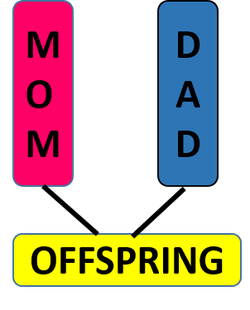
How many parents are necessary for sexual reproduction?

a)

2

b)

0

c)

3

d)

1

14.

Which cell is more complex?

a)

Prokaryotic

b)

Eukaryotic

15.

Which cell is simpler?

a)

Prokaryotic

b)

Eukaryotic

16.

This cell is a ...

a)

Prokaryotic Cell

b)

Eukaryotic Cell

17.

This is a _________________ cell.

a)

Prokaryotic

b)

Eukaryotic

18.

Requires two parents

a)

sexual

b)

asexual

19.

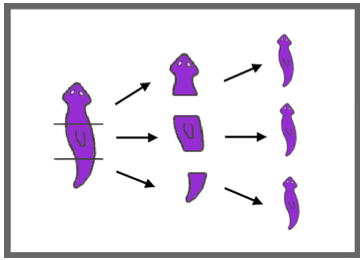
Requires only one parent

a)

sexual

b)

asexual

20.

A living organism is made of one or more cells.

a)

True

b)

False

21.

How does a heterotroph get energy?

a)

by eating other organisms

b)

from photosynthesis

c)

from the sun

d)

they don't need energy

22.

How do autotrophs get their food?

a)

they don't need food

b)

by eating other animals

c)

from the sun

d)

by eating plants

23.
This domain is characterized by ancient bacteria that can live in extreme environments, such as volcanoes.
a)
Archaea
b)
Bacteria
c)
Eukarya
d)
Prokarya
24.
This domain contains organisms that have a true nucleus in each of their cells. This domain breaks down into four kingdoms.
a)
Animalia
b)
Archaea
c)
Bacteria
d)
Eukarya
25.
Organisms that are classified as autotrophic are able to-
a)
be seen with the human eye
b)
move
c)
reproduce
d)
make their own food
26.

I am made of many cells. My cells have an organized nucleus. I mostly have two parents, but sometimes one. I make my own food. What kingdom do I belong to?

a)

Fungi

b)

Bacteria

c)

Plantae

d)

Animalia

27.

I have no nucleus and can live in extreme temperatures. What kingdom do I belong to?

a)

Fungi

b)

Protista

c)

Bacteria

d)

Archaea

28.

I reproduce sexually and I am multicellular. My cells have a nucleus. I am not able to make my own food. What kingdom do I belong to?

a)

Plantae

b)

Animalia

c)

Fungi

d)

Protista

29.

I am mostly unicellular. My cells have a nucleus. I can be either autotrophic or heterotrophic, and I reproduce sexually and asexually.

What kingdom do I belong to?

a)

Fungi

b)

Archaea

c)

Bacteria

d)

Protista

30.

Cells that do not have a true nucleus are called...

a)

eukaryote

b)

prokaryote

c)

unicellular

d)

multicellular

31.

Cells that have a true nucleus are called...

a)

eukaryotes

b)

prokaryotes

c)

unicellular

d)

multicellular

32.
Is fungi autotrophic or heterotrophic?
a)
Autotrophic, they make their own food
b)
Hetertrophic, they get food from other organisms
33.

Biologist are continually looking at the variety of life on Earth and trying to determine the best way to group it based on different characteristics. Recently, biologists have divided all life into three main groups, called domains. What are the three domains?

a)

plants, animals, bacteria

b)

prokaryotic, eukaryotic, viral

c)

Bacteria, Achaea, Eukarya

d)

biotic, abiotic, viral

34.

Scientists classify living organisms into categories based on their characteristics. What is the broadest classification category?

a)

domains

b)

kingdoms

c)

species

d)

organisms

35.

Which list of characteristics describes organisms classified as animals?

a)

Unicellular, prokaryotic, autotrophic

b)

Multicellular, eukaryotic, heterotrophic

c)

Unicellular, eukaryotic, heterotrophic

d)

Multicellular, eukaryotic, autotrophic

36.
I have cell walls
I am an autotroph
I am multicellular
What am I?
a)
Plant
b)
Animal
c)
Eubacteria
d)
Unicorn
37.
I am unicellular
I am prokaryotic
I am found in extreme ecosystems
What kingdom do I belong to?
a)
The Candy Kingdom
b)
Kingdom Plantae
c)
Kingdom Animalia
d)
Kingdom Archaebacteria
38.

An organism that is multicellular, reproduces sexually, and makes its own food (autotrophic) is classified into which taxonomic kingdom?

a)

Fungi

b)

Animalia

c)

Plantae

d)

Protista

39.
Term used to describe a one-celled organism is ________________
a)
multicellular
b)
cellular
c)
single organism
d)
unicellular
40.
Which describes an  organism that produces its own food
a)
heterotroph
b)
chef
c)
autotroph
d)
homeostasis
41.
How many parents are necessary for asexual reproduction?
a)
2
b)
0
c)
3
d)
1
42.
How does a heterotroph get energy?
a)
by eating other organisms
b)
from photosynthesis
c)
from chemosynthesis
d)
they don't need energy
43.

How many parents are necessary for sexual reproduction?

a)

2

b)

0

c)

3

d)

1

44.
An organism that gets its food by consuming other organisms is known as a:
a)
heterotroph
b)
autotroph
c)
prokaryote
d)
eukaryote
45.
Which characteristics best describes the Plant Kingdom?
a)
unicellular; eukaryote; autotroph
b)
multicellular, prokaryote, autotroph
c)
multicellular, eukaryote, autotroph
d)
unicellular, prokaryote, heterotroph
46.
Which characteristics best describes the Animal Kingdom?
a)
unicellular, eukaryote, autotroph
b)
multicellular, prokaryote, heterotroph
c)
multicellular, eukaryote, autotroph
d)
multicellular, eukaryote, heterotroph
47.
Which characteristics best describe the Kingdom Protista?
a)
multicellular, eukaryote, heterotroph and autotroph
b)
multicellular and unicellular, heterotoph and autotroph, eukaryote
c)
unicellular, autotroph, prokaryote
d)
multicellular and unicellular, prokaryote, heterotroph
48.
Which characteristics best describe the Kingdom Fungi?
a)
multicellular and unicellular, eukaryote, autotroph
b)
multicellular and unicellular, prokaryote, heterotroph
c)
multicellular, eukaryote, heterotoph
d)
multicellular and unicellular, eukaryote, heterotroph
49.
Which characteristics best describes the Kingdoms Eubacteria and Archaebacteria?
a)
unicellular, prokaryote, heterotroph
b)
unicellular, prokaryote, heterotroph and autotroph
c)
multicellular, eukaryote, autotroph
d)
multicellular, prokaryote, heterotroph and autotroph
50.

Which kingdom contains organisms that are mostly multicellular, have cell walls, and can be decomposers or heterotrophs?

a)

Fungi

b)

Plantae

c)

Animalia

d)

Protista

51.
Which level of organization is the most complex?
a)
organism
b)
population
c)
community
d)
ecosystem
52.
Multiple organisms of the same species describes a
a)
organism
b)
population
c)
community
d)
ecosystem
53.
What do ecosystems have that the other three levels of organization do not have?
a)
living things
b)
biotic factors
c)
abiotic factors
d)
organisms
54.
A forest full of many kinds of trees and grasses is an example of a
a)
group
b)
organism
c)
population
d)
community
55.
Which level of organization is more complex than a population and less complex than an ecosystem?
a)
organism
b)
population
c)
community
d)
ecosystem
56.
Which is an example of a population?
a)
different kinds of bacteria
b)
A group of fish and sharks
c)
deer, bear, and rabbits
d)
A herd of cattle
57.
which is the correct order of the levels of organization from simple to complex?
a)
organism, population, community, ecosystem
b)
ecosystem, community, population, organism
58.
Which is the definition of a community
a)
multiple organisms of the same species
b)
all the living and nonliving things in an area
c)
a living thing
d)
multiple organisms of different species
59.
All of the living and nonliving things in an area that interact with each other are called a/an ______.
a)
community
b)
habitat
c)
population
d)
ecosystem
60.
The non-living part of an ecosystem
a)
Ocean
b)
Lava Flow
c)
Birds
d)
Abiotic
61.
The living part of an ecosystem
a)
Biotic
b)
Abiotic
c)
Mother Earth
d)
Flowers
62.
Different populations living and interacting with each other in the same area
a)

Population

b)
Ecosystem
c)
Community
d)

Organism