
 Worksheets
7-Final Exam Cumulative Review 2025
Total questions: 65
Worksheet time: 5hrs 12mins
What is the function of our bones within our bodies?
They relax & contract to move our body
They make long connections between body parts so they can signal different areas of the body
They cover & protect the body
They provide a rigid internal framework that gives shape & support to our body
In biology, why is the structure of different parts of an organism important?
This determines how long the organism will live
This determines the specific function that part will do for the organism
This determines how the organism heals
This determines if the organism is living or nonliving
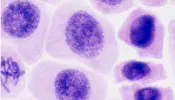
What is the basic unit of life that ALL living things are made of?
Organs
Organelles
Cells
Bricks
Arrange the following levels of organization from smallest to largest!
Cells → Organ systems → Organs → Tissues
Tissues → Cells → Organs → Organ systems
Organ system → Organs → Cells → Tissues
Cells → Tissues → Organs → Organ systems
What organelle is absolutely necessary for cell survival and can be found in ALL cells?
Cell wall
Cell membrane
Chloroplasts
Nucleus
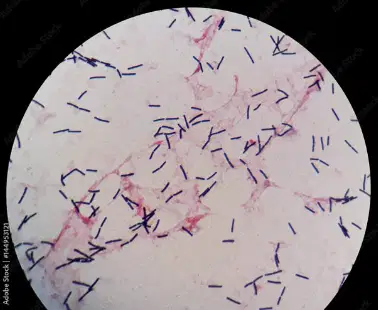
The image below shows a sample of bacteria viewed under a microscope using medium power (100x). If you were to increase the magnification to high power (400x) how would that affect the apparent size and quantity (number) of the bacteria observed under the microscope?
Apparent size and quantity of bacteria would increase
Apparent size and quantity of bacteria would decrease
Apparent size of bacteria would increase but the quantity of bacteria visible would decrease
Apparent size of bacteria would decrease but the quantity of bacteria visible would increase
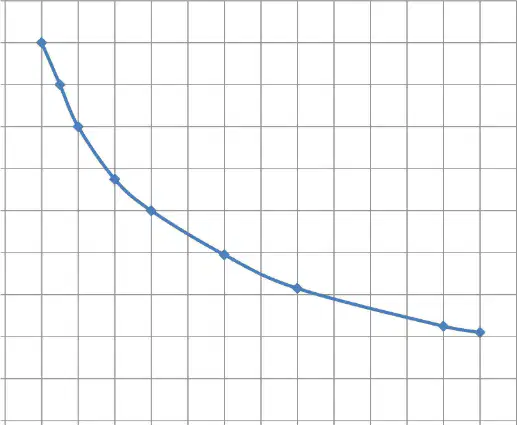
As you increase magnification under a microscope, you can see greater detail, what happens to the field of view (FOV)?
FOV Increases
FOV Decreases
FOV Remains the same
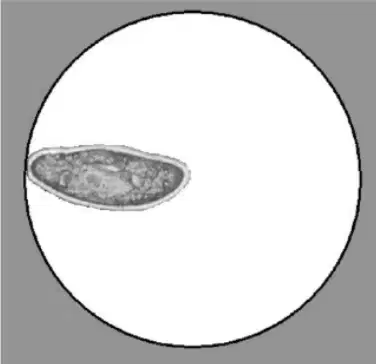
Below is a magnified image of a unicellular organism observed with a microscope using low power (40x). The field of view is 10.6 millimeters (mm). Determine the length of this unicellular organism to the nearest tenth of a millimeter.
21.2 mm
6.6 mm
5.3 mm
3.1 mm
Which of the following terms can be used to describe the characteristic of our cell membrane, which allows some molecules to pass through but restricts others?
Permeable
Impermeable
Semipermeable
Solid
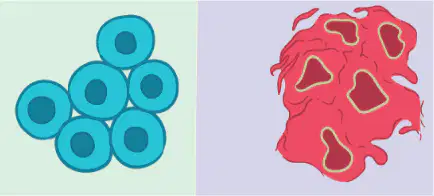
Which of the following diseases is a direct result of our bodies not being able to regulate mitosis & characterized by rapid, uncontrolled cell growth?
Common Cold
Cirrhosis
Covid-19
Cancer
A multicellular organism undergoes the process of mitosis for what purpose?
For digesting food more efficiently
To carry out photosynthesis
To duplicate cellular energy
For growth and repair
Ribosomes are an organelle that is found in most cell types because they have an important function. What function do ribosomes have?
Makes/builds proteins
Makes/builds lipids
Stores water
Stores DNA
This body system is responsible for absorption of tiny nutrients into the bloodstream.
Circulatory System
Endocrine System
Digestive System
Excretory System
This system removes liquid (urine) and gaseous wastes (CO₂) from the blood.
Nervous System
Reproductive System
Muscular System
Excretory System
Which is the correct pathway that food takes as it travels through our digestive system?
Mouth → Esophagus → liver → small intestine → large intestine
Mouth → Esophagus → stomach → small intestine → large intestine
Esophagus → stomach → liver → small intestine → large intestine
Esophagus → pancreas → stomach → large intestine → small intestine
Which process physically breaks down and increases the total surface area of our food?
Absorption
Mechanical Digestion
Chemical Digestion
Diffusion
Which process requires enzymes to break down food on the molecular level?
Chemical digestion
Mechanical digestion
Absorption
Metabolism
Amino acids are the building blocks for which large molecules that our cells use for daily functions?
Fiber
Fats
Carbohydrates
Proteins
How does increasing surface area help chemical digestion occur more effectively?
There are more enzymes present
The food is smaller so this helps enzymes eat the food molecules
The food is larger so this helps enzymes find the food molecules
There are more contact points which allow the enzymes to interact and further break down the food into tiny building blocks
Which structures provide a large amount of surface area that increases the rate of absorption of nutrients into our bloodstream?
Nerve cells in the brain
DNA in the nucleus
Teeth and tongue in the mouth
Villi and microvilli in the small intestine
Lipase is an enzyme found in our digestive system that breaks down which large molecule into smaller fatty acids?
Fiber
Lipids
Proteins
Carbohydrates
If accessory organs did NOT produce enzymes to break down our food...
Then enzymes could not do mechanical digestion
Then enzymes wouldn't be able to carry the food to our cells
Then food would be too large to be able to diffuse into the bloodstream
Then food would have too much surface area
Which is an appropriate definition of photosynthesis?
A process that releases energy
A process that creates carbon dioxide and oxygen
A process that uses oxygen
A process that converts light energy to chemical energy in the form of glucose
Which of the following shows the photosynthesis word equation?
Sunlight + Water + Carbon dioxide → Glucose + Oxygen
Glucose + Oxygen → Carbon dioxide + Water + Sunlight
Oxygen + Water → Glucose + Carbon dioxide + Sunlight
Sunlight + Carbon dioxide + Oxygen → Glucose + Water
Which organelle is absolutely necessary for a cell to carry out photosynthesis?
Cell wall
Chloroplast
Mitochondria
Cytoplasm
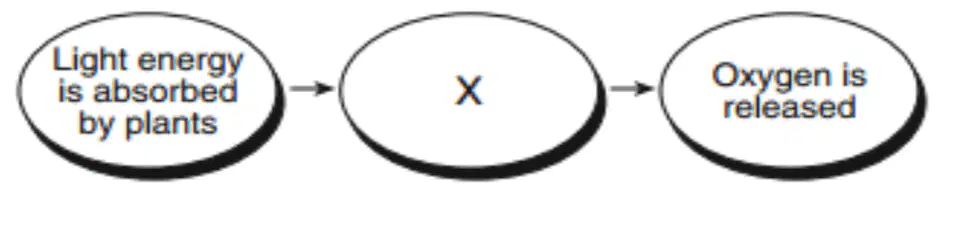
The flowchart below represents photosynthesis, and one step of the process, labeled "X" is missing. Determine which of the following occurs at "X"?
Plants are eaten by animals for food
Carbon dioxide and water are used to make sugar
Plants release water into the soil
Animals breathe out carbon dioxide
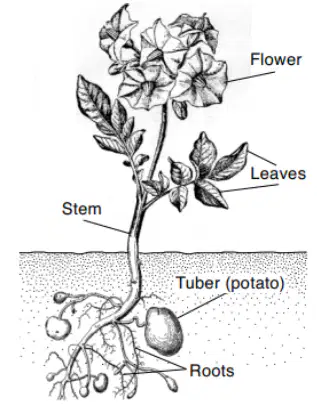
What is the primary structure on the potato plant that converts light energy into chemical energy?
Leaves
Roots
Flower
Stem
What would happen if some of the reactants of photosynthesis were missing?
The plant would produce a lot of sugar
The plant would start using a lot more water
The plant would lose the ability to produce sugar
The plant would start releasing water
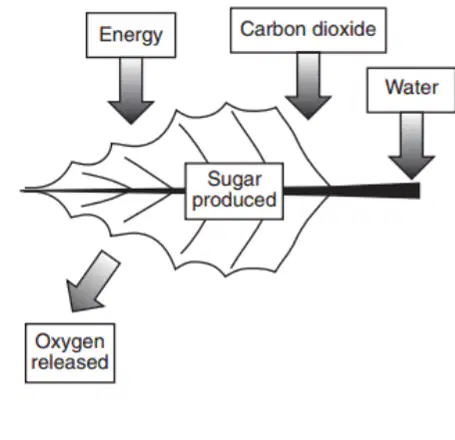
The diagram below shows a process that occurs in the leaf of a tree and other organisms that can capture sunlight. What process is being carried out in this diagram?
Mitosis
Photosynthesis
Cellular respiration
Digestion
What chemical reaction do ALL organisms rely on to provide their cells with energy?
Cellular respiration
Photosynthesis
Chemical Digestion
Mitosis
Students were measuring the rate of photosynthesis in a classroom experiment using spinach leaves. Which of the following variables could they use to measure the amount of photosynthesis & prove that this chemical reaction occurred?
Light production
Oxygen production
Water production
Carbon dioxide production
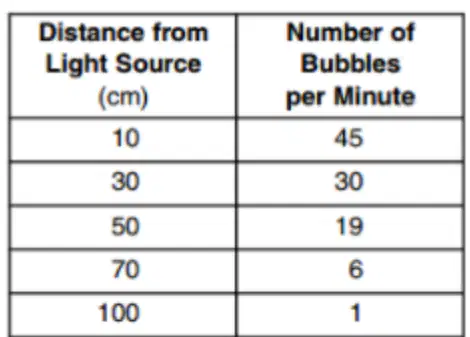
A student was conducting an experiment to measure the rate of photosynthesis in a water plant. The student was curious to determine the optimal distance a light source needed to be from a plant for it to undergo the most photosynthesis. Predict the number of bubbles in one minute that would appear if light was placed 5 cm from the plant.
5
15
35
55
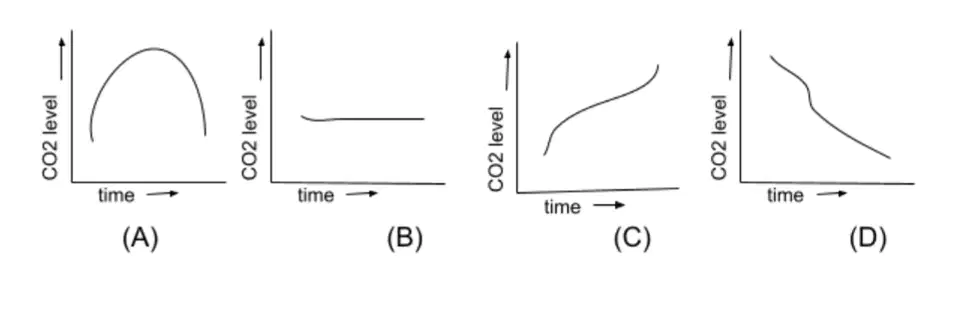
Which of the following graphs would result if the carbon dioxide sensor were sealed in an empty bottle with no organisms?
Graph A
Graph B
Graph C
Graph D
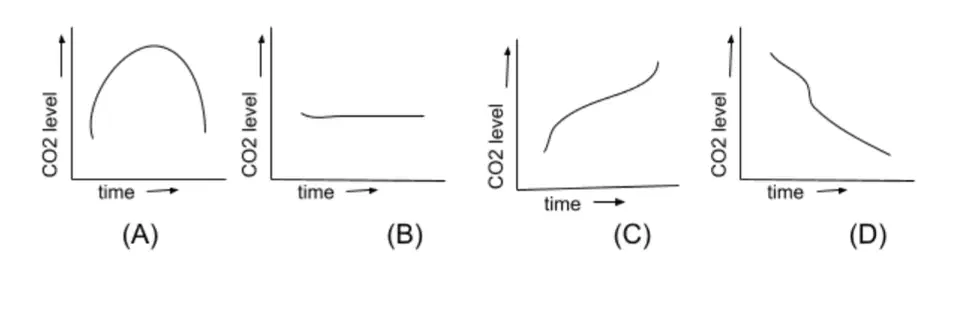
Which of the following graphs would result if the carbon dioxide sensor were sealed in a bottle with many spinach leaves?
Graph A
Graph B
Graph C
Graph D
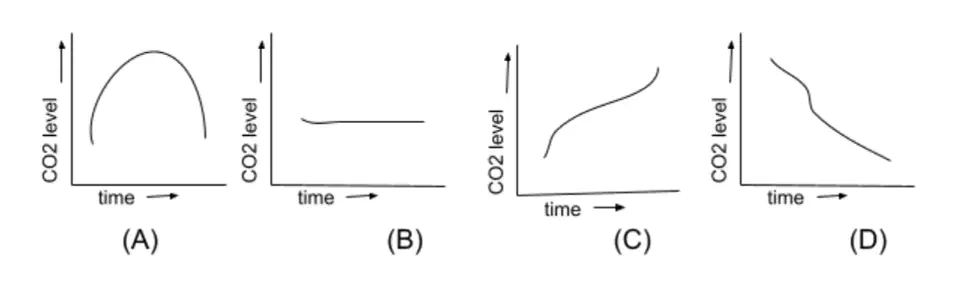
Which of the following graphs would result if the carbon dioxide sensor were sealed in a bottle with many crickets?
Graph A
Graph B
Graph C
Graph D

Which of the following terms best describes the image below?
Individual
Population
Community
Ecosystem
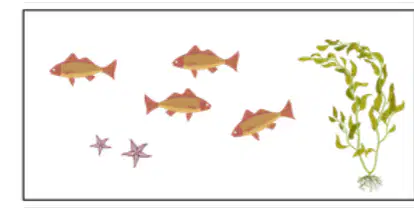
Which of the following terms best describes the image below?
Individual
Population
Community
Ecosystem
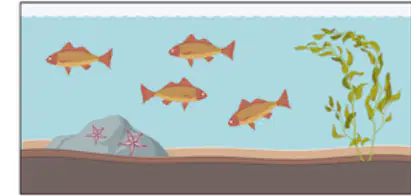
Identify the biotic factor from the ecosystem shown below.
Water
Rock
Sand
Seaweed
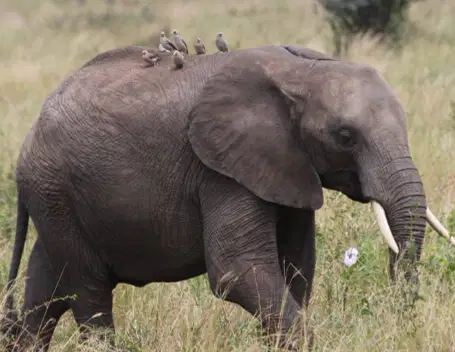
Oxpeckers are a type of bird that land on the back of elephants and eat lice and ticks that may be present in the elephant's skin. The oxpecker receives a meal and protection from their natural predators. The elephant gets harmful organisms removed from its skin. Describe the relationship between the oxpecker and the elephant...
Predation
Parasitism
Competition
Mutualism
In the mountains of Alaska, arctic foxes rely on snow hares as their main food source. However, wolf populations in the area have been increasing and eating more snow hares which has made it difficult for arctic foxes to find food. Describe the type of relationship between wolves and arctic foxes...
Predation
Parasitism
Competition
Mutualism
In the Smoky Mountains of North Carolina, Eastern Bobcats are great climbers and quiet hunters. They often stalk their prey before pouncing and going for the kill. Larger bobcats have been known to stalk and kill small deer. Describe the type of relationship between bobcats and deer.
Predation
Parasitism
Competition
Mutualism
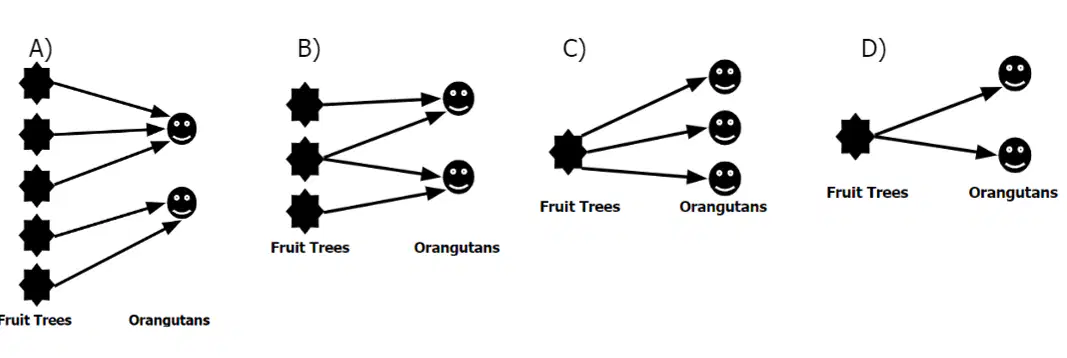
Which of the diagrams below show the highest level of competition between orangutans?
Diagram A
Diagram B
Diagram C
Diagram D
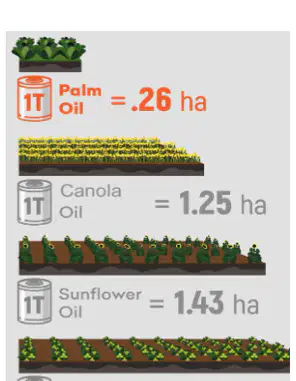
According to the diagram, explain why oil palm farms are being built even though they are harmful to the environment.
Palm oil produces more oil than other crops.
Palm oil can only be produced at the equator.
Palm oil is a healthy alternative.
Palm oil uses less land than other crops.
Orangutans mainly eat fruit, but will also eat insects and small mammals. This makes them...
(a)
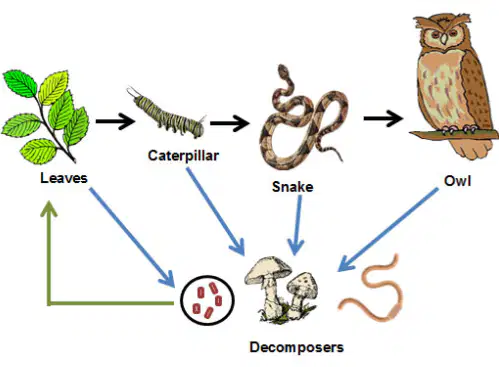
What type of organisms in this food web are responsible for recycling matter & energy back to producers?
Decomposers
Herbivores
Omnivores
Carnivores
What do the arrows in the food web represent? The arrow shows...
The organism that is releasing energy
The organism that is decomposing
The organism that is getting consumed
The direction that energy is flowing
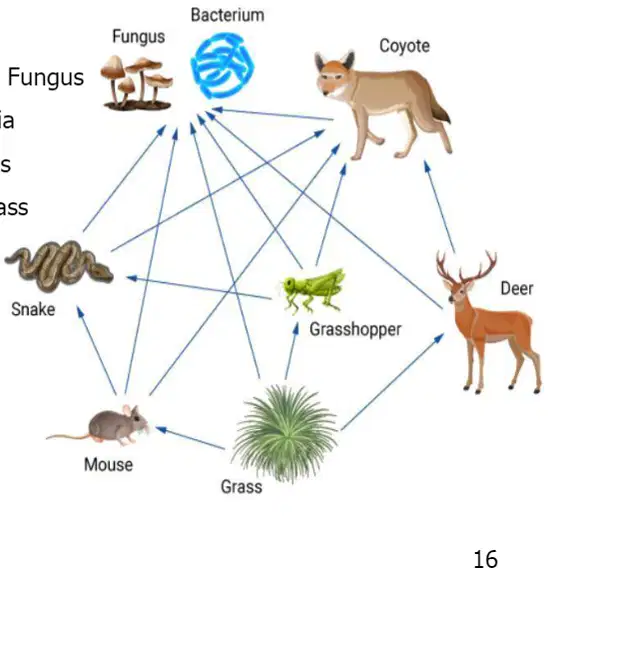
Identify a food chain within this food web.
Snake → Grasshopper → Grass → Fungus
Grass → Mouse → Deer → Bacteria
Grass → Deer → Coyote → Fungus
Bacteria → Snake → Mouse → Grass
How are traits passed down from parents to offspring?
By random mutations
Through the process of mitosis
By inheriting lipids
By inheriting DNA
Genes are sections of DNA code for and build ________, that give organisms their physical appearance.
Carbohydrates
Proteins
Enzymes
Fats
Which of the following is an accurate description of an allele? An allele is...
A population that is genetically identical.
Two different sections of DNA or genes that code for different traits, like fur color and ear shape.
A chromosome that gets damaged as a result of a mutation.
The same section of DNA or gene but has different codes for the same trait, like brown eyes vs blue eyes.
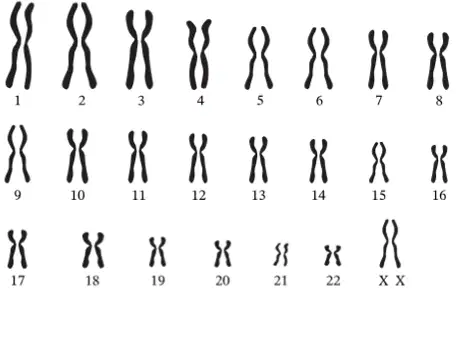
Based on the karyotype below, what can you conclude about this individual?
They are biological male
They are biological female
They are 22 years old
They have sickle cell anemia
Which statement describes how two organisms have different genotypes but display the same phenotype?
One is heterozygous and the other is homozygous recessive
One is heterozygous and the other is homozygous dominant
One is homozygous recessive and the other is homozygous dominant
Both are heterozygous
Steve claims he has more genes from his dad because everyone says they look alike. Is Steve's claim correct?
Yes, because traits are passed down from parents
Yes, because they are both biological males
No, because mom births you and gives you more DNA than dad
No, because half of our DNA come from mom and half come from dad
In order to display a recessive phenotype, how many copies of the recessive allele do you need?
Zero
One
Two
Three
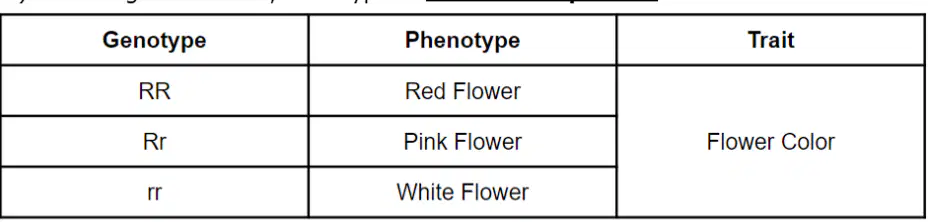
According to the chart, what type of inheritance pattern is shown for flower color?
Codominance
Incomplete dominance
Traditional dominance
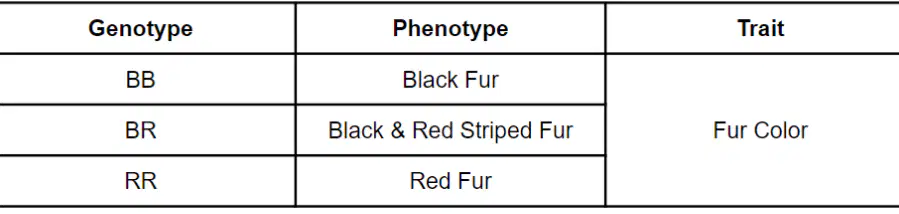
According to the chart, what type of inheritance pattern is shown for fur color?
Codominance
Incomplete dominance
Traditional dominance
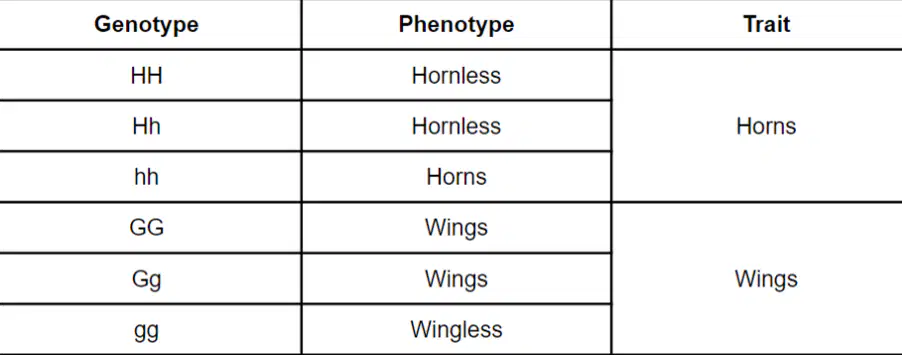
According to the chart, which phenotype is the dominant trait for horns?
Wingless
Wings
Hornless
What is a specific segment of DNA called? This is a section of DNA that will determine if you have a specific trait!
Allele
Gene
Chromosome
Nucleotide
The genetic makeup of an organism that includes which alleles they have is called...
Phenotype
Genotype
Karyotype
Traits
The physical and observable appearance of an organism is called...
Phenotype
Genotype
Karyotype
Traits
This type of reproduction occurs when two parent's sex cells fuse and create a genetically diverse offspring.
Asexual reproduction
Sexual reproduction
Pollination
Budding
How is the biological sex determined in humans and all mammals?
The age of the mother's egg cell will determine if the baby is male or female.
The diet of the mother will determine the sex of the baby.
If the 23rd pair of chromosomes are XY then it will be male, XX will be female.
The new baby's sex is determined by how many other males or females are already born into that family.
Match the large macromolecule to its building block
amino acids
Proteins
fatty acids
Lipids
Nucleotides
DNA
Glucose
Carbohydrates
Please label the cell pictured.
nucleus
cell membrane
organelles
Match the following cells to their pictures.

Animal Cell

Plant Cell

Bacteria Cell

