wayground logo

Free Printable Worksheets

NEW

Font size

S
M
L
XL
Worksheets

Sir Isaac Newtons First Law of Motion Quiz

Total questions: 60

Worksheet time: 31mins

Name
Class
Date
1.

What is Newton's 1st law?

a)

Law of Force and Acceleration

b)

Law of Inertia

c)

Law of Action-Reaction

d)

Law of motion

2.

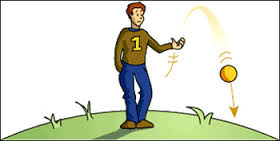
What Newtons law does this picture represent

a)

Newtons 1st law

b)

Newtons 2nd law

c)

Newtons 3rdt law

d)

Newtons 4rth law

3.

An object in motion stops when.....

a)

It falls of an edge.

b)

it is acted upon by an outside force.

c)

It is eaten

d)

It never stops

4.

A push or pull on an object is called...

a)

Acceleration

b)

Mass

c)

Inertia

d)

Force

5.
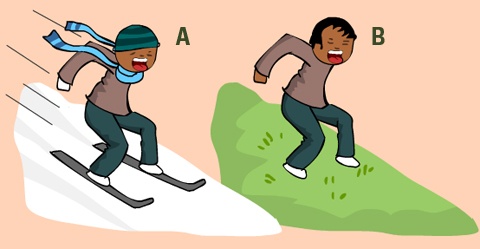
Why is it harder for the boy in Image B to get down the hill?
a)
Motion
b)
Friction
c)
Work
d)
Displacement
6.
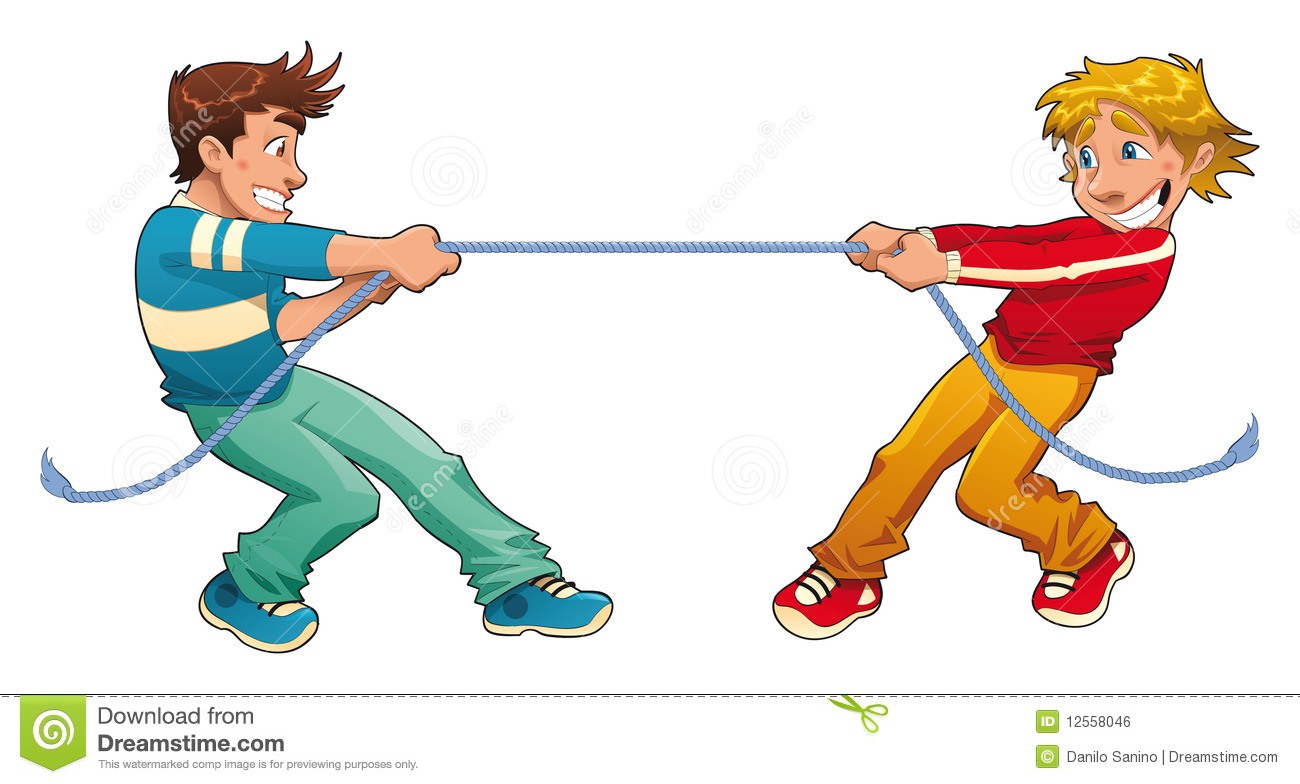
If these boys are pulling with the same amount of force.  What will happen?
a)
The boy in blue will win.
b)
They will not move at all.
c)
The boy in red will win.
d)
Both will fall down.
7.
Which force produces a change in motion?
a)
unbalanced force
b)
balanced force
c)
gravitational force
d)
frictional force
8.
At which point is potential energy greatest
a)
W
b)
X
c)
Y
d)
Z
9.
An automobile you are riding in suddenly stops, but you continue to go forward.
a)
Newton's
1st
Law of Motion
b)
Newton's
2nd
Law of Motion
c)
Newton's
3rd
Law of Motion
10.
a)
1st
b)
2nd
c)
3rd
11.
One object has twice as much mass as another object. The first object also has also twice as much...
a)
velocity
b)
gravitational acceleration
c)
inertia
d)
all of these
12.
What is the attractive force that exists between all objects that have mass?
a)
Weight
b)
Mass 
c)
Gravity
d)
Viscosity
13.
If an object is stationary (not moving) the forces acting upon it are _____________
a)
unbalanced
b)
weak
c)
balanced
d)
Hulk Smash!
14.
Which is always a contact force?
a)
electric
b)
friction
c)
magnetic
d)
gravity
15.

If there were no friction, a moving object would keep moving, even if no other force were applied to it.

a)

true

b)

false

16.

Inertia is two or more forces acting in opposite directions.

a)

true

b)

false

17.

If one force of 30 N and another force of 85N result in a net force of 55 N, which term describes the two forces?

a)

negative forces

b)

balanced forces

c)

unbalanced forces

18.

Which term explains why a crash-test dummy lunges forward during a car crash?

a)

inertia

b)

gravity

c)

velocity

19.

What happens to an object at rest if balanced forces act upon it?

a)

The object remains at rest.

b)

The object begins to move at a constant speed.

c)

The object begins to move and then slows down

20.

Newton's 1st Law is also called the Law of ...

a)

Friction

b)

Inertia

c)

Unbalanced forces

d)

Newtons

21.
The tendency of an object to resist a change in motion is...
a)
inertia
b)
kinetic energy
c)
vector
d)
net force
22.

Because of inertia, a moving object will keep ________ unless acted on by an unbalanced force.

a)

at rest

b)

moving

c)

in one spot

d)

inertia

23.
Because of inertia, a resting object will remain at ________.
a)
rest
b)
a constant speed
c)
school
d)
inertia 
24.
 What is the unit called that measures force?
a)
weight
b)
meter
c)
Newton
d)
kilogram
25.
Calculate the net force shown in the  diagram?
a)
6 N
b)
0 N
c)
3 N
d)
9N
26.
If there are two forces going in the same direction how would you find the net force?
a)
Subtract
b)
Add
c)
Neither
d)
Multiply
27.

Objects tend to stay at rest unless acted upon by ______

a)

An inside force

b)

An outside force

c)

A balanced Force

28.

If the forces acting on an object are balanced, then its motion will not change

a)

True

b)

False

29.

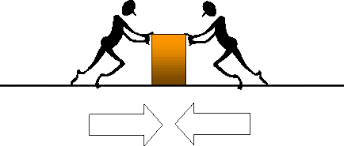
What is the net force acting on this box?

a)

8N to the right

b)

5N to the left

c)

5N to the right

d)

9N to the left

30.

What is the net force acting on this box?

a)

16N to the right

b)

4N to the left

c)

0N

d)

8N to the left

31.

Unbalanced forces change the motion of an object

a)

True

b)

False

32.

What year was Isaac Newton born?

a)

1643

b)

1543

c)

1971

d)

1600

33.

He created the Three Laws of....

a)

motion

b)

movement

c)

gravity

d)

texting

34.

What made Isaac think about gravity?

a)

He hit his head on a tree

b)

A bird pooped on his head

c)

He saw a shooting star

d)

An apple fell from a tree

35.

He was all of these things EXCEPT

a)

teacher

b)

philosopher

c)

astronomer

d)

mathmatician

36.

Isaac died in the year

a)

2001

b)

1700

c)

1727

d)

1608

37.

50 miles per hour, West

a)

acceleration

b)

speed

c)

velocity

d)

gravity

38.

A force is a ________________________ that acts on an object.

a)

push

b)

pull

c)

push or pull

39.

A force that pushes back against one object moving past another object

a)

gravity

b)

friction

c)

inertia

d)

mass

40.

Acceleration is best described as a change in an object's

a)

velocity

b)

speed

c)

direction

41.

An object at rest will stay at rest unless an unbalanced force acts on it.

a)

True

b)

False

42.

An object that is changing position (location) is

a)

at rest

b)

in motion

43.

An object's tendency to resist (not) change its state of motion.

a)

gravity

b)

force

c)

inertia

d)

friction

44.

Which of the following is not a force?

a)

gravity

b)

velocity

c)

friction

d)

push

45.

If an object in motion is not acted on by an unbalanced force, it will continue with the same speed and direction.

a)

True

b)

False

46.

If an object is speeding up, it has acceleration.

a)

True

b)

False

47.

The rate or measure of how fast an object is moving

a)

velocity

b)

force

c)

speed

d)

acceleration

48.

Which of the following will NOT reduce (make less) friction?

a)

make a surface smooth

b)

add wheels

c)

Increase the surface contact area

d)

add a lubricant or oil

49.

A squirrel sits on the ground and eats a donut. We know the forces on him must be balanced because...

a)

Forces are always balanced

b)

the squirrel is not accelerating

c)

squirrels are projectiles

d)

he's eating a donut

50.

Newton's 1st Law is also called the Law of ...

a)

Friction

b)

Inertia

c)

Unbalanced forces

d)

Newtons

51.
Objects with greater _________ also have greater inertia.
a)
speed
b)
mass
c)
temperature
d)
friction
52.
Because of inertia, a resting object will remain at ________.
a)
rest
b)
a constant speed
c)
school
d)
inertia 
53.
What kind(s) of objects have inertia?
a)
all objects with mass
b)
only objects at rest
c)
only objects in motion
d)
only objects whose motion is being changed
54.
You push on a car and it does not move.  What is true about the inertia?
a)
The inertia is changing
b)
The inertia of the car is too great 
c)
The inertia of the person is equal to the car
d)
There is not inertia because of no movement
55.
If a hockey puck slides on a frictionless force it will eventually slow down because of its inertia.
a)
True
b)
False
56.
When a heavy football player and a light one run into each other, who exerts more force?
a)
The heavy one
b)
The light one
c)
They are equal
d)
There is no such thing as force 
57.
What is Newton's First Law of Motion?
a)
F = m x a
b)
Every action has an equal an opposite reaction
c)
An object at rests stays, an object in motion stays in motion
d)
Friction
58.
What pulls a ball back to earth?
a)
Gas
b)
Friction
c)
Gravity
d)
Molecules
59.
A _______ is a push or pull.
a)
Newton
b)
Acceleration
c)
Momentum
d)
Force
60.
How many laws of motion does Newton have?
a)
One
b)
Two
c)
Three
d)
Four