
NEW
Font size
 Worksheets
#033 Periodic Table and Notes Review for Test
Total questions: 55
Worksheet time: 41mins
An element that is shiny, malleable, conducts heat and electricity well
metal
nonmetal
metalloid
halogen
An element that is dull, brittle, and conducts heat and electricity poorly.
metal
nonmetal
metalloid
halogen
An element that has properties of both metals and nonmetals.
metal
nonmetal
metalloid
halogen
One of the elements of group 17; they combine with most metals to form salts
group
halogen
period
noble gas
One of the elements of group 18 on the periodic table; unreactive
halogen
noble gas
group
family
The number of protons in the nucleus of an atom; identifies an element same number of protons for all atoms of the same element
period
valence electron
atomic mass
atomic number
The mass of an atom expressed in atomic mass units.
atomic mass
period
atomic number
valence electron
Electrons of the outer level of the atom that are involved in making the bonds that make compounds
atomic mass
period
atomic number
valence electron
Can be pounded or rolled into shape
valence electron
group
ductile
malleable
Atomic number is equal to
Neutrons
Protons added to Electrons
Electrons added to Neutrons
Protons
Elements on the right side of the of the zigzag line are normally?
nonmetals
metals
metalloids
rare earth metals


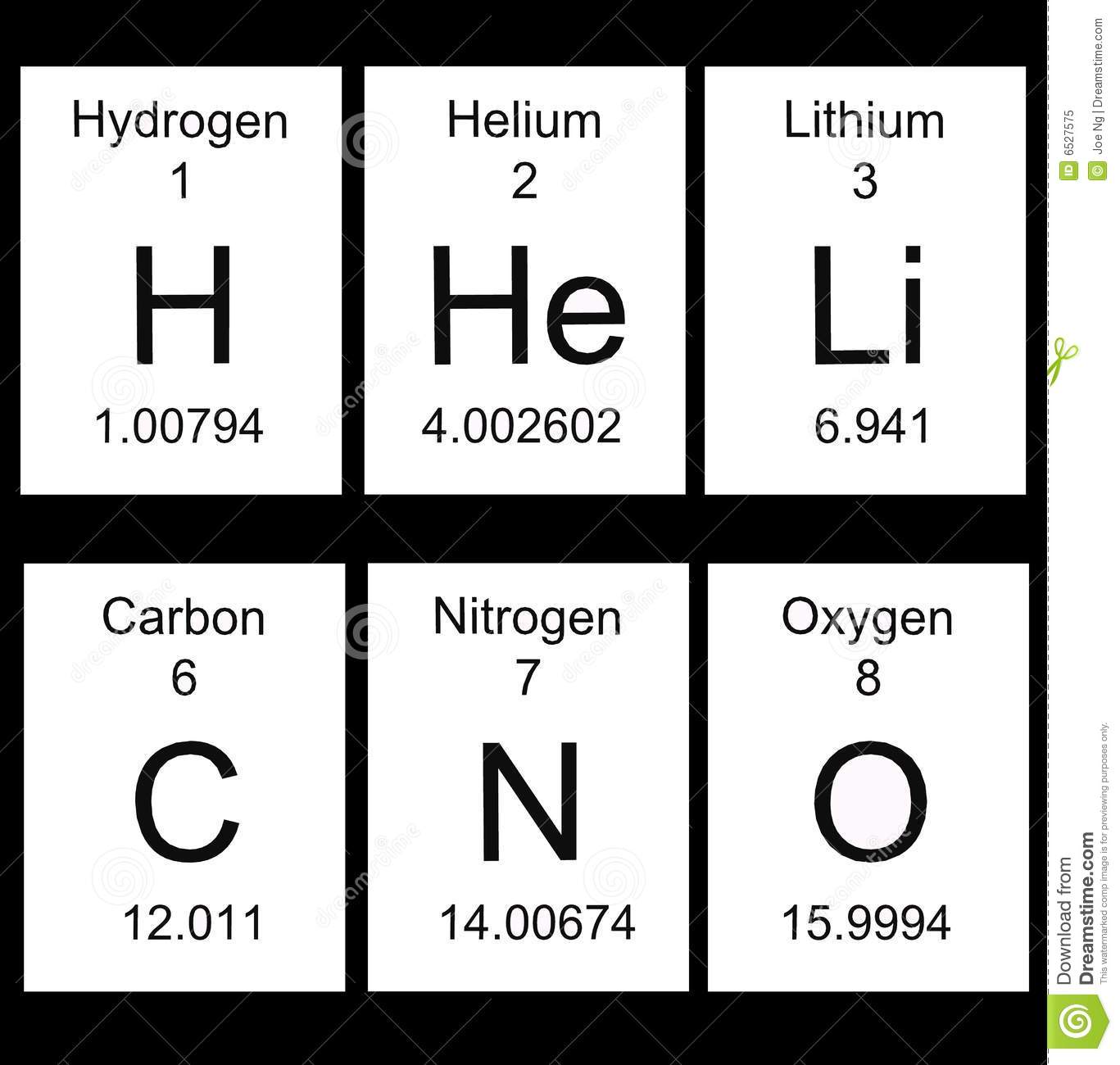
What does the C represent?
atomic mass
atomic number
element name
element symbol
__________ are the smallest unit of an element that maintains the properties of the element.
Particles
Atoms
Protons
Isotopes of an element have different number of ___________ and therefore have different masses.
Proton
Neutron
Electon
How many neutrons does Chlorine (Cl) with an atomic number of 17 and an atomic mass of 35.
17
18
19
If an atom has an atomic mass of 11 and contains 5 protons, its atomic number would be______
11
5
6

Which of the following subatomic particles is negatively charged?
neutron
proton
electron
megatron

Which particle does not have a charge?
neutron
proton
electron
megatron

Which particle has a positive charge?
neutron
electron
proton
megatron

Which of the following best describes the three general classes of elements?
solids, liquids, gas
metals, nonmetals, gases
metals, nonmetals, metalloids
metals, metalloids, synthetics
An unknown element is a good conductor of heat and electricity and has a shiny appearance.
Which of the following classifications best describes the unknown element?
Metal
Nonmetal
Metalloid
Element
An unknown element is a poor conductor of heat and electricity and has a dull appearance.
Which of the following classifications best describes the unknown element?
Metal
Nonmetal
Metalloid
Element

How many electrons does Oxygen have?
16
8
15.99
O
A student makes a statement that the smallest part of an element can be viewed using a light microscope. Is this statement true?
Yes. The element is made of atoms that are large particles easily seen through a light microscope.
No. The element is made of atoms that are too small to be seen under a light microscope.
Yes. The element is made of atoms that have mass.
No. The element is made of atoms that do not take up space.
A Russian chemist who was given credit for first arranging elements in a usable manner
Rutherford
Mendeleev
Mosley
Dalton
In a modern periodic table, elements are arranged in order of?
atomic mass
number of isotopes
atomic number
number of neutrons

What color are the METALS on this Periodic Table?
Blue
They are not pictured
Yellow
Red
What makes an atom neutral?
The number of protons are equal to the number of neutrons.
The number of protons are equal to the number electrons.
The number of electrons are equal to the number neutrons.
It is impossible to have a neutrally charge atom.

What color are the METALLOIDS on this periodic table?
Blue
They are not located on the periodic table
Yellow
Red

What color are the NON-METALS on this periodic table?
Blue
Non-metals are not located on the periodic table
Yellow
Red
Silicon, used in computer chips, is a semiconductor and has properties of both metals and nonmetals. What type of element is Silicon?
Metal
Nonmetal
Metalloid
Pretty
When an atom gives away or receives an electron from another atom it forms a what?
Isotope
Explosion
Ion
Element
What does an atom's period tell us?
Number of protons
Number of electrons
Number of valence electrons
Number of electron shells


Columns on the periodic table are known as __________.
Periods
Groups
Pillars
Grouper Fish

Horizontal rows on the periodic table are known as ___________.
Groups
Columns
Period
Timeline

