wayground logo

Free Printable Worksheets

NEW

Font size

S
M
L
XL
Worksheets

Unit 6 Review

Total questions: 55

Worksheet time: 43mins

Name
Class
Date
1.
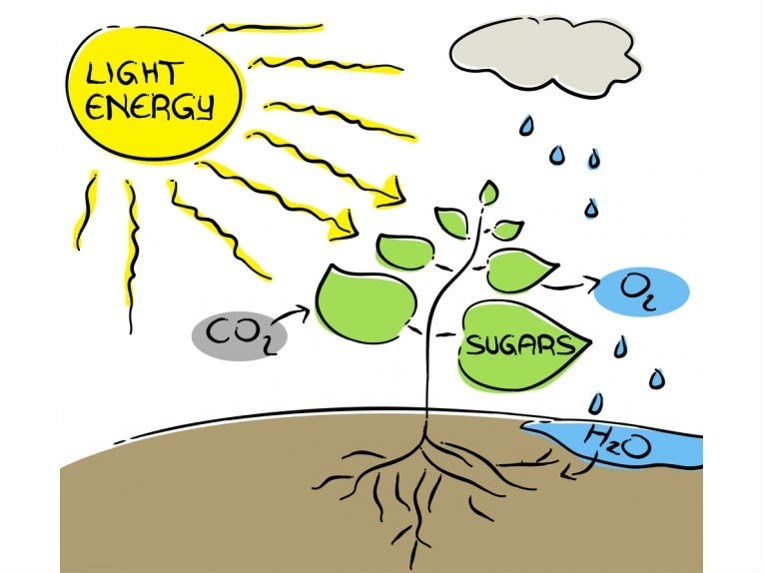
What three things do plants need?
a)
Water, air, and sunlight.
b)
Water, soil, and sunlight.
c)
Water, soil, and air.
d)
Love, family, and Cheetos.
2.
What does a plant release into the air?
a)
Plants release carbon dioxide into the air.
b)
Plants release sugar into the air.
c)
Plants release oxygen into the air.
d)
Plants release bacon into the air.
3.
What does chlorophyll capture?
a)
Chlorophyll captures water from the air.
b)
Chlorophyll captures carbon dioxide from the air.
c)
Chlorophyll captures the energy of sunlight.
d)
Chlorophyll captures baseballs.
4.
During photosynthesis, what form does the food take?
a)
The food takes the form of sugar.
b)
The food takes the form of carbon dioxide.
c)
The food takes the form of soil.
d)
The food takes the form of a ham sandwich.
5.
Where does a plant get carbon dioxide from?
a)
A plant gets carbon dioxide from the soil.
b)
A plant gets carbon dioxide from the air.
c)
A plant gets carbon dioxide from the water.
d)
A plant gets carbon dioxide at the Shell gas station.
6.
Leaves use the energy from the sun to change carbon dioxide and water into what?
a)
chlorophyll
b)
oxygen
c)
carbon dioxide
d)
sugar
7.
What is photosynthesis?
a)
The process plants use to turn carbon dioxide and water into food.
b)
The process plants use to chlorophyll and sunlight into air. 
c)
The process plants use to turn sunlight and chlorophyll into soil.
d)
The process plants use to turn chocolate and milk into chocolate milk.
8.
Where does photosynthesis take place?
a)
The leaves.
b)
The roots.
c)
The branches.
d)
The kitchen.
9.
What two materials are needed for photosynthesis?
a)
Water and soil.
b)
Carbon dioxide and water.
c)
Carbon dioxide and chlorophyll.
d)
Peanut butter and jelly.
10.

What are the 3 reactants of photosynthesis? The reactants are the things needed for photosynthesis to occur.

a)

oxygen, glucose, sunlight

b)

sunlight, oxygen, water

c)

water, oxygen, carbon dioxide

d)

carbon dioxide, sunlight, water
11.
Why is the insect a consumer?
a)
It is eaten by a mouse.
b)
It can make its own food.
c)
It eats the plant.
12.
In the food chain pictured, the source of energy for the water plant is ______.
a)
Sun
b)
Water Plant
c)
Mayfly
d)
Trout
13.
In the food chain pictured, why is the plant a producer?
a)
The plant consumes the sun.
b)
The plant makes its own food.
c)
The plant is not a producer.
14.
Which of the following organisms is a producer?
a)
Sun
b)
Water Plant
c)
Mayfly 
d)
Trout
15.
An ______ is an independent living thing.
a)
consumer
b)
producer
c)
organism
d)
herbivore
16.
All organisms need _____ to survive.
a)
Environment
b)
energy
c)
sun
d)
plants
17.
_________ cannot make their own food, so they need to consume (eat) plants or animals.
a)
consumers
b)
producers
c)
decomposers
18.
What does a food chain contain? Choose ALL correct answers.
a)
consumer
b)
producer
c)
decomposer
d)
all of the above
19.
__________ eat decaying matter, dead plants and animals and in the process they break them down. 
a)
consumer
b)
producer
c)
decomposer
20.
_______are animals that eat only plants.
a)
herbivore
b)
carnivore
c)
omnivore
21.
What is a producer?
a)
Organism that makes its own energy
b)
Organism that breaks down dead organisms
c)
Organism that eats other organisms for food & energy
22.
What is a decomposer?
a)
Organism that makes its own energy
b)
Organism that breaks down dead organisms
c)
Organism that eats other organisms for food & energy
23.
What is a consumer?
a)
Organism that makes its own energy
b)
Organism that breaks down dead organisms
c)
Organism that eats other organisms for food & energy
24.
What is an herbivore?
a)
An organism that only eats plants for energy
b)
An organism that eats animals for energy
c)
An organism that eats both plants and animals for energy.
25.
What is a carnivore?
a)
An organism that only eats plants for energy
b)
An organism that eats animals for energy
c)
An organism that eats both plants and animals for energy.
26.
What is an omnivore?
a)
An organism that only eats plants for energy
b)
An organism that eats animals for energy
c)
An organism that eats both plants and animals for energy.
27.
The ___% rule states that only ____% of energy is transferred to the next trophic level.
a)
10%
b)
25%
c)
50%
d)
100%
28.
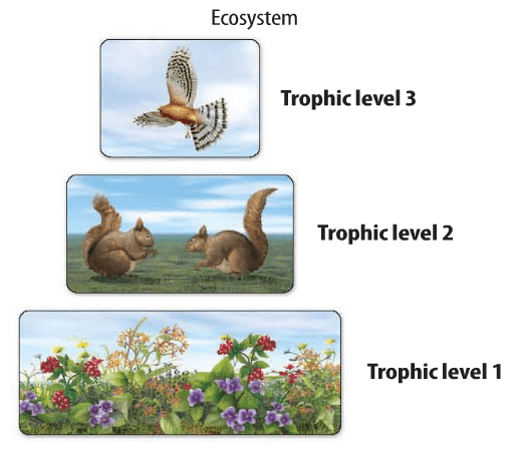
What are "trophic levels"?
a)
Levels in a food web/food chain
b)
Levels of land in a mountain
c)
Animal diets
29.
Grass: Producer, consumer or decomposer?
a)
Producer
b)
Consumer
c)
Decomposer
30.
Fungi: Producer, consumer or decomposer?
a)
Producer
b)
Consumer
c)
Decomposer
31.
Panda: Producer, consumer or decomposer?
a)
Producer
b)
Consumer
c)
Decomposer
32.
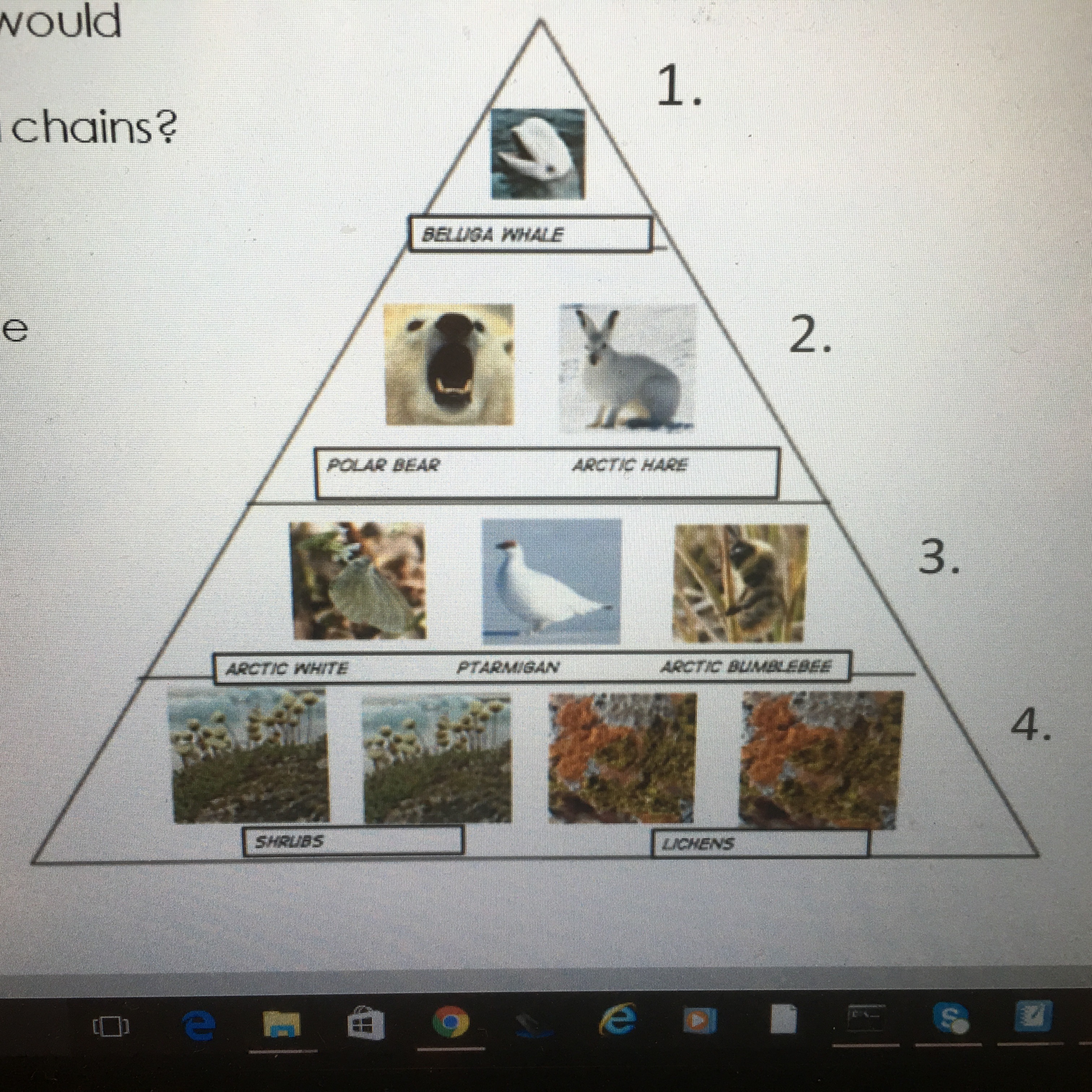
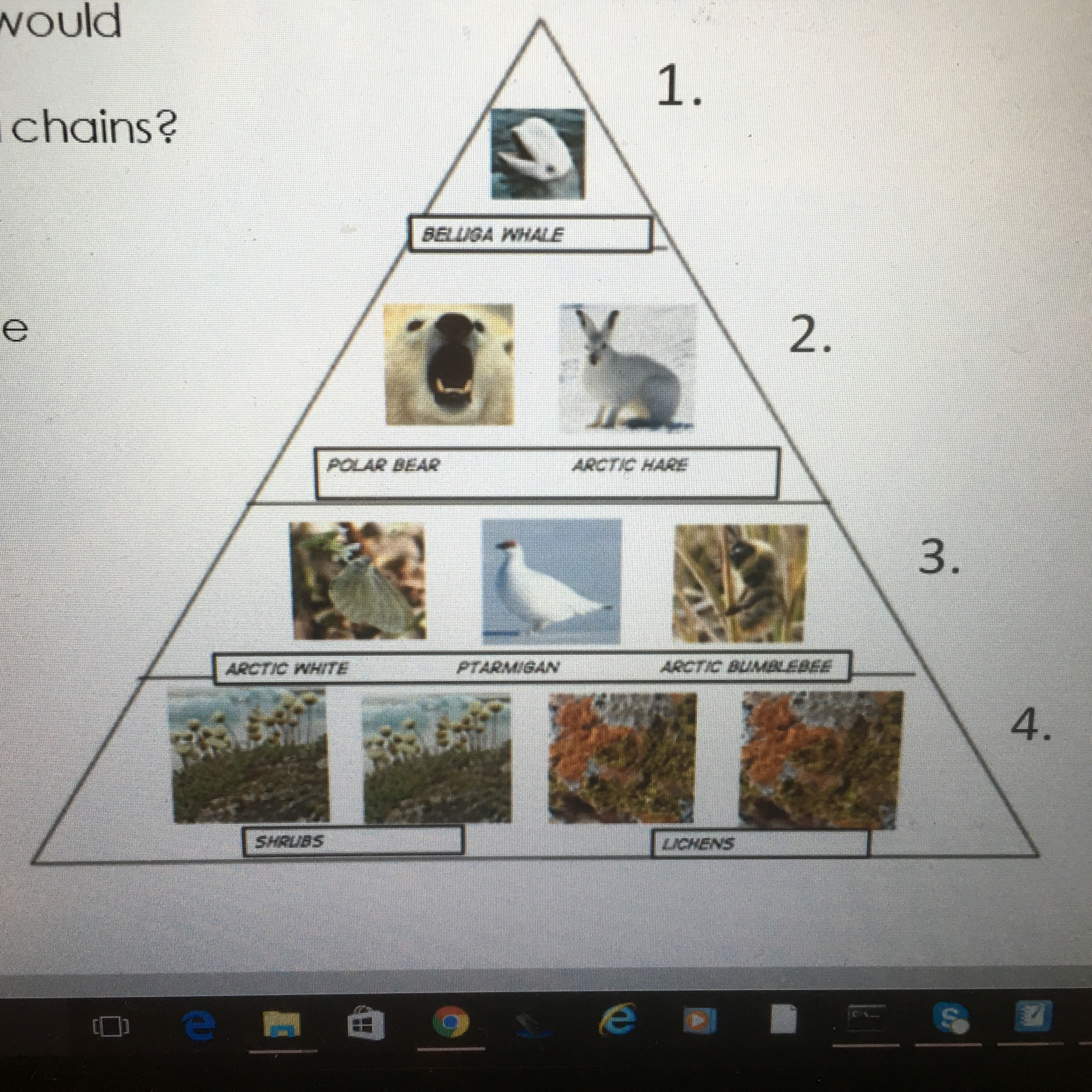
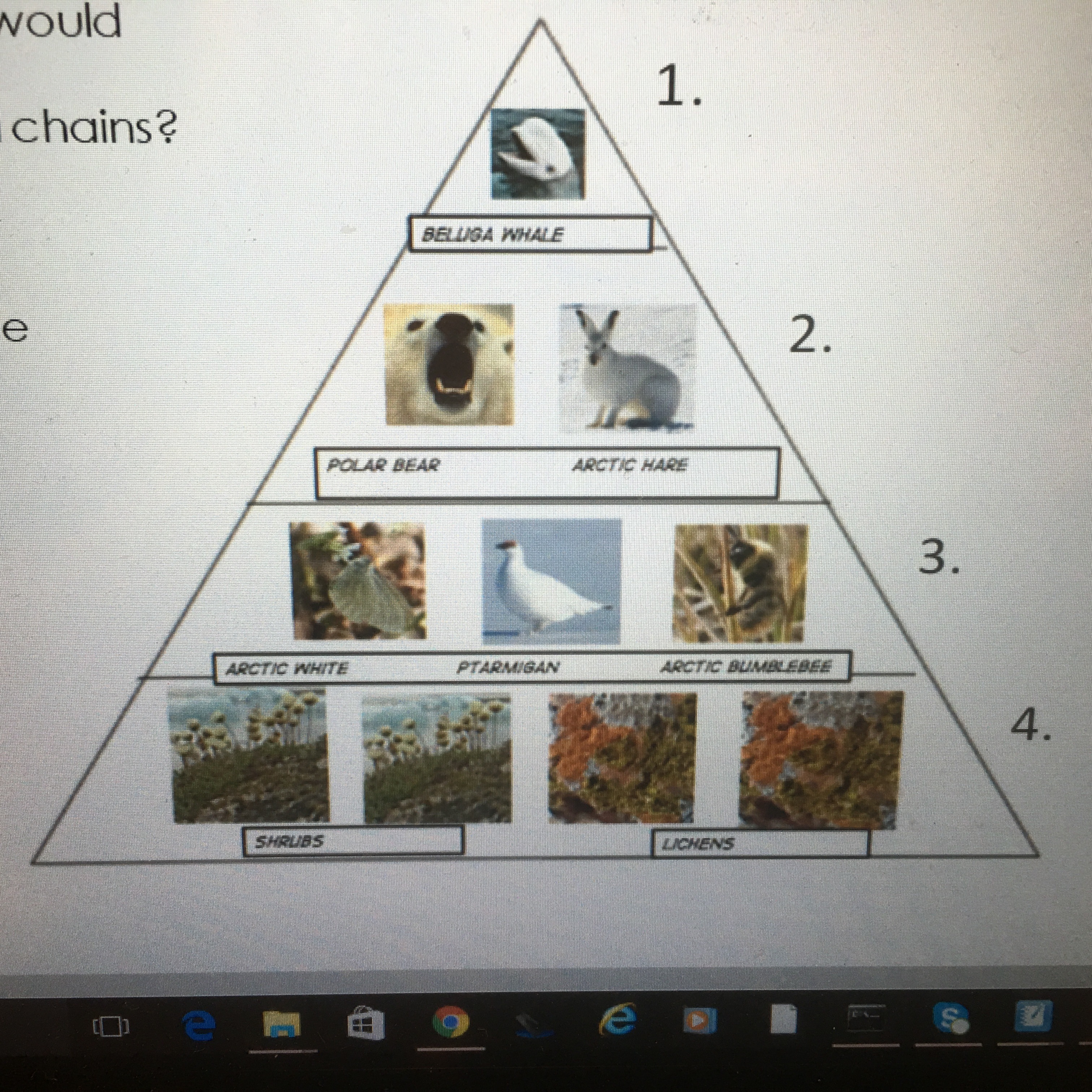
Based on the model, which consumers would receive the greatest amount of energy captured by the producers in their food chains? 
a)
Beluga Whale
b)
Polar Bear and Arctic Hare
c)
Ptarmigan and Arctic Bumble
d)
Lichens and Shrubs
33.
Which is the apex predator? 
a)
Ptarmigan
b)
Polar Bear
c)
Lichens
d)
Beluga Whale
34.
Which trophic level is the Primary consumer? 
a)
1
b)
2
c)
3
d)
4
35.
How much energy is lost when organisms consume another organism from a different level? 
a)
90%
b)
20%
c)
50%
d)
10%
36.
Where do producers get their energy? 
a)
soil
b)
decomposers
c)
sun
d)
garbage
37.
Makes its own food
a)
autotroph
b)
heterotroph
c)
herbivore
d)
biomass
38.
Process through which plants make their own food
a)
autotroph
b)
producer
c)
photosynthesis
d)
biomass
39.
Position that an organism occupies based on what it eats
a)
biomass
b)
autotroph
c)
trophic level
d)
carnivore
40.
Cannot make its own food
a)
heterotroph
b)
autotroph
c)
producer
d)
decomposer
41.
YOUR BODY OBTAINS ENERGY FROM THE FOOD YOU EAT. WHAT IS THE FORM OF ENERGY IN FOOD?
a)
KINETIC
b)
ELASTIC
c)
GRAVITATIONAL
d)
CHEMICAL
42.

The process by which plants collect sunlight and change it into food is called ______________.

a)

cooking

b)

breathing

c)

photosynthesis

d)

cellular respiration

43.

When you eat food, your body gains ___________ energy.

a)

electrical

b)

chemical

c)

thermal

d)

radiant

44.

Animals get the energy they need for growth and repair from...

a)

their muscles

b)

avoiding predators

c)

protective coloration (camouflage)

d)

the food they eat

45.

Why is the sun's energy important for life on Earth?

a)

The Sun heats the Earth.

b)

The Sun provides energy for plants to grow.

c)

The Sun allows ecosystems to function properly

d)

All of these

46.

In an ecosystem, how are food webs and food chains different?

a)

Food webs show the relationship between many different food chains in a single ecosystem. Food chains show one path of energy transfer in an ecosystem.

b)

Food chains show the relationship between many different food webs in a single ecosystem. Food webs show one path of energy transfer in an ecosystem

c)

Food webs rarely begin with plants, and food chains begin with animals.

d)

Food webs begin with animals, and food chains begin with plants.

47.

What is the purpose of a food chain?

a)

shows the transfer of energy between trophic levels

b)

shows what organisms eat which foods

c)

depicts the predator/prey relationships between organisms

d)

shows the importance of the Sun's energy

48.

Which tool shows the amount of energy available at each feeding level?

a)

food chain

b)

food web

c)

food pyramid

d)

energy pyramid

49.

A predator is the animal at the top of a food chain.

a)

top or apex

b)

primary

c)

secondary

d)

tertiary

50.

What percent of energy moves on to each trophic level in a food chain?

a)

1%

b)

10%

c)

100%

d)

.01%

51.

Which of the following energy transformations takes place during digestion?

a)

Thermal energy to Mechanical energy

b)

Mechanical energy to Chemical energy

c)

Chemical energy to Mechanical energy

d)

Solar energy to Chemical energy

52.

In which of the following scenarios is chemical energy being transformed into thermal energy?

a)

A squirrel uses the energy in seeds to build structures in its body

b)

A tree captures sunlight to produce the sugars it uses for food

c)

A fish is able to swim using the energy it gets from eating plants

d)

A lion’s temperature increases as it uses the energy it gets from its prey

53.

Animals can move as a result of what energy conversion?

a)

Chemical energy to Mechanical energy

b)

Mechanical energy to Thermal energy

c)

Thermal energy to Chemical energy

d)

Solar energy to Chemical energy

54.

Energy obtained by an organism when it consumes food is –

a)

absorbed into the bloodstream.

b)

transformed into other forms of energy.

c)

completely used during digestion.

d)

passed through the body as waste.

55.

Mammals maintain a constant body temperature by converting -

a)

Mechanical energy to Chemical energy

b)

Chemical energy to Mechanical energy

c)

Solar energy to Chemical energy

d)

Chemical energy to Thermal energy