wayground logo

Free Printable Worksheets

NEW

Font size

S
M
L
XL
Worksheets

Symbiosis ,Food Chains and Food Webs

Total questions: 60

Worksheet time: 1hrs 19mins

Name
Class
Date
1.
The relationship between ALL the organisms in a community showing who eats whom is called a ___________________________.
a)
Food Web
b)
Food Chain
c)
Abiotic Factors
d)
Biotic Factors
2.
One path that energy could take through an ecosystem is called a ________________________.
a)
Food Web
b)
Food Chain
c)
Abiotic Factors
d)
Biotic Factors
3.
Where does the energy that travels through an ecosystem originally come from?
a)
Earth's Core
b)
Water
c)
Plants
d)
The Sun
4.
An organism that lives by breaking down dead organic matter into simpler parts is a _______________________.
a)
scavenger
b)
consumer
c)
decomposer
d)
carnivore
5.
A second-level (secondary) consumer CANNOT be which type of consumer?
a)
Carnivore.
b)
Decomposer.
c)
Omnivore
d)
Herbivore.
6.
An animal that only eats other animals is a _______________.
a)
carnivore
b)
omnivore
c)
herbivore
d)
decomposer
7.
A living thing that makes its own food is called a __________________________.
a)
consumer
b)
producer
c)
carnivore
d)
herbivore
8.
If you connect all the food chains in an ecosystem you get a __________________________.
a)
food web
b)
food chain
c)
niche
d)
symbiosis
9.
Which shows a complete picture of the flow of energy through an ecosystem.
a)
Food Chain
b)
Food Web
10.
Recently, a family of bobcats moved into an area with a large rabbit population. What changes may occur in the ecosystem?
a)
The rabbit population may increase
b)
The rabbit population may decrease
c)
The rabbit population may increase first, then decrease
d)
The rabbit population will remain the same
11.
A population of mice lives in a barn community. A cat population has just joined the community. What will happen?
a)
Mouse and cat populations both go up?
b)
Mouse and cat populations both go down
c)
Mouse population goes down as cat population goes up
d)
Mouse population goes up as cat population goes down
12.
An animal that eats only plants is a ______________________.
a)
carnivore
b)
omnivore
c)
herbivore
d)
decomposer
13.
In the food web shown, the snail would be considered...
a)
primary consumer
b)
secondary consumer
c)
tertiary consumer
d)
producer
14.
Which best describes what a food chain shows you?
a)
Energy flowing through an ecosystem
b)
Food flowing through an ecosystem
c)
Consumers eating other organisms
15.
What is the role of decomposers in a food chain?
a)
Use sunlight to make food
b)
Eat other organisms to gain energy
c)
Make the food for the whole food chain
d)
Break down dead organisms and add nutrients to the soil
16.
What's the role of consumers in a food chain?
a)
Use sunlight to make food 
b)
Eat other species and keep them from overpopulating
c)
Break down dead stuff
d)
Add nutrients to the soil
17.
Which of these is true about this food web?
a)
The Owl gets its energy from the producer.
b)
The Lion gets its energy only from a wild cat.
c)
The Kite gets its energy from the goat.
d)
The Mouse is most likely to die, several ways.
18.
Which organism do the owl and the weasel compete for in the food web?
a)
Hawk
b)
Spider
c)
Grasshopper
d)
Shrew
19.
What might happen if you remove a primary consumer from the ecosystem?
a)
There would be more food for secondary consumers.
b)
The number of primary consumers would increase.
c)
The number of plants would increase.
d)
The number of secondary consumers would increase.
20.
Identify the correct food chain that demonstrates the energy flow of this food web
a)
Plant > Caterpillar > Bluebird > Eagle
b)
Plant > Lizard > Snail
c)
Plant >Lizard > Snail >Eagle
d)
Eagle >Lizard>Caterpillar>Plant
21.
Cattle egrets forage (feed) in fields among cattle. The egret gets easy access to flying insects stirred up by the cattle, and the cattle don't care if they are there or not.
a)
mutualism
b)
commensalism
c)
competition
d)
parasitism
22.
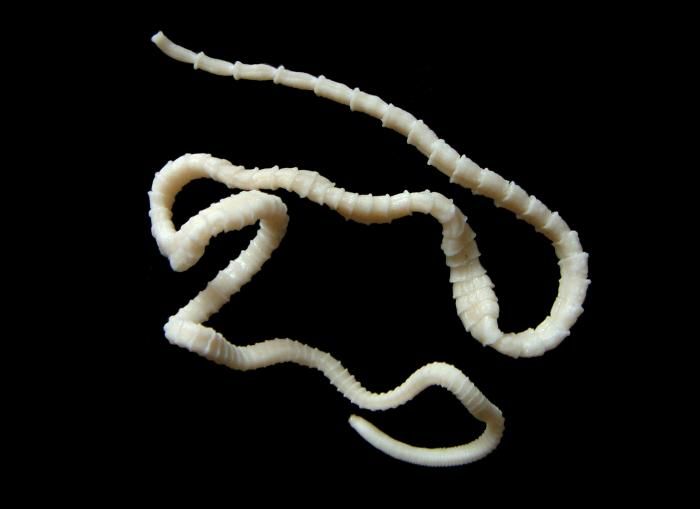
A tapeworm and a cat have this type of relationship.
a)
mutualism
b)
parasitism
c)
commensalism
d)
competition
23.
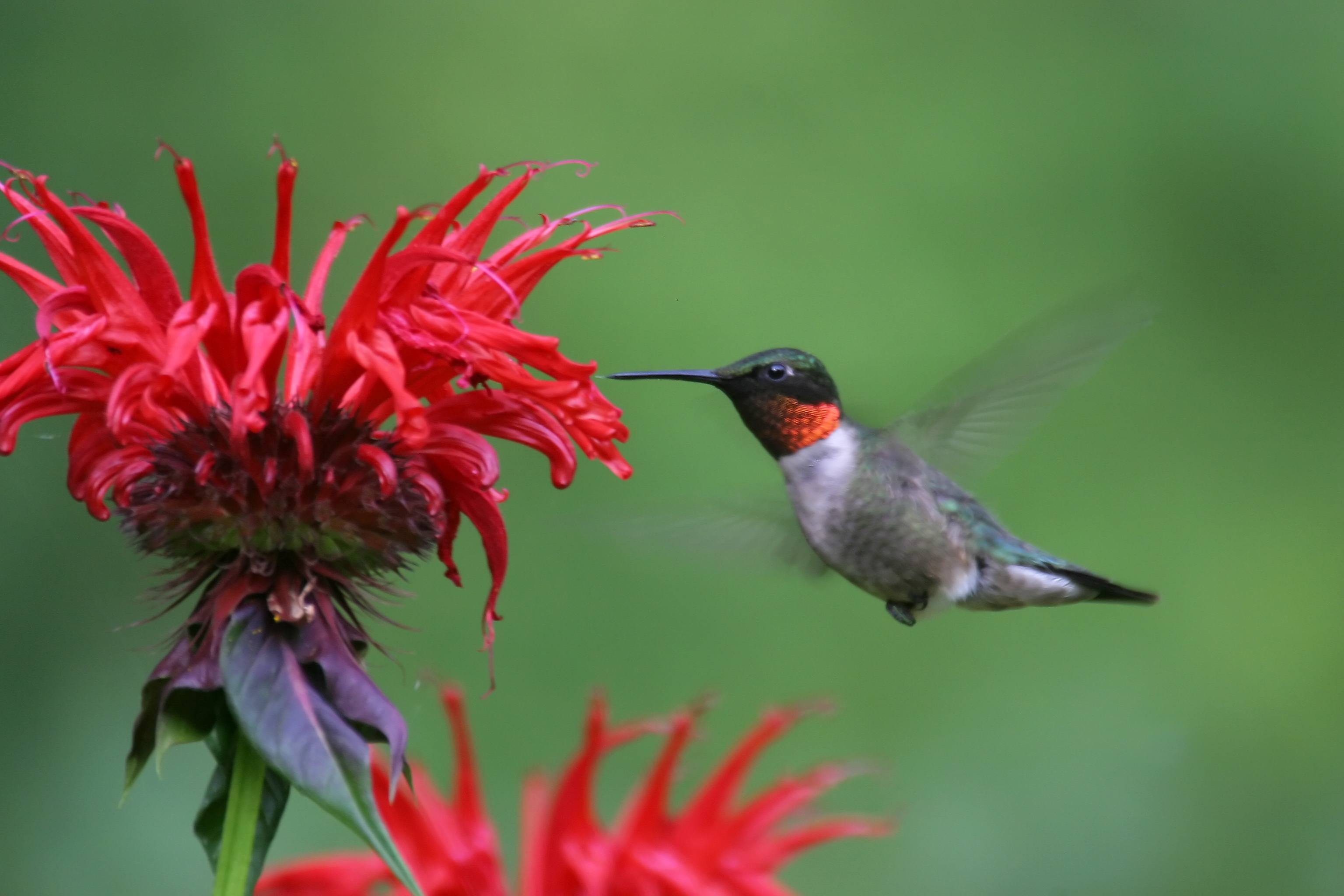
What type of symbiosis?  Hummingbirds feed on nectar from flowers.  The flowers are pollinated by hummingbirds as they move from flower to flower.
a)
commensalism
b)
mutualism
c)
parasitism
d)
predation
24.
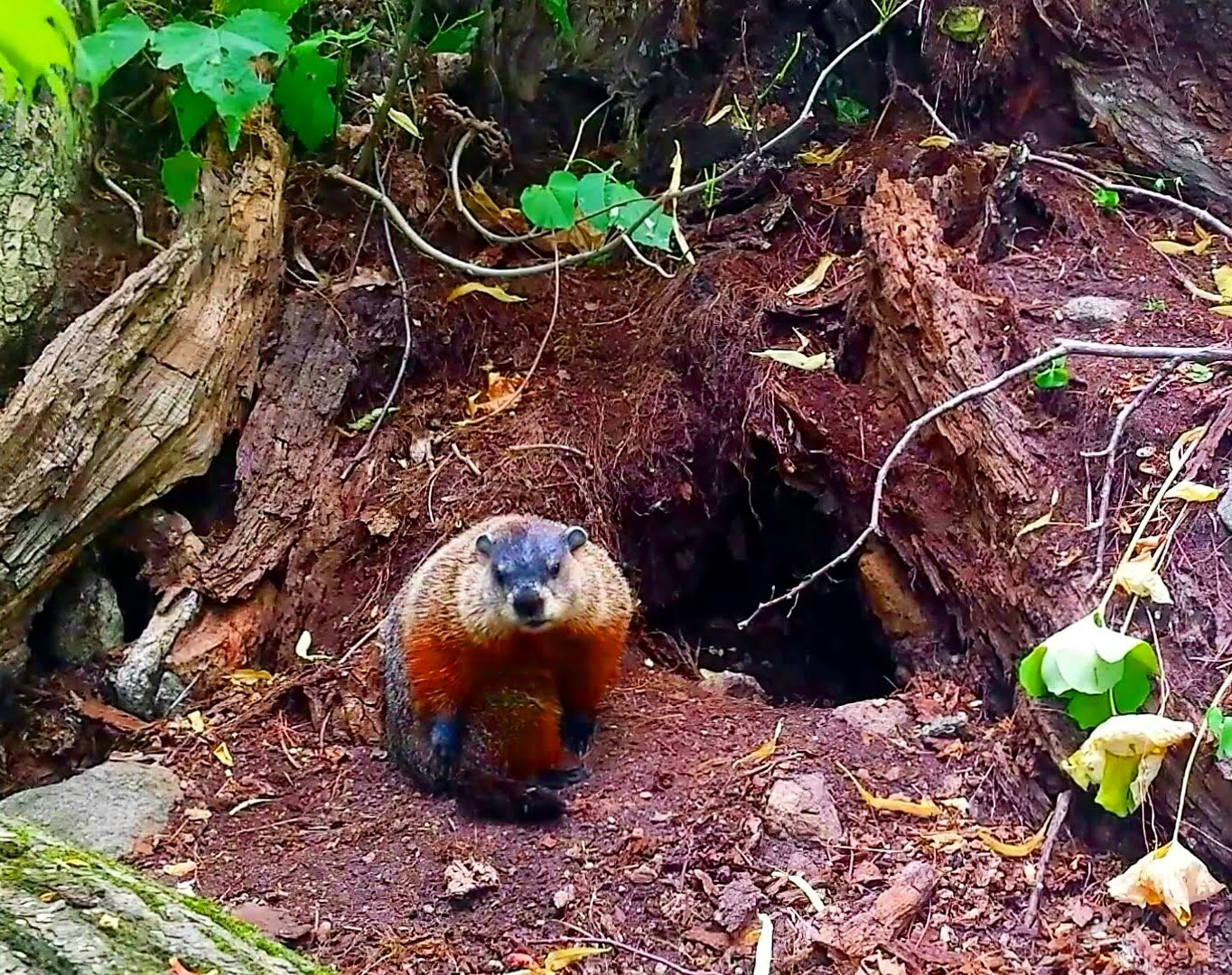
What type of symbiosis?  Skunks often live in burrows that have been dug and abandoned by woodchucks.  
a)
commensalism
b)
mutualism
c)
parasitism
d)
predation
25.
Which symbols best describe parasitism?
a)
+,+
b)
+,-
c)
+,0
d)
-,0
26.

Aphids are tiny insects that live on and eat the leaves of plants, removing vital nutrients from the plants.

a)

Predation

b)

Parasitism

c)

Commensalism

d)

Mutualism

27.
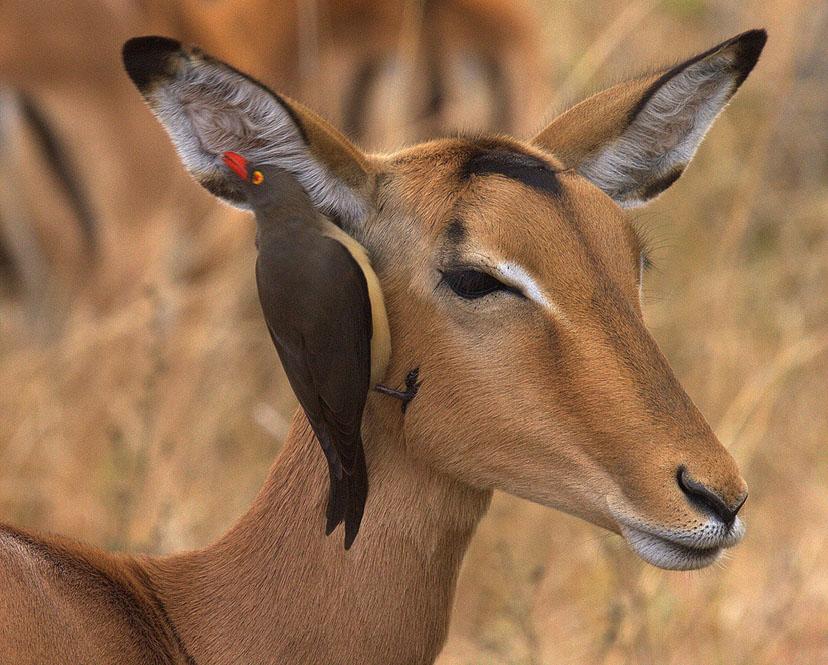
Red-billed oxpeckers are birds that often feed on parasites that infest impala.  This is an example of _______.
a)
commensalism
b)
mutualism
c)
neutralism
d)
competition
28.
Red-billed oxpeckers are birds that often feed on parasites that infest impala.  This is an example of _______.
a)
commensalism
b)
mutualism
c)
neutralism
d)
competition
29.

A relationship in which two species live closely together.

a)

resource

b)

mutualism

c)

succession

d)

symbiosis

30.
What type of symbiosis is this?
*
Hermit crabs find shells left by snails that have died and move in.
*
  Snails die and leave behind their shells.
a)
commensalism
b)
mutualism
c)
parasitism
d)
predation
31.
Barnacles create home sites by attaching themselves to whales. This neither harms nor benefits the whales.  What kind of relationship is this?
a)
Mutualism 
b)
Parasitism 
c)
Commensalism 
32.
A relationship between two organisms in which both organisms benefit. 
a)
Mutualism 
b)
Competition
c)
Parasitsm 
d)
Commensalism 
33.
A tick and a dog have this type of relationship.
a)
mutualism
b)
commensalism
c)
neutralism
d)
parasitism
34.
A frog eats a fly. The frog and fly are demonstrating ________.
a)
mutualism
b)
competition
c)
predator/prey
d)
parasitism
35.
A relationship between two organisms in which one organism benefits and the other is unharmed...
a)
Mutualism 
b)
Competition
c)
Parasitsm 
d)
Commensalism 
36.

Remoras attach themselves to the bodies of sharks. They then travel with the shark and feed on the leftover scraps from the sharks' meals. What type of symbiosis is this relationship?

a)

commensalism

b)

mutualism

c)

parasitism

37.

As buffaloes walk through grass, insects become active so they are spotted by and then eaten by cowbirds. What type of symbiosis is this relationship between the buffaloes and cowbirds?

a)

commensalism

b)

mutualism

c)

parasitism

38.

A cuckoo may lay its eggs in a warbler's nest. The cuckoo's young will displace the warbler's young and end up being raised by the warbler. What type of symbiosis is this relationship?

a)

Parasitism

b)

Commensalism

c)

Mutualism

39.

In a mutualism relationship, both organisms are ---

a)

benefited.

b)

unaffected.

c)

harmed.

40.

Commensalism is where one organism is benefiting and the other organism is ---

a)

unaffected.

b)

benefited.

c)

harmed.

41.

Where do parasites such as tapeworms or heartworms live?

a)

Inside the host

b)

Outside the host

42.

An organism that lives on or in another organism and causes it harm is called ---

a)

a host.

b)

a parasite.

c)

a virus.

43.

A tapeworm lives in the intestines of its host. Which example best describes the relationship between the tapeworm and its host?

a)

The tapeworm benefits from its host; however, the host is not affected.

b)

The tapeworm does not benefit from its host, but the host does benefit.

c)

The tapeworm benefits from its host, and the host is negatively affected.

44.

Clown fish live among anemones, acting as a lure for the sea anemone's prey. The clown fish get protection and shelter from the anemone. This is an example of which type of symbiosis?

a)

Commensalism

b)

Mutualism

c)

Parasitism

45.

Mistletoe extracts water and nutrients from the spruce tree to the detriment of the spruce. This is an example of which type of symbiosis?

a)

Commensalism

b)

Mutualism

c)

Parasitism

46.

A bee and a flower work together to benefit each other. This is an example of a ______. The bee helps the flower by pollinating it and the flower helps the bee by providing it with nectar.

a)

commensalism relationship

b)

parasitic relationship

c)

mutualism relationship

47.
What is a producer?
a)
Organism that makes its own energy
b)
Organism that breaks down dead organisms
c)
Organism that eats other organisms for food & energy
48.
Which one are you?
a)
Producer
b)
Consumer
c)
Decomposer
49.
What is an omnivore?
a)
An organism that only eats plants for energy
b)
An organism that eats animals for energy
c)
An organism that eats both plants and animals for energy.
50.
Grass: Producer, consumer or decomposer?
a)
Producer
b)
Consumer
c)
Decomposer
51.
Fungi: Producer, consumer or decomposer?
a)
Producer
b)
Consumer
c)
Decomposer
52.
Horses eat grass, so they are a ______.
a)
Herbivore
b)
Carnivore
c)
Omnivore
53.

Producers are ...

a)

plants

b)

able to do photosynthesis

c)

also called autotrophs

d)

all of these are true

54.

Arrows in a food web represent...

a)

eating

b)

sunlight

c)

energy

d)

matter

55.

Photosynthesis is important because...

a)

it makes carbon dioxide

b)

it makes food for the food webs

c)

it makes water

d)

it's not important

56.

In photosynthesis, which are the products?

a)

carbon dioxide, water

b)

oxygen, glucose

c)

sunlight, oxygen

d)

water, soil

57.

The original source of energy for a food web is...

a)

plants

b)

sun

c)

producers

d)

decomposers

58.
Short Answer on Test: Why will having fewer insects affect the mice?
a)
The mice will not have enough insects to eat.
b)
It will not affect the mice.
c)
The mice will have too many insects to eat.
59.
Which of the following organisms is a producer?
a)
Sun
b)
Water Plant
c)
Mayfly 
d)
Trout
60.
The shrew provides energy for the _______?
a)
cricket
b)
grasshopper
c)
frog
d)
snake