wayground logo

Free Printable Worksheets

Font size

S
M
L
XL
Worksheets

US Semester 2 Midterm Review

Total questions: 50

Worksheet time: 47mins

Name
Class
Date
1.
What was the main goal of the women’s rights movement during the Progressive Era?
a)
starting a system of women’s colleges
b)
winning elections for public office
c)
securing the right to vote
d)
separating men and women in prison
2.
Which president supported progressive ideas such as conservation and the regulation of public health? 
a)
William McKinley
b)
Teddy Roosevelt
c)
Calvin Coolidge
d)
Herbert Hoover
3.

Main goal of most muckraking journalists?

a)

Gain fame through articles of high popular interest

b)

Expose social and economic problems in need of political attention

c)

Increase public awareness of America's great potential

d)

End corrupt relationships between politicians and big business

4.
1906- Wrote The Jungle which exposed the conditions in the U.S. meat packing industry. (Helped pass the Pure Food and Drug Act) 
a)
Upton Sinclair 
b)
Lincoln Steffens 
c)
Jacob Riis 
d)
Frank Norris 
5.

What was one of the results of Plessy v. Ferguson?

a)

The Supreme Court ruled in favor of Plessy saying segregation was illegal.

b)

The Supreme Court never made a ruling.

c)

The Supreme Court ruled that segregation was legal.

6.

What famous phrase came out of the Plessy case?

a)

"Separate but equal"

b)

"Give me liberty or give me death."

c)

"By any means necessary"

7.

The Plessy v. Ferguson case had what impact on the U.S.?

a)

It legalized Jim Crow (Segregation) Laws throughout the U.S.

b)

It made Jim Crow (Segregation) Laws illegal throughout the U.S.

c)

It created more equality

8.

These reforms made the government directly accountable to the citizens.

a)

Referendum, recall, initiative, and 17th amendment

b)

19th and 22nd Amendments

c)

Pendleton Act & Homestead Act

d)

16th and 18th Amendments

9.

What organization did W.E.B. Dubois establish to help secure legal equality for minorities?

a)

Muckrakers Movement

b)

Black Panthers

c)

NAACP

d)

SNCC

10.
According to the Roosevelt Corollary, what was the role of the US in the Western Hemisphere? 
a)
Ok for Europeans to imperialize
b)
international police force
c)
allow imperialism in the Americas
d)
allow European nations to take over
11.
What was Roosevelt's policy called?
a)
Dollar Diplomacy
b)
Big Stick Diplomacy
c)
Sphere of Influence
d)
Pan-Americanism
12.

Addition to the Monroe Doctrine that states the US may use force to keep stability in Latin America

a)

Monroe Doctrine

b)

Roosevelt Corollary

c)

Yellow Journalism

d)

Industrialization

13.
Roosevelt used his "big stick diplomacy" to build the _______________ to connect the Atlantic and Pacific oceans
a)
Suez Canal
b)
Panama Canal
c)
Eerie Canal
d)
That big ole ditch down south 
14.
This was signed to try to PREVENT any future wars after WWI
a)
 NATO 
b)
United Nations 
c)
League of Nations 
d)
Treaty of Versailles
15.

In 1917, why did the United States finally intervene in WWI? Check all that apply.

a)

Sinking of the Lusitania

b)

Zimmerman Telegram,

c)

USS Maine

d)

Unrestricted submarine warfare,

16.

What was the name of Wilson's peace plan which included establishing the idea of the League of Nations?

a)

Fourteen Points

b)

United Nations

c)

NATO

d)

Treaty of Versailles

17.

What legislation created a constitutional issue because it suspended freedom of expression/speech (1st amendment) during WWI?

a)

Interstate Commerce Act

b)

Silent Act

c)

Espionage Act

d)

Homestead Act

18.

What caused the U.S. to enter WWI because it was a secret message that revealed a proposed military alliance between Mexico and Germany?

a)

DeLome Letter

b)

Zimmerman Telegram

c)

Roosevelt Corollary

d)

Tea Pot Dome Scandal

19.

The Great Migration had to do with

a)

African Americans

b)

Asian Americans

c)

moving North

d)

moving West

e)

jobs in cities

20.
What event valued stocks lower than their worth and caused people to panic, lose their jobs, homes and life savings?
a)
Black Friday
b)
Stock Market Crash
c)
The First Day of School
d)
The Solar Eclipse
21.
During the Great Depression, there was a severe drought in the Great Plains. Strong prairie winds picked up the topsoil and spread dust everywhere. Many farm families packed everything up and moved west. What was this event called?
a)
Dust Bowl
b)
Salad Bowl
c)
Great Plains Panic
d)
Depressing Dust
22.
What effect did the Dust Bowl storms have on the Great Depression?
a)
Many farmers were forced to leave the Great Plains.
b)
Unemployment decreased gradually.
c)
Many homes long the Mississippi River were flooded.
d)
Hoover was re-elected as president.
23.
After the Stock Market Crash, many people lost their life savings because _______________.
a)
banks closed
b)
banks gave away their money
c)
they couldn't remember where they put it
d)
someone stole it
24.

Which of the following is NOT a cause of the Great Depression?

a)

overproduction and underconsumption

b)

reliance on credit

c)

stock market speculation

d)

high income taxes

25.
Which of the following was a major cause of the Great Depression?
a)
overproduction and underconsumption
b)
a decrease in the supply of consumer goods
c)
an increase in demand for imported products
d)
an increase in the price of wheat on the world market
26.
What problem were both the Civilian Conservation Corps and the Works Progress Administration developed to address?
a)
Excessive stock market speculation
b)
High unemployment
c)
Increased use of credit
d)
Overproduction of goods
27.
A major reason for creating the Tennessee Valley Authority in 1933 was to-
a)
Provide health care benefits to southerners
b)
Encourage African-Americans to settle in the valley
c)
Improve economic conditions in a poor rural region
d)
Evacuate farmers from the impoverished region
28.
The New Deal was divided into 3 categories: relief for immediate help, reform to fix problems, and _________________________ to help the people and nation “get back on their feet”. 
a)
reinvent
b)
radicalize
c)
recovery
d)
reissue 
29.

The Agricultural Adjustment Act tried to help farmers by

a)

helping them become more efficient

b)

paying them not to grow crops

c)

buying up their surpluses

d)

making land available for farming

30.

In Roosevelt's speech after ____ ,he called it , " A day that will live in infamy."

a)

Normandy ,France

b)

Invasion of North Africa

c)

Pearl Harbor , Hawaii

d)

Bombing of Japan

31.
Restricting the amount of food and other goods people may buy during wartime to assure adequate supplies for the military
a)
holocaust
b)
nazism
c)
fascism
d)
rationing
32.

What battle, fought in June 1942, was the first major victory for the United States in the Pacific. It marked a turning point in the war with Japan.

a)

Coral Sea

b)

Leyte Gulf

c)

Midway

d)

Pearl Harbor

33.

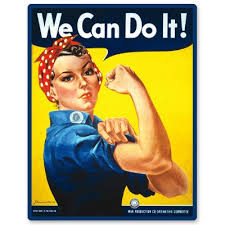
Who is this a image of and what did she a symbol of .....

a)

June the Fighter symbol of women's suffrage

b)

Susan the solider symbol of women working on airplanes

c)

Rosie the Riveter symbol of women working in factories during the war.

34.

What was the purpose of the Double V campaign?

a)

to motivate people to buy war bonds

b)

to allow more women to join the armed forces

c)

to gain to victories one at home by ending segregation in armed forces and two victory over Hitler.

35.

What is another name for the Invasion of Normandy?

a)

Battle of France

b)

Battle of the Bulge

c)

D-Day

d)

V-E Day

36.
In which WWII event did Japan use the strategy of surprise attack to bomb the United States? 
a)
D-Day on the shores of France
b)
Pearl Harbor
c)
Invasion of Poland
d)
V-E Day
37.
What did allied forces do on D-Day, June 6, 1944?
a)
They sent thousands of troops to Berlin.
b)
They stormed the beaches of Normandy, France.
c)
The fought the Nazi troops in Russia.
d)
They took control of many Japanese islands.
38.
Which WWII leader became President after FDR passed, wanted  to save American lives in the Pacific, and decided to drop the  atomic bombs?
a)
Franklin D. Roosevelt
b)
Winston Churchill
c)
Harry S. Truman
d)
Joseph Stalin
39.

What was the Lend/Lease Act

a)

The U.S. would be able to lend/lease arms to any country considered “vital to the defense of the US."

b)

The U.S. would be able to defend the U.S. from Germany

c)

The U.S. would be able to lend supplies to the Axis powers.

d)

The U.S would be able to lend/lease arms to any country considered and enemy of the U.S.

40.
Prior to United States entry into World War II, Congress passed the Cash-and-Carry Act of 1939 and the Lend-Lease Act of 1941. These foreign policy actions showed that the United States
a)
gave equal support to both the Allied and Axis Powers
b)
attempted to contain the spread of communism
c)
became increasingly drawn into the war in Europe
41.

The Supreme Court case Korematsu v. U.S. ruled that military necessity justified the internment of __________________ in the United States.

a)

German-Americans

b)

African-Americans

c)

Japanese-Americans

d)

Italian-Americans

42.
This man threatened FDR that he and thousands more would march on DC if African-Americans continued to face employment discrimination...
a)
A. Philip Randolph
b)
Martin Luther King Jr. 
c)
Marcus Garvey
d)
W.E.B Du Bois
43.
The social impact of the Red Scare was characterized by
a)
Yellow Journalism
b)
Spread of Communism
c)
Stock Market Crash
d)
Anti-Immigrant Sentiment
44.

What did quotas do for immigration?

a)

sent back all unmarried males

b)

allowed everyone into the US

c)

limited who could come into the US

d)

allowed people in who had a college degree

45.

What is Nativism

a)

hatred for/discrimination against Native Americans

b)

sense of extreme pride for your country

c)

support of farmers

d)

hatred for/discrimination against immigrants
46.
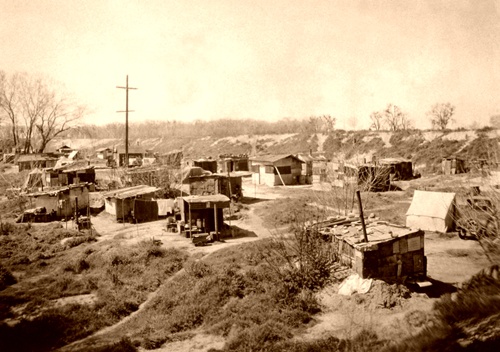
People who could no longer afford their homes were forced to live in cardboard shacks that they built in public parks. What were these shacks called?
a)
Shantyshacks
b)
Town Homes
c)
Tenement Housing
d)
Hoovervilles
47.
What were the villages full of shacks located in cities filled with unemployed Americans called?
a)
Hoovervilles
b)
Okies
c)
Bonus Army Bases
d)
Rooseveltowns
48.
The fear of communism taking over the US during the 1920's was called the
a)
Red Menace
b)
Bolshevik Revolution
c)
Red Scare
d)
Palmer Revolt
49.
Which law began limiting the flow if immigrants when it was passed in 1921?
a)
National Origins Act
b)
Emergency Quota Act
c)
Dawes Act
d)
Teapot Dome Act
50.
How did Hoovervilles get their name?
a)
President Franklin Roosevelt named them after his dog, Hoover.
b)
Hoovervilles were named after President Hoover.