
Font size
 Worksheets
Science 5 chapters 9 and 10
Total questions: 80
Worksheet time: 1hrs 20mins
When the sun gets higher in the sky, shadows get ______.
longer
gone
shorter
darker
When the sun gets lower in the sky, shadows get______.
longer
gone
shorter
darker
Shadows are shortest around______.
morning and evening
noon
night
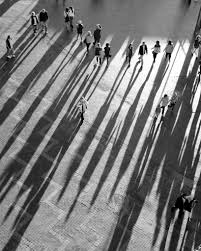
When was this picture most likely taken?
(Hint: think about the shadow's length)
morning or evening
night
noon
afternoon
What do shadows on Earth help show?
Earth's rotation
Earth's revolution
Earth's equator
Earth's axis
When an object blocks the path of light, what is formed?
A problem
A fog
A reflection
A shadow
When an object moves closer to a light source, its shadow...
Gets smaller
Gets bigger
Changes shape
Stays the same size
When the Sun is behind you, your shadow is ...
behind you
in front of you
at the side of you
not there
Which object allows you to see your reflection?
rock
mirror
paper
12.Translucent is?
When light bounces off an object
Material that only allows a little light to pass through
Our main source of light
Opaque is?
Material that allows light to pass through
Light made by nature
Material that allows no light to pass through
Transparent is?
A material that allows light to pass through
The colors of the rainbow
Light made by man
Why does your shadow change during the day?
The sun is moving.
The directions (N, S, E, W) change throughout the day.
The sun's position in the sky changes.
The moon rises.

You can tell where the sun is by looking at a shadow because the sun is always on the __________ side of the object.
same
opposite
right
left

Which picture shows the shadow of a pole at noon?


Where will the tree's shadow be?
A
B
C

Where will the tree's shadow be?
A
B
C

Which position of the sun will make the longest shadow?
A
B
C
What changes the length of a shadow?
the size of the sun
the angle of the sun
the heat of the sun
the color of the sun
The unit of light intensity.
Meter
lamp
lux
volt
Light always travels in a .........................line.
straight
curved
elliptical
none
The intensity of the light can be measured using a............................
intensity
volt meter
stop watch
light meter
1.People told the time by _____________ before the invention of clocks.
Candle power
Sundials
Shadow puppet
Silhouette
2. Light intensity used to be measured according to _____________
Shadow stick
Candle power
Shadow puppet
Silhouette
4. _________ is a solid image of a person or a scene, like a shadow.
Etienne
Silhouette
Transparent
Translucent
Fireworks are .....
an artificial light source
a natural light source
non-luminous
An object that produces light is ....
luminous
non luminous
artificial
A lightbulb is .....
an artificial light source
a natural light source
non-luminous
Burning your feet on the hot sand in the summer is an example of...
Radiation
Convection
Conduction
Less dense warm air rises and more dense cool air sinks in this kind of heat transfer...
Radiation
Conducation
Convection
Most pots and pans are metal or glass because...
These materials are conductors that speed up heat transfer.
These materials expand and contract a lot when heated and cooled.
These materials are insulators that slow down heat transfer.
These materials have very low mass so they can hold a lot of thermal energy.
What happens to particles as you add thermal energy?
Molecules speed up and contract, causing the material to expand.
Molecules break apart and the atoms spread out.
Molecules speed up and spread out, causing the material to expand.
Molecules slow down and begin to contract.
The sun's rays heating the earth is an example of...
radiation
convection
conduction
Touching a hot pot and burning your hand is an example of what kind of heat transfer?
Radiation
Conduction
Convection
Boiling water is an example of what kind of heat transfer?
Radiation
Conduction
Convection
Heat always travels...
alone
by air
with a partner
from hot to cold
Heat energy is also known as
Thermal Energy
Kinetic Energy
Potential Energy
When particles are heated, they
expand
contract
conduct
insulate
Equilibrium is...
When two substances cool
When two substances reach the same temperature
When two substances heat up
When two substances freeze

What reduces the flow of heat?
ice cubes
conductors
insulators

When you walk on the beach and the sand burns your feet, this is what kind of thermal energy transfer?
convection
radiation
conduction
Convection is when ...
heat is transferred by waves
heat is transferred by warm water rising and cold water sinking
heat is transferred by direct contact from a warmer object to a cooler object

When the sun's rays warm your skin, this is what type of thermal heat transfer?
radiation
conduction
convection
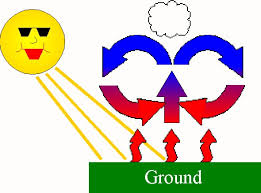

With liquids and gases convection means...
hot falls, cold rises
cold falls, hot rises
hot and cold are mixed
cold goes out hot comes in

Which object losses heat?
object A losses heat
object B losses heat
Which object gains heat?
object A gains heat
object B gains heat

Which object losses heat?
object P losses heat
object Q losses heat

Which object gains heat?
object A gains heat
object B gains heat

What process occurs?

What process is occurring?

What process is occurring?


What process is occuring

You put your hand on a metal rod (like the leg of your chair). Which has the higher energy?
Rod
Hand

How does the heat energy move in this situation?
From the cool hand to the warm rod.
From the warm rod to the cool hand.
From the cool rod to the warm hand.
From the warm hand to the cool rod.

How does the heat energy move in this situation?
From the cold cat to the warm blanket.
From the warm cat to the cold blanket.
From the cold blanket to the warm cat.
From the warm blanket to the cold cat.

How does the energy move in this situation?
From the pan, to the ice, to the air.
From the air, to the ice, to the pan, to the burner.
From the burner, to the ice, to the water, to the air.
From the burner, to the pan, to the ice, to the air.

How does the heat energy move in this situation?
From the hot marshmallow to the cold fire.
From the hot fire to the cold marshmallow.
From the cold marshmallow to the hot fire.
From the cold fire to the hot marshmallow.

How does the heat energy move in this situation?
From the cold rag to the warm forehead.
From the cold forehead to the warm rag.
From the warm rag to the cold forehead.
From the warm forehead to the cold rag.
In order to change the states of matter, what is needed?
Luck
Heat
Electricity
Molecules

