
 Worksheets
4.1 an 4.2
Total questions: 32
Worksheet time: 2hrs 36mins

A person pushes against a wall with 15N of force. The wall doesn't move. The wall exerts how much force on the student?
15N
greater than 15N
less than 15N
0N
What is a unit equivalent to in terms of fundamental units
G . m/s
G . m/s2
KG . m/s
KG . m/s2
the tendency of an object to resist a change in its motion
acceleration
inertia
mass
frame of reference
Inertia is the tendency of an object to resist a change in its ___________.
temperature
shape
size
motion
The greater the mass , the greater the inertia, the less the ...
friction
gravity
acceleration
weight
A contact force is from
objects physically touching
far apart objects
not touching object
always a pull
A non-contact force is between
two objects that aren't touching
two objects that are touching
the ground and wheels
you and me

The three examples pictured are of
Non-contact Forces
Contact Forces
______________ is a force that always acts in the direction opposite of motion.
applied
friction
gravity
normal
Applied force is an example of a _________________ force.
contact
non-contact
balanced
unbalanced
What is the net force on an object?
the sum of all the forces on an object
the negative forces on an object
the positive forces on an object
the balanced forces on an object

Why does an 18-wheeler truck have more inertia than a bicycle?
it has more mass
it has more volume
it is not as aerodynamic
It has more space
When two equal forces act in opposite directions on an object, they are called ______________________.
frictional forces
balanced forces
centripetal force
gravitational force
All forces act on an object from
Where the force is applied
The centre of an object
The edge of an object
It's not affected
Who was the first scientist that was followed by Newton
Mandeleve
Newton was the first one
Gadeo
Galileo


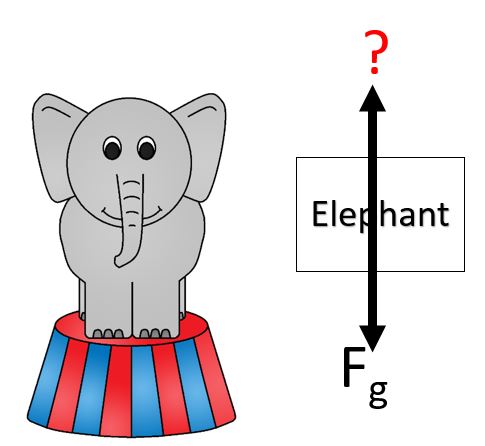
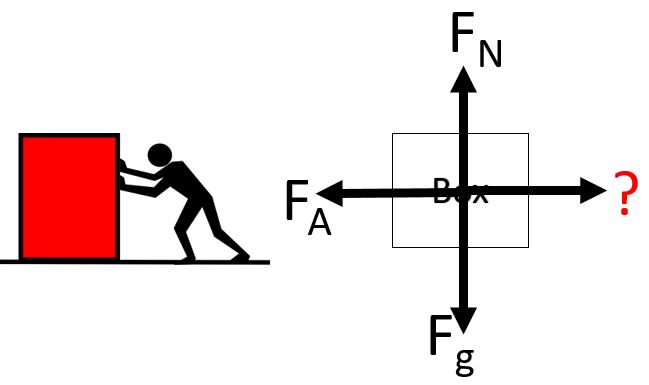
A force diagram is a diagram that shows speed vector as arrows
True
False
Free body diagrams show the forces affecting the object only
True
False
What is equilibrium ?
the tendency of an object not to accelerate.
the amount of matter in an object.
a state where an object is at rest and moving.
a state where an object is at rest.
Constant velocity is an example of:
unbalanced forces
equilibrium
high acceleration
If an object is truly in a state of equilibrium then its net force must be equal to 0 net force
True
False

