
 Worksheets
Review: Inertia, Gravity, Rotation/Revolution Review
Total questions: 57
Worksheet time: 2hrs 54mins
Suppose that an astronaut throws a baseball in outer space at a location far from significant influences of gravity and air resistance. One would expect that the baseball would ____.
eventually stop since all objects ultimately "lose their steam"
eventually stop as its inertia slowly becomes used up
continue in motion with the same speed and direction
either a, b, or c -- depending on whether the astronaut continues to push it
The law of inertia (Newton's first law) applies _____.
to moving objects only
only to objects that are not moving
to both moving and nonmoving objects
Inertia refers to _____
the tendency of moving objects to remain in motion
the force which keeps moving objects in motion with a constant velocity
the force that keeps stationary objects at rest
the tendency of stationary objects to remain at rest
A skateboard rolls down a hill, reaches the level surface and eventually comes to a stop. The fact that the skateboard ultimately stops is best explained by ____.
an unbalanced force would be required to keep the sled moving forward at constant speed
the presence of an unbalanced force (e.g., friction) can cause a moving object to stop
the presence of inertia causes it to stop
the natural tendency of any object is to ultimately stop
Inertia depends on ______
Velocity
Speed
Distance
Mass
All objects have inertia
True
False
An astronaut kicks a soccer ball in outer space at a location far from significant influences of gravity and air resistance. The soccer ball will _________.
continue in motion with the same speed and direction
eventually stop as its inertia slowly becomes used up
eventually stop since all objects ultimately "lose their steam"
either a, b, or c -- depending on whether the astronaut continues to kick it
More mass = More inertia
True
False
the tendency of an object to resist a change in its motion
acceleration
inertia
mass
frame of reference
Inertia is the tendency of an object to resist a change in its ___________.
temperature
shape
size
motion
Inertia is a force
True
False
Inertia is Newton's _______ Law of Motion.
First
Second
Third
What is the relationship between heavy objects and inertia?
Only heavy objects have inertia.
Heavy objects have more inertia.
Heavy objects have less inertia.
Heavy objects have no inertia.
Inertia tells us that we need ____________ to get an object moving or to make it stop.
a force
gravity
friction
strength

Diagram 3 shows a cat chasing a rat. The inertia of the cat is bigger than the rat because.
The size of the cat is bigger than the rat
The length of the cat is more than the rat
The mass of the cat is bigger than the rat

While you’re ice-skating with your friends, you push off from one end of the rink and slide forward. Based on Newton’s first law of motion, what is true?
You will lose your balance and fall over before you reach the middle of the ice rink.
You will continue to slide across the ice until a force makes you stop or change direction.
The force of gravity will make you keep your velocity until your friend makes you stop.
The size of your ice skates will determine how quickly or slowly you travel across the ice.
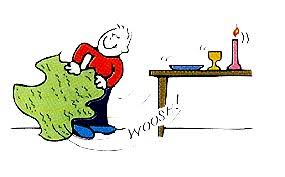
Which explains why the tablecloth trick works?
The dishes are stuck in place due to air resistance.
The tablecloth is an ilusion.
The dishes have inertia, and therefore stay on the table.
magic
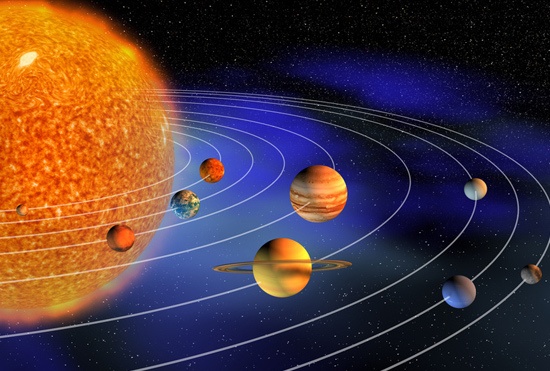
Why do all of the planets orbit the sun rather than Earth?
the sun has more mass
the sun is a star
the Earth is heavier
the sun is in the middle of the milky way
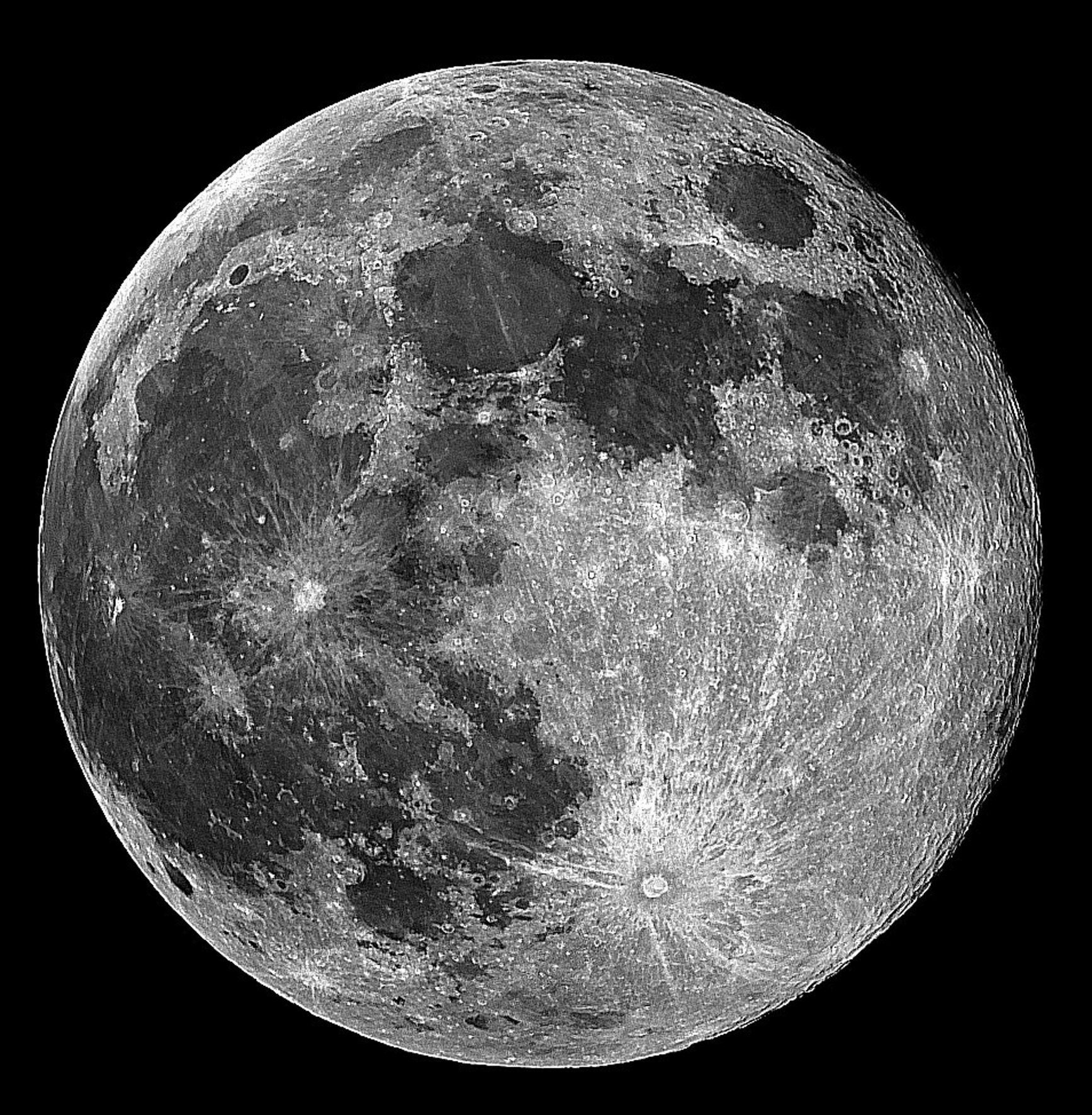
Gravity is a ______________ between objects and depends on mass and distance.
force
mass
release
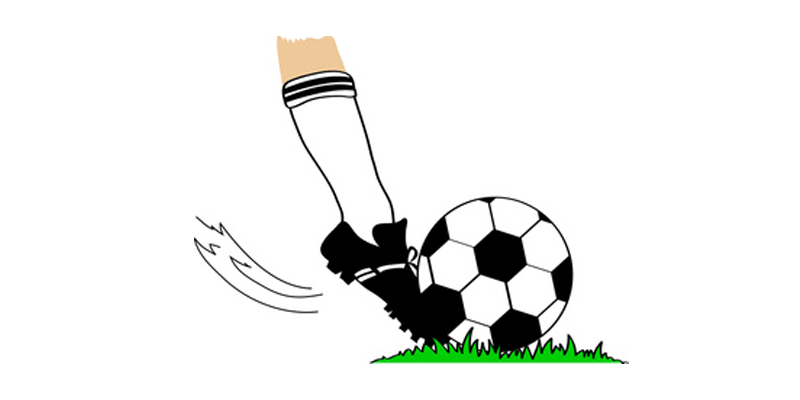
as the mass of an object increases, the pull of gravity...
Increases
Decreases
Stays the same
Why do we have a stronger gravitational attraction with Earth than the Sun?
the sun has a larger mass
the Earth has a larger mass
we are closer to center of sun
we are closer to center of Earth
When placed at equal distances apart, the greatest gravitational attraction will be between two
skateboards
bowling balls
school buses
A student drops a bowling ball and an apple from a third-story window. Both objects hit the ground at the same time. From the experiment, the student should conclude that
the apple weighs more than the bowling ball
more air friction is acting on the apple than on the bowling ball
gravity pulls on both objects, causing them to fall at the same time.
Gravity on moon is less than the gravity on earth because
a. moon's mass is less
b. moon's mass is more
c. moon's mass is equal to Earth
d. moon has no mass
A push or pull that can change the motion of an object,
Gravity
Force
Attractive
Mass
An astronaut way out in space is considered to be "weightless" because...
His mass is so small relative to earth that gravity doesn't affect him.
Gravitational force decreases greatly over long distances
Gravitational force pushes objects away from each other at long distances.
Objects far away from earth have less mass.
The sun APPEARS to move across the sky, during the day. Which of the following causes shadows to change length throughout the day?
earth's rotation
earth's revolution
sun's revolution
earth's orbit
Earth rotates on its axis once approximately every-
month
24 hours
year
12 hours
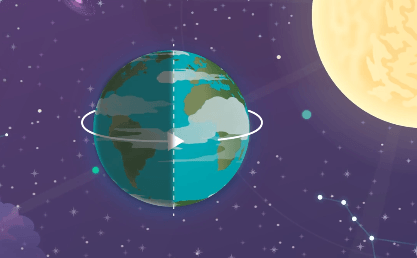

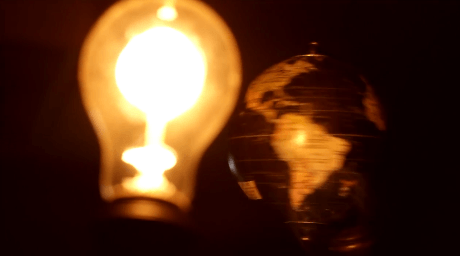
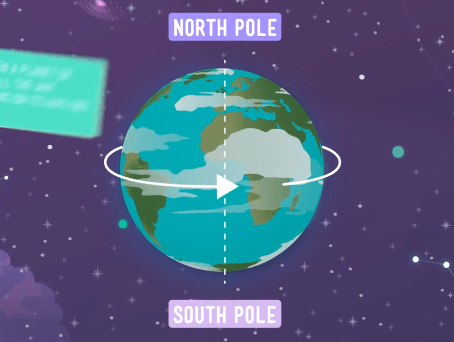
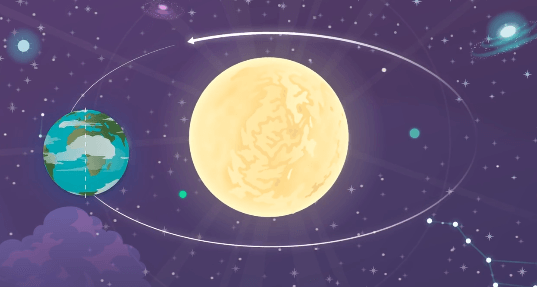


Earth is tilted at an angle of 23 1/2 degrees on its axis
true
false
What is an example of revolution?
When the Earth spins once on its axi
When the Earth goes around the sun
When it changes from day to night
When the sun moves closer tot he Earth
During the summer our hemisphere is...
closest to the sun
tilted toward the sun
farthest from the sun
tilted away from the sun
During the winter our hemisphere is...
closest to the sun
tilted toward the sun
farthest from the sun
tilted away from the sun

