
 Worksheets
Work and Energy Review
Total questions: 44
Worksheet time: 4hrs 46mins
Which of the following is NOT a kind of energy that makes up mechanical energy in a system?
gravitational potential energy
kinetic energy
elastic potential energy
thermal energy
Which of the following is FALSE according to the law of conservation of energy?
total mechanical energy in a system is conserved
the amount of energy in a system always changes
if you add up the kinetic and potential energies for a system at any given time, the total energy will always be the same value
Energy in a system can be transformed into different types of energy but it can never be destroyed
Which of the following is INCORRECTLY matches the type of energy with its description?
Kinetic Energy - energy of motion
Gravitational Potential - energy due to position
Elastic Potential - energy stored in a spring
Mechanical Energy - energy in the form of heat
What is work in physics?
force times acceleration
when a force is applied perpendicular to the displacement of an object
the transfer of energy into or out of a system
when a force causes an object to maintain its energy
Units of force are...
Newtons
Grams
Joules
Meters
Units of work are...
Newtons
Grams
Joules
Meters
If you push a cart with a force of 60 N for 2 m... how much work have you done?
120 J
30 J
120 N
30 N

Each of the boxes shown is pulled for 10 m across a level, frictionless floor by the force given. Which box experiences the greatest change in its kinetic energy?
A
B
C
D
E

Rank in order, from largest to smallest, the gravitational potential energies of the balls.
1 > 2 = 4 > 3
1 > 2 > 3 > 4
3 > 2 = 4 > 1
3 > 2 > 4 > 1

Starting from rest, a marble first rolls down a steeper hill, then down a less steep hill of the same height. Ignoring friction, for which is it going faster at the bottom?
Faster at the bottom of the steeper hill
Faster at the bottom of the less steep hill
Same speed at the bottom of both hills
Can’t say without knowing the mass of the marble
You are traveling along a freeway at 65 mi/h; your car has kinetic energy. You suddenly skid to a stop because of congested traffic. What happened to the kinetic energy your car just had?
It is all in internal energy in the road
It is all in internal energy in the tires
Some of it has transformed to internal energy for the tires and the road, and some of it transferred away by sound energy and thermal energy into the air.
It was destroyed
A major league pitcher can throw a baseball with a kinetic energy of 150 J. How much work must the pitcher do to the ball to give it that much KE?
150 J
0
Can’t tell without knowing the mass of the ball
A rock has 10 J of potential energy on top of a roof. If it is dropped and lands with only 8 joules of kinetic energy, how much work did air resistance do on the rock?
-18 J
-10 J
-8 J
-2 J
A basketball that is dropped bounces back up to its original height. Pick the correct energy transformation from the point when it was dropped until it returns to the original height.
KE --> PE --> Elastic
PE --> KE --> Elastic --> KE --> PE
KE --> PE --> Elastic --> PE --> KE
Elastic --> PE --> KE --> Elastic
4 m.
Where is the kinetic energy of pendulum at its highest?
at the top of the swing
at the bottom of the swing
at 1/4 of the swing
at 3/4 of the swing

At which point of this roller coaster is the energy 1/2 kinetic and 1/2 potential?
A
B
C
D

At which point in the picture must the cart have the most MECHANICAL energy?
Point 1
Point 2
Point 3
They would all be the same
Work can also be shown as
W = ΔKEHow do you find ΔKE ?
KEi − KEf
KEf − KEi
KE + KPOP = BbyMtl
42?
When negative work (by friction or external forces) is done on a system, the total mechanical energy will ______.
Increase
Decrease
Remain the same

What situation describes the initial (i) and final (f) state shown by the energy bar graph.
A phone falls from a table (i) to the floor (f)
A ball is thrown straight up (i) into the air (f)
A car driving on a flat road (i) accelerates (f)

What situation describes the initial (i) and final (f) state shown by the energy bar graph.
A student running to a downhill slip-n-slide (i) slows down as they approach the bottom(f)
A student running to a downhill slip-n-slide (i) speed up as they approach the bottom (f)
A student at rest (i) is dragged by their friend down a slip-n-slide
A student running to a horizontal slip-n-slide (i) has fun slidding to a stop (f)
When will a spring have maximum potential energy?
At the equilibrium position
When the displacement is at a maximum (either compression or elongation)
When the spring is stretched to its maximum only
When the spring is compressed to its maximum only
Which of the following would have a large spring constant?
A spring that is stretched to its maximum displacement
A spring that is at its equilibrium position
A spring that is very thin and stretchy
A spring that is very stiff and strong

What is the spring constant for the system shown above?
0.1 N
10 N
200 N/m
50 N/m

Which of the following looks like the correct energy bar chart for position E?


Which of the following energy bar charts best describes the situation above?


Which of the following energy bar charts best describes the situation above?


If a pendulum has 30 J of kinetic energy at point 3, how much potential energy will it have a point 3?
0 J
10 J
20 J
30 J
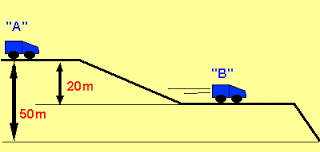
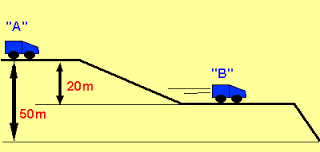
In diagram 2, if the mass of the car is 600 kg, what is the change in potential energy from point A to point B?
411,600 J
294,000
176,400 J
117,600 J
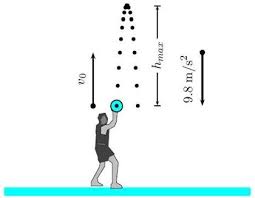
If a ball is thrown with a max height of 10 m and a mass of 0.5 kg, what will be it's KE after it has fallen halfway to a height of 5m?
(HINT: Find PE first. )
g = 9.8 m/s2
12.5 J
25 J
50 J
6.25 J
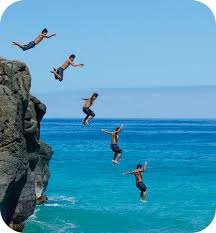
A cliff diver with a mass of 125 kg jumps off a 50m high cliff, how fast will he be traveling just before he hits the water? (His height at this point is 0m)
(HINT: Find PE first.) KE = 1/2mv2
g = 9.8 m/s2
61,250 m/s
980 m/s
31.3 m/s
247.5 m/s
Which object has elastic potential energy?
a hanging leaf
a burning coal
a rolling ball
a stretched bow

Calculate the force that changes the spring length by 0.25m, when the spring's spring constant is 350Nm-1.
1400 N
14000 N
7.14 x 10⁻⁴ N
87.5 N

Calculate the elastic potential energy Leo puts into the trampoline mat when he stretches the mat (k= 473 Nm-1) by 0.35 m.
2.887 J
28.97 J
82.775 J
12.76. J
According to the Law of Conservation of Energy, when one form of energy is transformed into another, __________ energy is lost in the process
no
some
all
An object weighing 20 N moves horizontally toward the right a distance of 5.0 m. What is the work done on the object by the force of gravity?
The work done on the object by the force of gravity is 50 J.
The work done on the object by the force of gravity is zero joules.
The work done on the object by the force of gravity is 4.0 J.
The work done on the object by the force of gravity is 0.25 J.
The work done on the object by the force of gravity is 100 J.
A 10.0 kg box is accelerated from 2.0 m/s to 4.0 m/s. What will be the work done?
50 J
60 J
20 J
45 J
A kid with a mass of 50 kg starts from rest and then travels down a 5 m tall slide. If friction does 500 J of work on the kid, how much kinetic energy will they have at the bottom of the slide?
2000 J
3000 J
2500 J
1500 J
An arrow with a mass of 0.40 kg is fired from a bow with an initial speed of 20 m/s. If it's final speed just before reaching the target is 15 m/s, then how much work was done by air resistance?
35 J
80 J
45 J
125 J

