
Font size
 Worksheets
Unit 5 Study Guide
Total questions: 50
Worksheet time: 13hrs 30mins
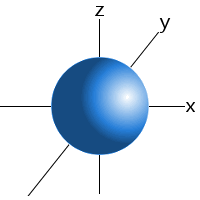
Which shape represents the shape of an "s" orbital?
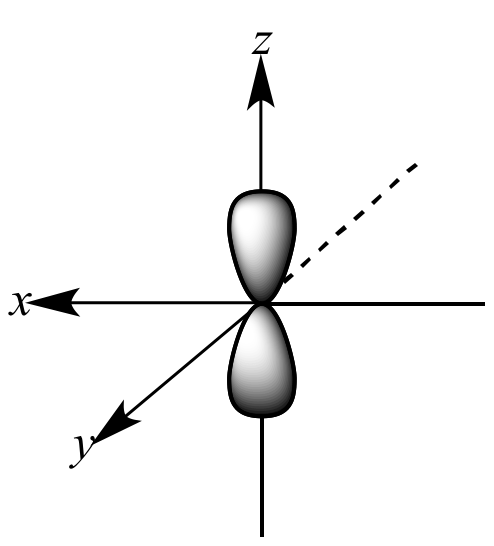

Which shape represents the shape of an "p" orbital?
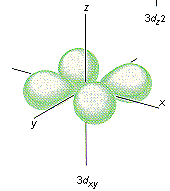
Which shape represents the shape of an "d" orbital?
Which of the following is not paired with the correct description?
S subshell: 1 orbital: 2 electrons
P subshell: 3 orbitals: 6 electrons
D subshell: 5 orbitals: 12 electrons
F subshell: 7 orbitals: 14 electrons

Which element is depicted from this orbital diagram?
Fluorine
Neon
Chlorine
Argon

What is incorrect about this orbital diagram?
Both arrows in the 2p box should be pointing up
There is nothing incorrect with this diagram
In the 2p box there should only be 1 electron in the first 2p box and one in the 2nd 2p box, both spin-up.
There should only be one electron in the 1s box.
Which is the correct orbital notation for nitrogen (atomic # = 7)


Identify the Electron Configuration for Aluminum (Al)
1s2 2s2 2p6 3s2 3p1
1s2 2s2 2p6 3s2 3p3
1s2 2s2 2p6 3s2 4p1
none of these are correct.

1s22s22p63s23p64s23d10
What is the valence electron configuration for fluorine?
2s22p5
2p5
3s23p6
2s12p6
The principal energy level (n) of Germanium, Ge, is _______.
2
3
4
5
What is the shorthand electron configuration for Sulfur?
[Ar] 3p4
[He] 3s23p4
[Ne] 3s23p4
[Na] 3s23p3

What is the shorthand configuration for Tin?
[Xe]5s24d105p2
[Xe]5s24d105p2
[Kr]5p2
[Kr]5s24d105p2
What is the full electron configuration for a magnesium ion, Mg2+
1s22s22p63s2
1s22s22p63s23p64s2
1s22s22p6
1s22s22p63s23p2
N3- is isoelectronic with what noble gas?
Kr
Ar
He
Ne
Out of the atoms K, Na, Si, and Ge, which statement is paired incorrectly?
Largest atomic radius: K
Highest electronegativity: Ge
Highest ionization energy: Si
Most metallic character: K
As you move across the periodic table from left to right, the atomic radius decreases. This is because -
the number of protons increases, so attraction to electrons increases, pulling them in closer to the nucleus.
the number of energy levels increases
the number of electrons increases
the atomic mass increases
The atom with the largest atomic radius in Period 4 (row 4) is -
K
Kr
Fe
Se
The element with the largest ionization energy in Period 5 is -
Rb
Ag
I
Xe

The chart shows the relationship between increasing atomic number and first ionization energy. Which family is represented by letter A?
Alkali Metals
Alkaline Earth Metals
Halogens
Noble Gases
Electronegativity __________ from left to right within a period and __________ from top to bottom within a group.
decreases, increases
increases, increases
increases, decreases
stays the same, increases
Atoms that have a high electronegativity, _______________.
give up their electrons more easily.
hold on to their electrons more tightly.
have more electron shells.
are typically larger atoms
Identify the atom with the same number of shielding electrons as phosphorus.
Nitrogen
Neon
Silicon
Antimony
Which of the following pairs of elements could form a covalent bond?
Li and Br
Na and P
Ca and S
N and C
What is the name for the compound CS2?
Carbon sulfide
Monocarbon disulfide
Carbon sulfate
Carbon disulfide
What is the name of the compound Ni2(CO3)3?
Dinickel tricarbonate
Nickel (III) carbonate
Nickel (II) carbonate
Nickel (I) carbide
What is the name of the compound CaCl2?
Calcium dichloride
Calcium chloride
Calcium (II) chloride
Calcium dichlorate
Check all the compounds that have the correct name paired with the correct formula.
Copper (II) phosphate: Cu3(PO4)2
Boron trifluoride: BF3
Magnesium hydroxide: MgOH
Calcium dibromide: CaBr2
Silver Nitrate: AgNO3
What is the empirical formula of C6H12O3?
C3H4O
C2H4O
CH2O0.5
C12H24O6
A compound consists of 72.2% magnesium and 27.8% nitrogen by mass. What is the empirical formula?
Mg4N3
MgN2
Mg3N2
MgN
A compound has 50% sulfur and 50% oxygen by mass. What is its empirical formula?
SO2
S2O4
SO3
SO4
What is the empirical formula for a compound with 43.6% phosphorus and 56.4% oxygen?
PO2.5
P2O5
P2O4
PO
What is the molecular formula of a compound containing 92.3% Carbon and 7.7% Hydrogen with a molar mass of 78 g/mol?
C6H6
CH
C3H6
C2H4
What is the molecular formula of a compound with a molar mass of 90.2 grams that contains 53.3% carbon, 15.7% hydrogen, and 31.1% nitrogen?
C2H7N
C5H15N2
C4H14N2
CH3N2

What is the correct Lewis structure for NH3?


Which is the correct Lewis structure for carbon dioxide?


Carbonate (CO32-) has how many double bonds?
0
1
2
3
HCl has how many lone pairs?
0
1
2
3

How many electrons are shared in a triple covalent bond?
1
3
4
6

Why is this Lewis Structure incorrect? Select all that appy.
There should be a single bond between H and C.
There should be a triple bond between C and N.
Carbon has too many bonds around it.
Hydrogen needs more electrons.

Why is this Lewis Structure incorrect? Choose all that apply.
There are too many bonds around Si.
There should only be single bonds in this Lewis Structure.
The Structure is missing a triple bond.
Chlorine only has 6 electrons surrounding it.

Which of the following drawings is the correct structure for SO32- ?
A
B
None of these.

Which is the correct structure for H2S?
A
B
C
None of these

