
NEW
Font size
 Worksheets
Skin and Body Membranes Review
Total questions: 60
Worksheet time: 40mins
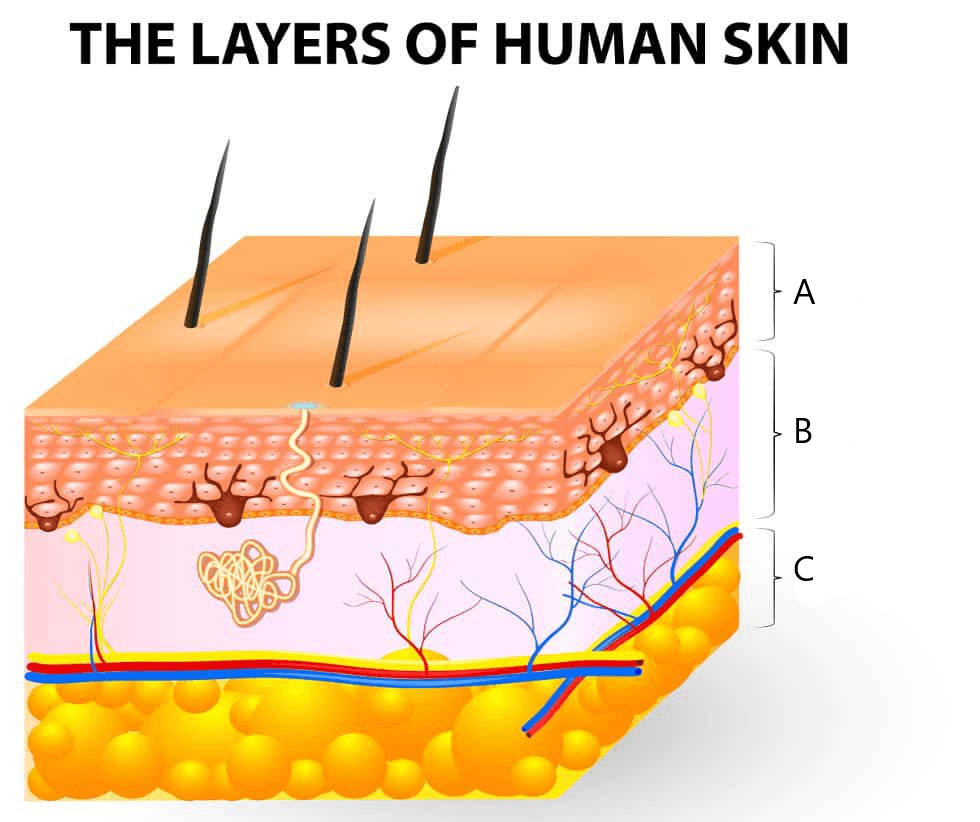
What layer of skin is A?
epidermis
dermis
hypodermis
What layer of skin is B?
epidermis
dermis
hypodermis
What layer of skin is C?
epidermis
dermis
hypodermis
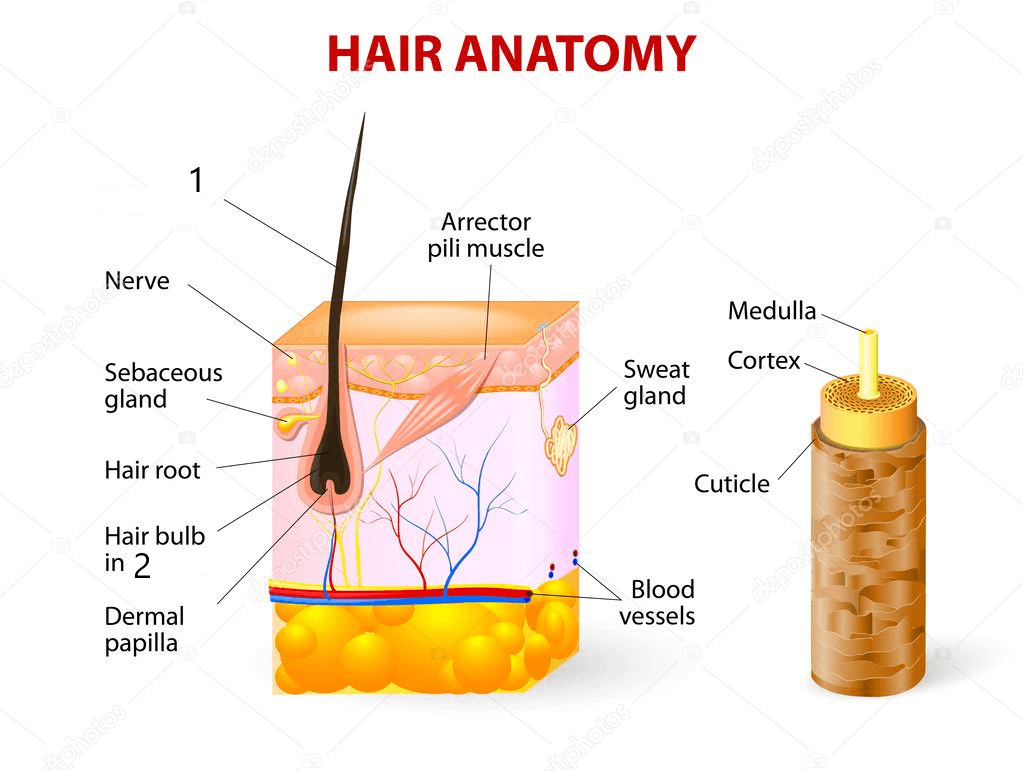
What is #1?
hair shaft
hair follicle
arrector pilli
sebaceous gland
What is #2?
hair shaft
hair follicle
arrector pilli
sebaceous gland
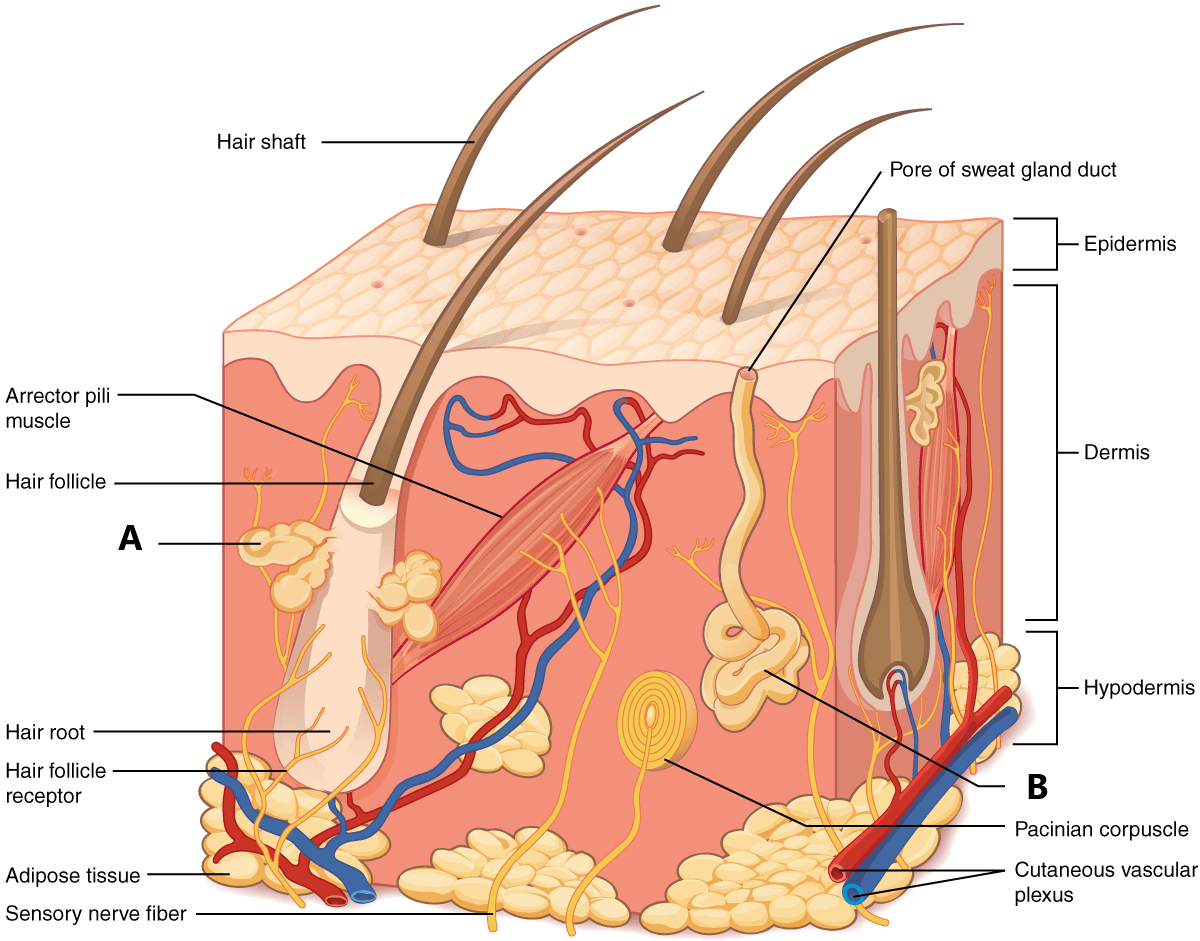
What type of gland is A?
eccrine sweat gland
sebaceous (oil) gland
What type of gland is B?
eccrine sweat gland
sebaceous (oil) gland
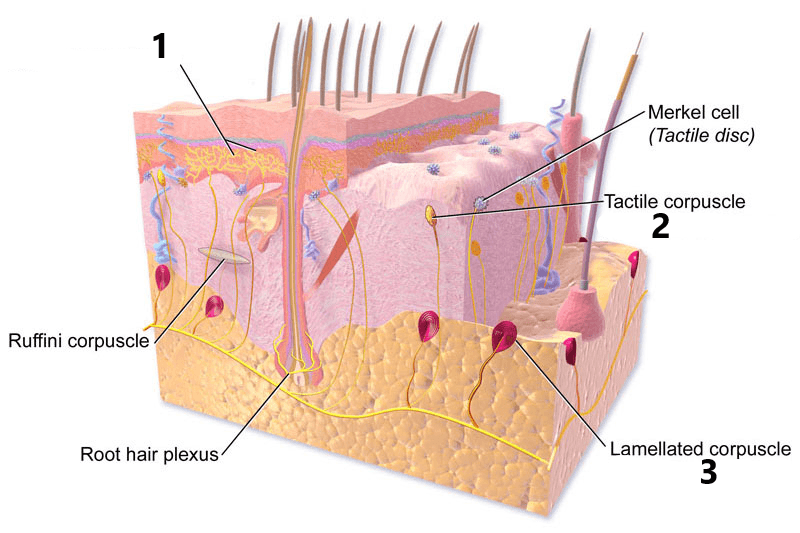
What type of nerve ending is #2? They are abundant in hairless portions of the skin (lips). They detect fine touch; distinguis between two points on the skin.
Meissner's corpuscle
Pacinian corpuscle
free nerve ending
What type of nerve ending is #3? They are common in deeper subcutaneous tissues, tendons, and ligaments. They detect heavy pressure and vibrations.
Meissner's corpuscle
Pacinian corpuscle
free nerve ending
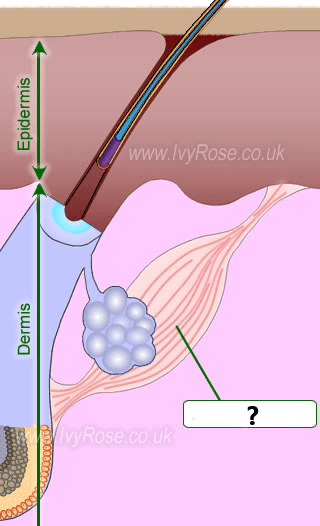
What is the structure in this picture?
arrector pili muscle
hair follicle
hair shaft
sebaceous gland
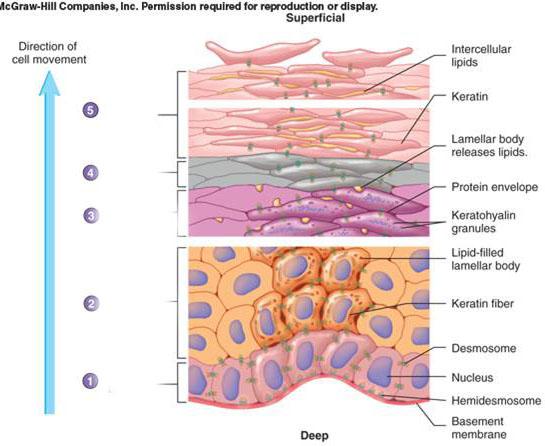
What layer of epidermis is #1?
stratum basale
stratum spinosum
stratum granulosum
stratum lucidum
stratum corneum
What layer of epidermis is #2?
stratum basale
stratum spinosum
stratum granulosum
stratum lucidum
stratum corneum
What layer of epidermis is #3?
stratum basale
stratum spinosum
stratum granulosum
stratum lucidum
stratum corneum
What layer of epidermis is #4?
stratum basale
stratum spinosum
stratum granulosum
stratum lucidum
stratum corneum
What layer of epidermis is #5?
stratum basale
stratum spinosum
stratum granulosum
stratum lucidum
stratum corneum
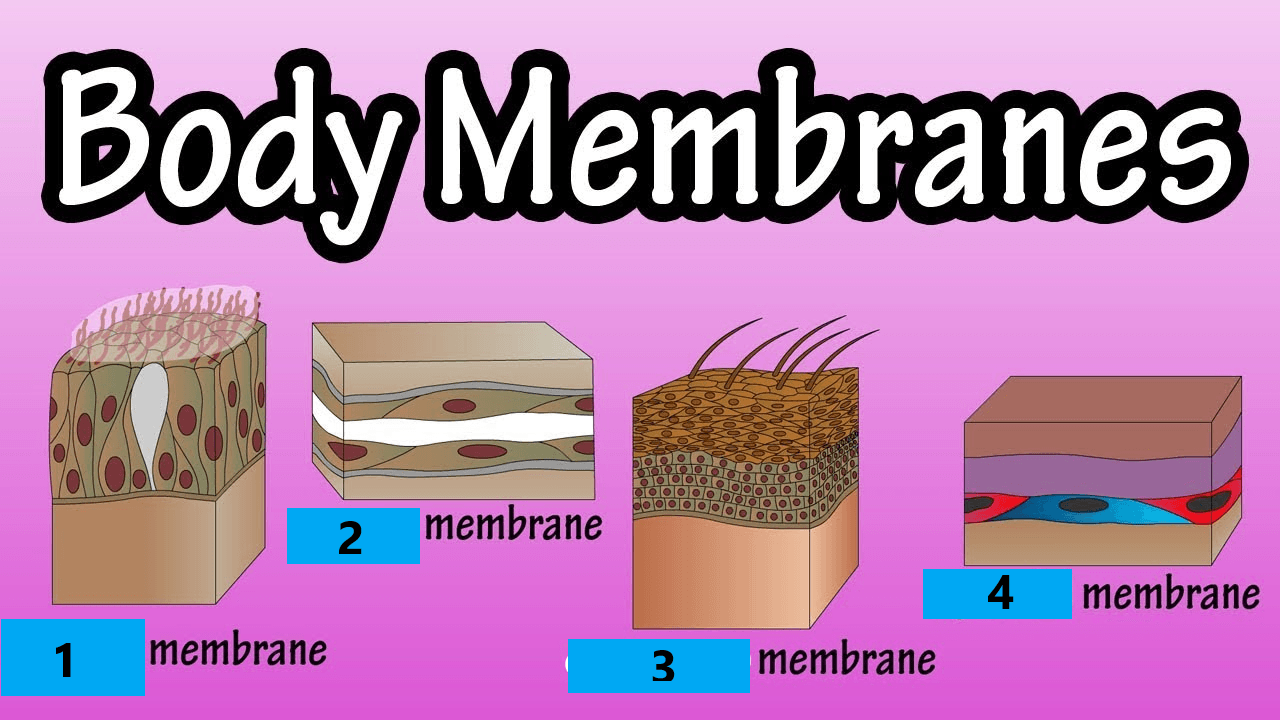
What type of body membrane is #1? They are "wet" or moist membranes. They line all body cavities that open to the exterior body surface like respiratory, digestive, and reproductive organs. They are adapted for absorption and secretion.
mucous membrane
serous membrane
cutaneous membrane
synovial membrane
What type of body membrane is #2? They are composed of surface simple squamous epithelium with underlying areolar CT. They line open body cavities that are open to the exterior of the body. They occur in pairs: parietal and visceral.
mucous membrane
serous membrane
cutaneous membrane
synovial membrane
What type of body membrane is #3? They are dry membranes because they are exposed to air. they are the outermost protective boundary. Have two parts: superficial epidermis and dermis.
mucous membrane
serous membrane
cutaneous membrane
synovial membrane
What type of body membrane is #4? Their function is the lubrication for friction; They are composed of connective tissue only. They line fibrous capsules surrounding joints.
mucous membrane
serous membrane
cutaneous membrane
synovial membrane
encloses the lungs
pleura
pericardium
peritoneum
encloses the heart
pleura
pericardium
peritoneum
encloses the abdominopelvic region
pleura
pericardium
peritoneum
thin, double layered membrane
serous
visceral
parietal
clings to the wall of the cavity, outside layer
serous
visceral
parietal
clings to the organs external surface, inside layer
serous
visceral
parietal
lubricating fluid
serous
visceral
parietal

What is the only connective tissue membrane in the body?
synovial membrane
cartilaginous membrane
dermal membrane
serous membrane

Which body membrane occurs in pairs?
synovial
serous
cutaneous
mucous

What type of epithelial tissue makes up serous membranes?
simple squamous
simple cuboidal
simple columnar
stratified squamous
Which body membrane will you find surrounding the entire body?
Serous
Mucous
Synovial
Cutaneous


What layer of the skin contains sweat glands?
Dermis
Epidermis
Hypodermis
Subcutaneous
What layer of skin produces melanin?
Dermis
Epidermis
Hypodermis
Subcutaneous
Which of the following are protective chemical barriers of the skin?
intact epidermis
keratin
melanin
both melanin and keratin
Which of the following provides a natural sunscreen for skin?
melanin
carotene
hemoglobin
vitamin D
Which of the following is a bluish cast of the skin resulting from inadequate oxygenation of the blood?
melanin
carotene
hemoglobin
cyanosis
When diagnosing melanoma, which of the following does C stand for in ABCD?
color change
cyanosis
cold to the touch
carotene present

On a scale of 1-10, 1 meaning 'don't worry about it' and 10 being 'go see a dermatologist immediately', how would you classify this image?
1
3
7
10
Which is the most common skin cancer?
Basal Cell Carcinoma
Squamous Cell Carcinoma
Melanoma
When diagnosing melanoma, which of the following does B stand for in ABCDE?
bigger than dime
Border
blackish in color
True or False: 1 in 5 Americans will develop skin cancer in their lifetime
True
False

