
 Worksheets
Solubility PRACTICE quiz
Total questions: 55
Worksheet time: 1hrs 23mins


Which substance's solubility changes the most from 0 degrees Celsius to 100 degrees Celsius?
NH3
NaCl
KI
KNO3

Which substance is most soluble at 20 degrees Celsius?
NH3
HCl
NaNO3
KI

At what temperature (in degrees Celsius) does KNO3 have a solubility of 85 g/100 g H2O?
20
30
40
50

You have a solution of NaNO3 containing 100 grams at 75 degrees Celsius. Your solution is...
saturated
unsaturated
supersaturated
super duper saturated :)
The substance(s) being dissolved is called the ____________
solution
solvent
solute
solvation
You are making Kool-aid with sugar, Kool-aid powder, and water. What is the solvent?
water
kool-aid powder
sugar
kool-aid powder and sugar
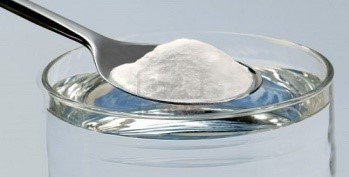
Based on the picture, which of the following will be the solute when the substances are mixed?
The water in the glass
The glass that holds the solution
The solution containing both powder and water
The powder on the spoon

Water is the most common ____.
solute
solvent
solution
mixture
Solutes dissolve quicker in _________ water.
cold
warm
Solutes dissolve quicker if you stir them.
true
false
What does "like dissolves like" mean?
polar solvents dissolve in polar solutes
polar solutes dissolve in polar solvents
non-polar solvents dissolve in polar solutes
non-polar solutes dissolve in polar solvents
Gases are more soluble at ______temperatures and _____pressures.
high, low
low , high
high, high
low, low
If water is a polar molecule, then which of the following must be nonpolar
sugar
salt
oil
vinegar
Since "like dissolves like", water and oil will not mix because
both are polar
both are nonpolar
oil is polar and water is nonpolar
oil is nonpolar and water is polar
Molarity concentration is abbreviated as _________
MM.
m.
Mol.
M.
Molarity is defined as _________ divided by ___________
mol, liters
mol, kg
kg, liters
liters, kg

If a solute dissolves in water than it is_____.
soluble
insoluble
solute
solvent
Label the diagram with the appropriate word to describe changing the state of matter.
condensation
imitation
deposition
freezing
melting
evaporation
sublimation

The ___ does the dissolving, while the ____ gets dissolved.
solvent, solute
solute, solvent
solute, solution
solution, solute
What is the molarity of a 0.5L sample of a solution that contains 60.0 g of sodium hydroxide (NaOH)
0.8 M
1.5M
3.0M
6.0M
Which of the following is the correct formula for calculating molarity?
moles/liters of solution
moles/kg of solvent
# particles/Avogadro's #
theoretical yield/actual yield
What is the molarity of a solution in which 3.0 moles of NaCl is dissolved in 1.5 L of water
2.0 M
0.22 m
135 m
2.0m
What is the molarity of a solution made by adding 1.565 moles of Pb(NO3 )2 to enough water to make 500. mL of soution?
300. M
31.3 M
3.13 M
1.56 M
Why doesn't oil dissolve in water?
Oil is polar and water is nonpolar and are not attracted to each other.
Both are polar substances and "likes" repel.
Oil is nonpolar and water is polar and are therefore not attracted to each other.
Both are nonpolar substances and only "opposites" attract.
What is the concentration of O2(g), in parts per million, in a solution that contains 0.008 gram of O2(g) dissolved in 1000. grams of H2O(l)?
0.8 ppm
80 ppm
8 ppm
800 ppm
A 2400.-gram sample of an aqueous solution contains 0.012 gram of NH3. What is the concentration of NH3 in the solution, expressed as parts per million?
5.0 ppm
15 ppm
20. ppm
50. ppm
The chemist determined that a 175-gram sample of the
town’s water contains 0.000 250 gram of fluoride ions.
How many parts per million of fluoride ions are present in the analyzed sample?
IDK
1.43
Molarity = (a) of (b) / (c) of (d)
determine the molarity of 10.5kg of Na2SO4 in 19.95L of solution.

What volume is needed to make a 2.45 M solution of KCl using 0.50 mol of KCl?
4.9 L
0.20 L
1.2 L

Organize these sweet tea concentrations from least sweet (1) to most sweet (2)
.02 M
.50 M
1.0 M
1.5 M
2.0 M
At the same concentration, which salt will have the largest effect on the freezing point?
C2H4O2
H2S
LiBr
CaF2

Which one of the following diagrams has the highest boiling point?
1
2
3
4
5
Which solution below has the highest boiling point?
NaCl 1 M
CaCl2 1 M
C6H12O6 1 M
AlCl3 1 M
The freezing point of water is...
100oC
0oC
-10oC
150oC

