
Font size
 Worksheets
Body movements - Grade 6 ANNUAL EXAMS
Total questions: 40
Worksheet time: 20mins
Which of these form skeleton?
Bones & cartilage
Skull & ribs
Legs & hands
Shoulder & hipbones
The only movable bone in the skull is
the upper jaw bone
femur
humerus
mandible
Which of the following are the characteristics of the birds?
Forelimbs modified as wings
Hollow bones
Strong muscles
All the above
Muscular foot is a locomotary organ in
Snakes
Cockroach
Earthworms
Snails
Which of the following organs are protected by the rib cage
Stomach
Heart
Lungs
Both heart and lungs
The forward and backward movement of our head is possible because of presence of
ball and socket joint where our neck joins the head
pivotal joint where our neck joins the head
hinge joint where our neck joins the head
None of these
How many muscles are needed to move a bone ?
2
4
3
7
Name the muscles used to move the arm
biceps ,femur
triceps , liver
biceps , triceps
femur , liver
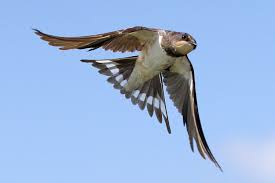
Which part of birds are modified as wings?
Hindlimbs
Shoulder
Forelimbs
Beak
3.Muscles are attached to bones by a tissue called_____
cartilage
tendon
ligaments
joints
Which of the following statements best describe how the arm bends at the elbow?
Biceps contract to bend arm at the elbow while the triceps relax.
Biceps contract to bend arm at the elbow
Triceps contract to bend arm at the elbow
Triceps contract to bend arm at the elbow while the biceps relax.
Streamlined body is found in
Birds only
Birds and fish
Fish only
Frog
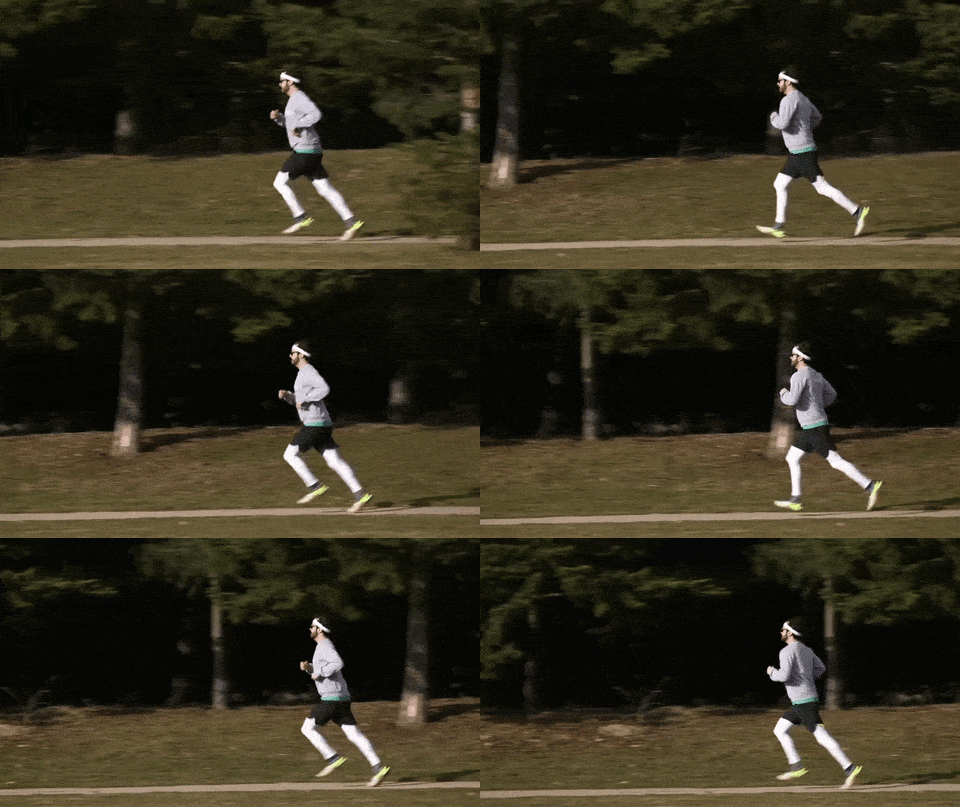
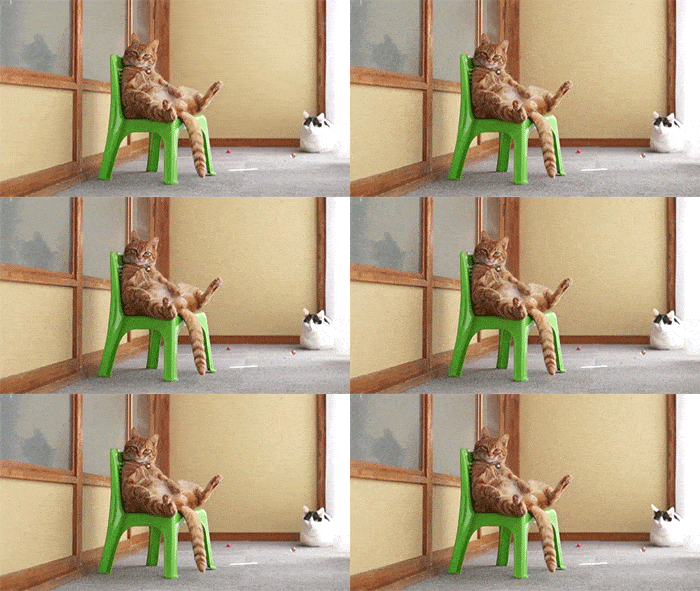
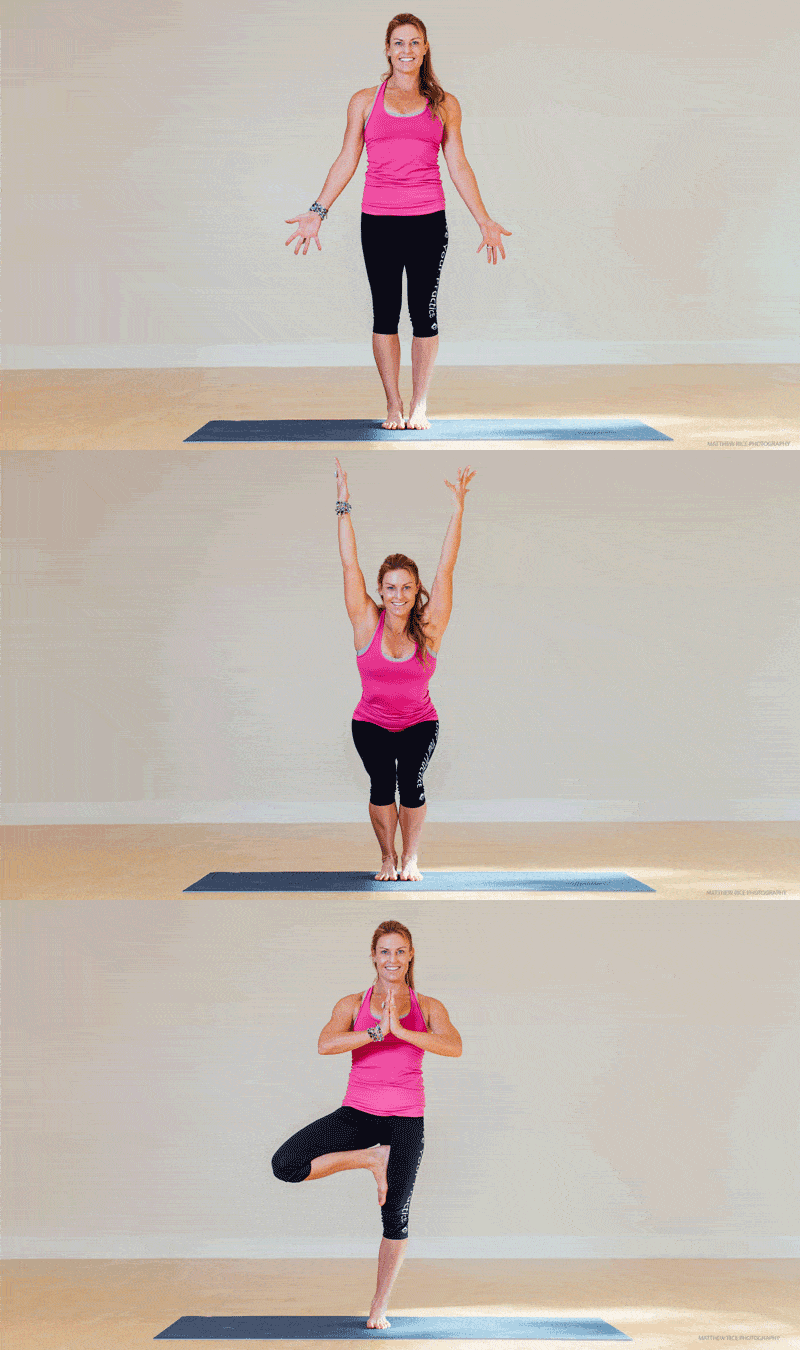
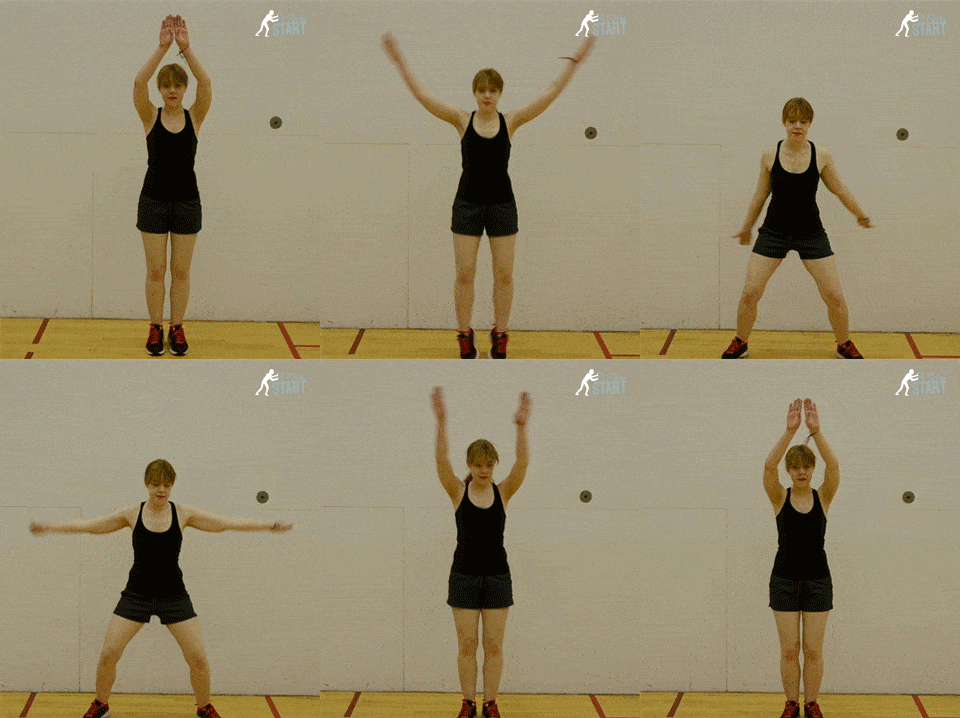
Which picture is an example of a locomotor skill?
Hip joint is
Hinge joint
Pivotal joint
Fixed joint
Ball and socket joint
Which of the following are the functions of the skeleton
Gives support to the body
Protects inner organs
Give shape to the body
All of the above
Which of the following joints is immovable?
Lower jaw and Upper jaw
Upper jaw and Skull
Knee and Hip joint
Wrist and Pivotal joint
How many pairs of ribs do a human body have?
20 pairs
12 pairs
6 pairs
24 pairs

Earthworm body secretes a______________substance to help the movement.
Rough
Slimy
Enzymes
Blood
The contraction of the ___________pulls the bones during movement
Bones
Muscles
Both
None
What is a joint?
A place where two muscles come together
A place where a bone and a muscle come together
A place where two bones come together
All of the above
How many bones are in the human body?
25
127
206
389
The type of joint in which a cylindrical bone rotates in a ring is which of the following types of joint?
Ball and socket joint
Pivotal joint
Hinge joint
Fixed joint
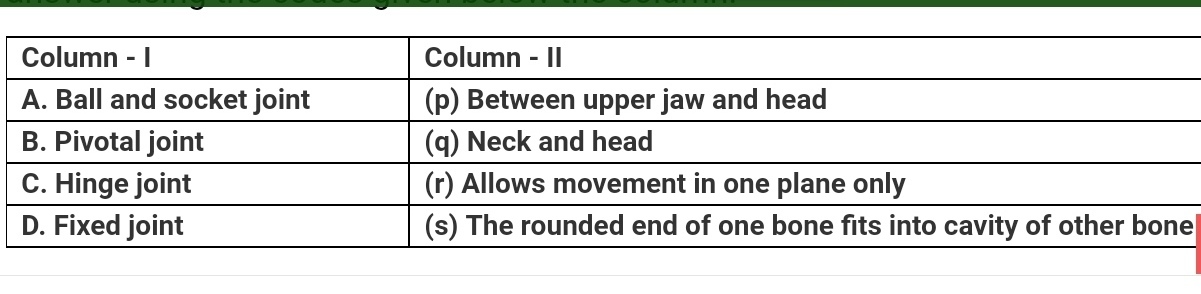
DIRECTIONS: Match Column-I with Column-II and select the correct answer using the codes given below the column.
A→(s);B→(r);C→(q);D→(p)
A→(r);B→(s);C→(q);D→(p)
A→(s);B→(q);C→(r);D→(p)
A→(s);B→(q);C→(p);D→(r)
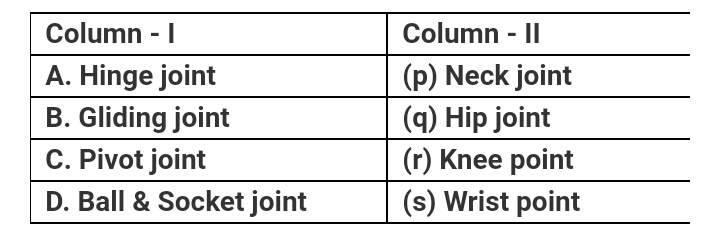
DIRECTIONS: Match Column-I with Column-II and select the correct answer using the codes given below the column.
A→(r),B→(s),C→(p),D→(q)
A→(p),B→(q),C→(s),D→(r)
A→(s),B→(p),C→(r),D→(q)
A→(q),B→(r),C→(p),D→(s)
Which of the following statements best describe how the arm bends at the elbow?
Bicep contracts to bend arm at the elbow while the tricep relaxes.
Bicep contracts to bend arm at the elbow
Tricep contracts to bend arm at the elbow
Tricep contracts to bend arm at the elbow while the bicep relaxes.
These muscles are found in your organs, like your stomach, bladder, and intestines.
Skeletal muscle
Smooth muscle
Rough muscle
Cardiac muscle
This type of muscle is only found in your heart.
Skeletal muscle
Smooth muscle
Rough muscle
Cardiac muscle
When your heart _________ it squeezes blood out of the heart. When your heart _________ it fills with more blood.
relaxes, contracts
contracts, relaxes
Which type of muscles are involuntary? Select all that apply.
skeletal muscle
cardiac muscle
smooth muscle
rough muscle
The skeleton which is inside the body is known as _______. The skeleton which is outside the body is known as _______.
invertebrates, vertebrates
vertebrates, invertebrates
exoskeleton, endoskeleton
endoskeleton, exoskeleton
Which of the following statement is incorrect:-
A fish moves by its fin in a zig-zag pattern.
An earthworm moves by expanding and contracting its body muscle.
A snake moves by curving its body into many loops, each loop pushing against the ground.
Birds fly with their hollow and very light bones which are modified vas forelimbs.

identify the insect which can climb, fly and have outer skeleton.
Snail
Cockroach
Earthworm
snake
what is a cartilage
soft tissue present between two bones
joint that allows slight movement
framework of bones
a thick fibrous tissue

what type of joint is this
flat bone
ball and socket joint
irregular bone
gliding joint

Which part of the human skeleton protects our brain
spine
skull
limbs
backbone
Identify the Pelvic Bones



