wayground logo

Free Printable Worksheets

NEW

Font size

S
M
L
XL
Worksheets

Byzantine Empire - Review

Total questions: 35

Worksheet time: 15mins

Name
Class
Date
1.
Constantinople was a strategic location for the capital of the Byzantine Empire because it was a crossroads of trade.
a)
True
b)
False
2.
One of Justinian’s greatest accomplishments was
a)
adding minarets to the Hagia Sophia.
b)
the Great Schism.
c)
re-conquest of former Roman Empire lands.
d)
codification of Hammurabi’s Code.
3.
Which geographic factor was most important to the growth of the Byzantine Empire?
a)
Extensive iron deposits
b)
River water for irrigation
c)
Abundant fertile soil
d)
Access to trade routes
4.
The Code of Justinian later served as the basis for most
a)
Indian religious ceremonies.
b)
African trade agreements.
c)
European legal systems.
d)
Chinese government principles.
5.
Which empire was best known for libraries that preserved ancient Greek and Roman knowledge?
a)
Mongol
b)
Gupta
c)
Chinese
d)
Byzantine
6.
Which of the following represents the best description for the word “Patriarch” from 300 CE to 1000 CE?
a)
The head of the Seljuk Mosque
b)
The head of the Russian government
c)
The head of the Byzantine Church
d)
The head of the German military
7.
Which group conquered the Byzantine Empire in 1453?
a)
Mongols
b)
Indians
c)
French
d)
Turks
8.

Which of the following answer choices is true about the historical building in the photo above?

a)

It is located in the city of Jerusalem and served as a place to worship the Roman gods.

b)

It is known as the Byzantine Empire's greatest architectural achievement during Emperor Justinian's rule.

c)

It was intended to serve as a fort to protect the city from invasion.

d)

It was the capitol building for the Byzantine government.

9.

Why was Constantinople’s geographical location considered important?

a)

It was strategically located between Asia and Europe for trade and culture.

b)

It was centrally located between Africa and the Americas.

c)

It was positioned to control the trade between Eastern and Western Europe.

d)

It was the center of trade between Arabia and China.

10.

Constantine converted Rome to which of the following religions?

a)

Islam

b)

Buddhism

c)

Christianity

d)

Paganism

11.

Why was the capital moved from Rome to Byzantium?

a)

Constantine wanted to be closer to the Holy Land.

b)

Merchants and traders in Rome became powerful to name the emperor.

c)

It was easier to defend and easier to trade unlike Rome.

d)

Future emperors were interested in exploring Africa.

12.

Byzantine culture worked to:

a)

adapt barbarian ideas and religions for use within the empire.

b)

preserve Greek and Roman knowledge and traditions.

c)

create new ideas and traditions not based in the past.

d)

remove Greek influences from all aspects of life.

13.

What was the specific type of Christianity practiced by the eastern half of the Roman Empire?

a)

Protestantism

b)

Eastern Orthodox

c)

Roman Catholicism

d)

Calvanism

14.

The Byzantine monks developed an alphabet that was used in Russia and eastern Europe. What was this called?

a)

cuneiform

b)

sanskrit

c)

cyrillic

d)

Hieroglyphs

15.
Constantinople was a strategic location for the capital of the Byzantine Empire because it was a crossroads of trade.
a)
True
b)
False
16.
The location of Constantinople helped the Byzantines control
a)
the actions of the Pope.
b)
tax policies of Rome.
c)
warring African tribes.
d)
trade between Asia and Europe.
17.

Justinian’s wife Theodora encouraged him to

a)

Defend his empire against rioters.

b)

flee his empire when a massive riot erupted.

c)

expand his empire to include India and parts of China.

d)

ban all statues and icons of Jesus in his empire.

18.
One of Justinian’s greatest accomplishments was
a)
adding minarets to the Hagia Sophia.
b)
the Great Schism.
c)
re-conquest of former Roman Empire lands.
d)
codification of Hammurabi’s Code.
19.

What happened to the Western Roman Empire?

a)

It flooded.

b)

It was burned to the ground.

c)

It was overthrown by Germanic tribes.

d)

It was renamed the Byzantine Empire.

20.

What was the capitol of the Byzantine Empire?

a)

Rome

b)

Constantinople

c)

Greece

d)

Nashville

21.

What did Justinian create that made laws easier to understand?

a)

Pax Romana

b)

Justinian's Code

c)

The Ten Commandments

d)

Hagia Sophia

22.
What language was used in the Eastern Orthodox Church?
a)
Latin
b)
Greek
c)
English
d)
Arabic
23.

What two cultures mostly made up Byzantine culture?

a)

Roman and Armenian

b)

Greek and Armenian

c)

Germanic and Roman

d)

Greek and Roman

24.
Which group conquered the Byzantine Empire in 1453?
a)
Mongols
b)
Indians
c)
French
d)
Turks
25.
The Byzantine Empire preserved the cultural heritage of what two places?
a)
Greece & Persia
b)
Rome & Persia
c)
Greece & Rome
d)
Russia & Rome
26.
The origin of the Byzantine Empire begins when . . .
a)
Carthage lost the Punic Wars
b)
Julius Caesar ends the civil wars
c)
Diocletian divides the empire
d)
Constantine converts to Christianity
27.
The capital of the Byzantine Empire was located in which city?
a)
Rome
b)
Constantinople
c)
Kiev
d)
Carthage
28.
Which of the following is the religion of the Byzantine Empire?
a)
Eastern Orthodox
b)
Roman Catholicism
c)
Western Christianity
d)
Lutheranism
29.
What religion influenced Russia the most?
a)
Roman Catholicism
b)
Christianity
c)
Eastern Orthodox
d)
Islam
30.
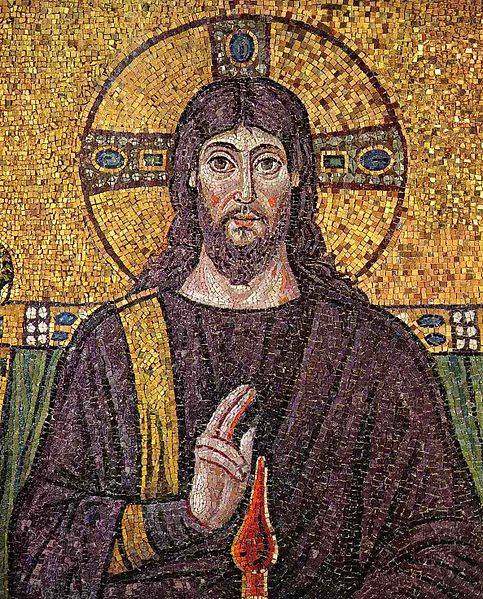
What type of art form from the Byzantine Empire is pictured?
a)
mosaics
b)
painting
c)
sculpture
d)
frescos
31.
Hammurabi’s Code, the Twelve Tables, and the Justinian Code are examples of  early developments in the area of
a)
literature
b)
Law
c)
science
d)
medicine
32.
What was Justinian’s longest lasting and greatest achievement according  according to the images?
a)
codifying Roman laws
b)
re-conquering former Roman lands
c)
improving trade for the Empire
d)
building a new capital at Corinth
33.

What Goods did the Byzantine Produce:

a)

Gold

b)

Silk

c)

Grain

d)

Olives and Wine

e)

All of the Above

34.

What was the name of the Road the Byzantine used to trade?

a)

Byzantine Highway

b)

Silk Road

c)

Istanbul Highway

d)

None of the Above

35.
The _____ was a structure in the Byzantine Empire where thousands of people would gather to watch chariot races.
a)
hippodrome
b)
Colosseum
c)
pyramid of Giza
d)
Hagia Sophia