wayground logo

Free Printable Worksheets

Font size

S
M
L
XL
Worksheets

UNIT I: PHYSICAL SCIENCE EXAM

Total questions: 60

Worksheet time: 3hrs 40mins

Name
Class
Date
1.

°C = (°F-32) x (5/9)

°F = (9/5) x °C + 32

Celsius = Kelvin - 273

Kelvin = Celsius + 273


Convert the temperature:

25 C = _______ F

a)

77 °F

b)

32 °F

c)

28 °F

2.

°C = (°F-32) x (5/9)

°F = (9/5) x °C + 32

Celsius = Kelvin - 273

Kelvin = Celsius + 273


Convert the temperature:

-40 °C = _______ °F

a)

-40 °F

b)

32 °F

c)

0 °F

3.

°C = (°F-32) x (5/9)

°F = (9/5) x °C + 32

Celsius = Kelvin - 273

Kelvin = Celsius + 273


Convert the temperature:

25 °F = _______ °C

a)

-3.9 °C

b)

-10 °C

c)

13 °C

4.

°C = (°F-32) x (5/9)

°F = (9/5) x °C + 32

Celsius = Kelvin - 273

Kelvin = Celsius + 273


Convert the temperature:

-40 °F = _______ °C

a)

-40 °C

b)

14.5 °C

c)

40.9 °C

5.

°C = (°F-32) x (5/9)

°F = (9/5) x °C + 32

Celsius = Kelvin - 273

Kelvin = Celsius + 273


Convert the temperature:

25 °C = _______ K

a)

157.15 K

b)

298.15 K

c)

89.15 K

6.

°C = (°F-32) x (5/9)

°F = (9/5) x °C + 32

Celsius = Kelvin - 273

Kelvin = Celsius + 273


Convert the temperature:

97 °C = _______ K

a)

170.15 K

b)

300.15 K

c)

370.15 K

7.

2 h 35 min = (a)   min

8.

3 h 15 min = (a)   min

9.

4 h 18 min = (a)   min

10.

2 h 34 min = (a)   min

11.

95 min = (a)   h _ min

(Type h and min in your answer. E.g. 1 h 5 min)

12.

280 min = (a)   h _ min

(Type h and min in your answer. E.g. 1 h 5 min)

13.

168 min = (a)   h _ min

(Type h and min in your answer. E.g. 1 h 5 min)

14.

115 min = (a)   h _ min

(Type h and min in your answer. E.g. 1 h 5 min)

15.

230 min = (a)   h _ min

(Type h and min in your answer. E.g. 1 h 5 min)

16.

490,000 g =____ kg

a)

490

b)

49

c)

4,900

d)

0.49

17.

285 kg = ____ g

a)

285,000

b)

285

c)

2,850

d)

28,500

18.

1,000 milligrams =

a)

1 kilogram

b)

1 ton

c)

1 gram

19.

Jill's binder weighs 672 grams. How many kilograms is Jill's binder? (1 kilogram = 1,000 grams)

a)

67.2 kg

b)

6,720 kg

c)

0.672 kg

d)

0.0672 kg

20.

The Science lab had 2,300 milligrams of salt to use for a science experiment. How many grams of salt did the Science lab have? (1 g = 1,000 mg)

a)

2,300,000 grams

b)

2.3 grams

c)

23 grams

d)

230 grams

21.

14 lb = ________ oz

a)

224 oz.

b)

224 lb.

c)

226 oz.

22.

12,000 lb = _______ ton

a)

12 lb

b)

6 ton

c)

12 ton

23.

How many milliliters are in 13 liters? (1 liter = 1,000 milliliters)

a)

0.013 mL

b)

130 mL

c)

1,300 mL

d)

13,000 mL

24.

Kyle measured the length of his truck and it was 534 centimeters long. How many meters long is his truck? (1 meter = 100 centimeters)

a)

5.34 meters

b)

53.4 meters

c)

5,340 meters

d)

0.0534 meters

25.

Holly brought 11 quarts of lemonade to school for the math celebration. How many gallons of lemonade did Holly bring? (1 gallon = 4 quarts)

a)

44 gallons

b)

2.75 gallons

c)

2.5 gallons

d)

40 gallons

26.

What is matter?

a)

anything that has mass and takes up space

b)

anything that can be felt

c)

anything that can behave in many different ways

d)

anything that exist on Earth

27.
Define a liquid.
a)
Indefinite shape, indefinite volume
b)
Definite shape, definite volume
c)
Found in stars
d)
Definite volume, indefinite shape
28.
How is a gas defined?
a)
no shape, no volume
b)
Definite shape, definite volume
c)
Found in stars
d)
Definite volume, no shape
29.

Which form of matter has a definite shape and takes up space (has definite volume)?

a)

liquid

b)

solid

c)

gas

d)

clay

30.
The milk in the glass has volume and takes the shape of its container. Therefore, it is assumed that milk is a ______________.
a)
solid
b)
liquid
c)
gas
d)
plasma
31.

The particles in the picture are tightly held together with little movement. They have shape and energy. Therefore, the picture represents _________.

a)

solid

b)

liquid

c)

gas

d)

plasma

32.

Particles move quickest in which state of matter

a)

solid

b)

liquid

c)

gas

d)

solid, liquid and gas

33.
Water can be a solid, liquid, and a gas.
a)
True
b)
False
liquid
34.
What does this picture represent? 
a)
solid
b)
liquid 
c)
gas
d)
plasma
35.

Which is an example of water's solid state?

a)

ice in a skating rink

b)

rain falling from clouds

c)

a waterfall in a river

d)

steam rising from a pasta pot

36.

What are the three main states of matter?

a)

solid, liquid, color

b)

liquid, gas, solid

c)

gas, texture, liquid

d)

solubility, liquid, odor

37.
Flammability is an example of what property?
a)
Chemical property
b)
Physical property
38.
What type of property is the ability to combust?
a)
Physical property
b)
Chemical property
39.
Ability to rust is this type of property:
a)
Physical property
b)
Chemical property
40.
Which is an example of a physical property?
a)
ability to react with acid
b)
 color
c)
flammability
d)
ability to react with oxygen
41.
Which is NOT a physical property?
a)
odor
b)
reacts with bleach
c)
sinks in water
d)
density
42.
Physical properties are
a)
properties that can be observed without changing the identity of the substance
b)
properties that describe how a substance changes into a completely different substance
c)
properties that we can only observe with our eyes
d)
properties that we need special tools to observe
43.
Which of the following is a chemical property of water?
a)
Reacts with pure sodium
b)
Boils at 100 oC
c)
Is liquid at room temperature
d)
Has a density of 1 gm/mL
44.
Alka-Seltzer gives off carbon dioxide when added to water
a)
physical change
b)
chemical change
45.
Which of the following is a sign that a chemical reaction has occurred?
a)
change in shape
b)
melting
c)
formation of a gas
d)
dissolving
46.
What kind of properties can only be observed when a substance changes into a different substance?
a)
physical properties
b)
chemical properties
c)
liquid properties
d)
real properties
47.
What is burning an example of?
a)
physical change
b)
physical property
c)
chemical change
d)
chemical property
48.
What is digestion?
a)
Physical property
b)
Chemical change
c)
Physical change
d)
Chemical property
49.
When you break a cracker into pieces it is a 
a)
Chemical change
b)
Physical change
c)
Chemical Weathering
d)
Physical Weathering
50.
A tire is inflated with air
a)
physical change
b)
chemical change
c)
physical property
d)
chemical property
51.
Salt dissolving in water is an example of what?
a)
A physical change
b)
A chemical change
c)
A physical property
d)
A chemical property
52.
Which is an example of a physical property?
a)
rusting
b)
boiling point
c)
combustion
d)
reactivity with water
53.
Which of the following is a chemical property?
a)
odor
b)
combustibility
c)
solubility
d)
all of the above
54.

Identify the change shown in the picture.

a)

Irreversible physical change

b)

Irreversible chemical change

c)

reversible physical change

d)

reversible chemical change

55.

What does the picture represent ?

a)

physical change

b)

chemical change

56.

A chemical change may involve

a)

Evolution of gas

b)

Change in temperature

c)

Change in colour

d)

All of the above

57.
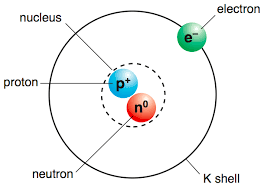
What subatomic particles would you find in the nucleus of an atom?
a)
Protons only
b)
Protons and Neutrons
c)
Neutrons and Electrons
d)
Protons and Electrons 
58.
What subatomic particle is electrically neutral (no charge)?
a)
Proton
b)
Ion
c)
Neutron
d)
Electron
59.
What subatomic particle(s) would be found orbiting the nucleus?
a)
Neutrons only
b)
Electrons only
c)
Protons and Neutrons
d)
Protons and Electrons
60.
Which subatomic particles contribute the most to the mass of an atom?
a)
Protons, Neutrons, Electrons
b)
Protons only
c)
Protons and Electrons
d)
Protons and Neutrons