
Font size
 Worksheets
Classification & Natural Selection
Total questions: 30
Worksheet time: 16mins
The discipline of classifying organisms and assigning each organism a universally accepted name.
Binomial Nomenclature
Invertebrate
Taxonomy
Platyhelminthes
The beaks of the finches found on the Galapagos islands were different because?
Size of the island
Length of their wings
Predator's that hunted them
The available food supply
Farmers reproducing plants with the best traits to increase crop size is a form of ?
Common Ancestors
Selective Breeding
Natural pace of evolution
Existence rate rises
when using a two naming system to classify things, What is this called?
Nomenclature
Kingdom
Scientific Name
Binomial Nomenclature
How many kingdoms are there in the Taxa classification?
4
6
8
3
A population of rabbits grows rapidly from one year to the next. Then one year, a disease strikes approximately one fourth of the adult rabbits. The disease remains with the population in the years that follow.
As explained by Darwin’s theory, which of these conditions allows the rabbit population to evolve by natural selection?
The disease affects adult and juvenile rabbits equally.
The disease reduces the ability of the rabbits to reproduce.
Some rabbits are resistant to the disease, and they pass the resistance to their offspring.
No rabbits are resistant to the disease, and all die when the disease strikes them.
What is a trait?
a color
the quality or characteristic of an organism
the DNA of an organism
when mutatuons cause extra limbs.
Why are some traits more common in some populations?
It is random
organims choose their traits
common traits are ussualy adaptive and help organisms survive and reproduce
organisms traits change all the time
Mutations are important because they bring about
death of the organism in which they develop
genetic variation needed for a population to evolve
benefits for the individual, not for the population
changes in genotype, but not phenotype

Domesticated dogs are an example of:
Natural Selection
Selective Breeding
Evolution
Common Ancestry
Why is competition important for natural selection?
It shows which variations are more successful, allowing the organisms with those variations to survive.
It causes organisms, regardless of which traits they have, to die out, reducing the population size.
It causes organisms to get stronger due to having to outcompete other species.
Competition is not important for natural selection.
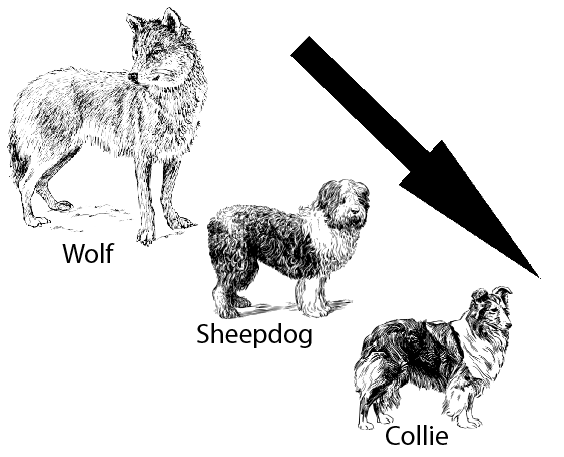
Gradualism means Natural Selection would normally happen over many generations and very
slowly
quickly
in space
beyond time
Adaptations can be:
camouflage
ability to survive cold weather
hunting skills
all of the above
Differences in traits are called:
natural selection
genetic variations
artificial selection
adaptations
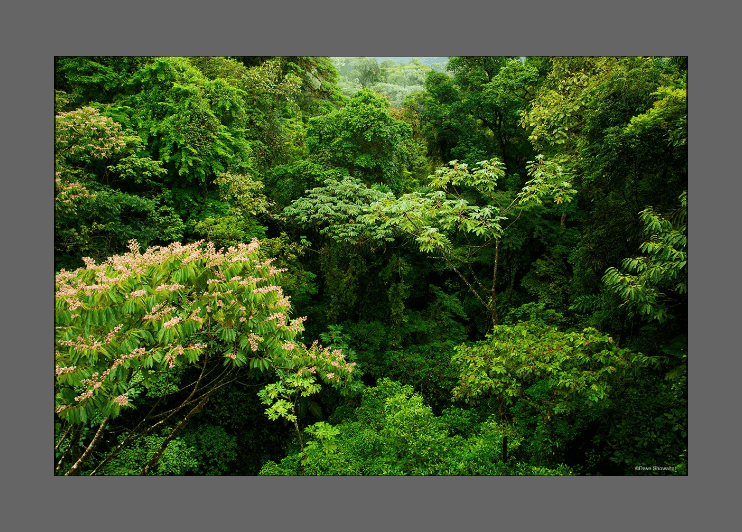
A yellow morph and green morph of an insect lives in the rainforest canopy. You would expect:
the green population to increase and the yellow to decrease
both populations should stay the same
both populations will increase
the green population to decrease and the yellow to increaseThis is a wrong answer
How do you "win" at natural selection?
survive
go extinct
survive & reproduce
reproduce
In a cold environment what would be some adaptive traits? Sellect all that apply.
thick blubber
thick fur
thin fur
strong muscles

