wayground logo

Free Printable Worksheets

NEW

Font size

S
M
L
XL
Worksheets

Living Things Review

Total questions: 41

Worksheet time: 55mins

Name
Class
Date
1.

The ability to produce offspring to help ensure the population survives is called

a)

Cloning

b)

Photocopy

c)

Sleeping

d)

Reproduction

2.

As you mature and go through the life cycle, what characteristics is this demonstrating?

a)

Organization

b)

Reproduction

c)

Energy

d)

Growth

3.

Which characteristic does the image represent

a)

Use Energy

b)

Maintain Homeostasis

c)

Grow

4.

When you sweat from getting to hot that is an example of?

a)

Made of cells

b)

Growth

c)

Reproduction

d)

Maintain Homeostasis

5.
A plant grows toward the light. The plant's action is an example of 
a)
reproduction.
b)
a response.
c)
a stimulus.
d)
development. 
6.
The processes an organism uses to maintain "normal" internal conditions
a)
Homeostasis
b)
Reproduction
c)
Metabolism
d)
Evolution
7.
What is an organism whose entire body is only 1 cell known as?
a)
unicellular
b)
multicellular
c)
cell
d)
Homeostasis
8.
All living things reproduce, what are the 2 ways living things reproduce?
a)
Asexual, Birth
b)
Sexual, Asexual
c)
Reproducing, Sexual
d)
Birth, Reproducing
9.
What is the balancing of an organism’s internal environment to keep conditions suitable ?
a)
stimulus
b)
multicellular
c)
cell
d)
Homeostasis
10.
Which one of these is NOT one of the characteristics of living things?
a)
All living things are made of cells
b)
All living things reproduce
c)
All living things eat
d)
All living things evolve
11.
In the word BIOLOGY, the suffix -OLOGY means
a)
the study of...
b)
life, living
c)
organism
d)
biology
12.
This picture is a good example of
a)
Growth
b)
Development
13.
This picture is a good example of
a)
Growth
b)
Development
14.
Responding to change helps an organism to survive, which is the best example of a response to change:
a)
A polar bear hides it's cubs from danger.
b)
You move your hand away from a hot surface when you touch it.
c)
A cell only grows in a certain enviroment.
d)
Geese migrate to the south for the winter.
15.
This stores our genetic information:
a)
DNA
b)
lipids
c)
ATP
d)
flash drives
16.
Living things require energy to survive.
a)
True
b)
False
17.
The telephone ringing is an example of a
a)
stimulus
b)
simulation
c)
similarity
18.
The telephone ringing is an example of a
a)
stimulus
b)
simulation
c)
similarity
19.

What is the basic unit of life?

a)

cells

b)

organisms

c)

humans

d)

atoms

20.

The difference between non-living and dead is...

a)

they mean the same thing

b)

dead means it was once living but now is not

c)

non-living means it was once alive but now is not

d)

there is no difference

21.
Change over time describes.....
a)
Speciation 
b)
Selective Breeding 
c)
Evolution 
d)
Adaptation 
22.
I traveled around the world on the HMS Beagle in 1831 in search of answers.
a)
Reginald Punnett
b)
Gregor Mendel
c)
Charles Darwin
d)
Alfred Hitchcock 
23.
What is a characteristic that helps an organism survive and reproduce in its environment? 
a)
Selective Breeding 
b)
Adaptation 
c)
Evolution 
d)
Fossils 
24.
Which is not an adaptation of a polar bear? 
a)
White fur 
b)
Large Feet 
c)
Thin Layer of fat 
d)
Strong Swimmer 
25.
The process by which organisms with favorable traits survive and reproduce at a higher rate
a)
Natural Selection 
b)
Adaptation 
c)
Evolution 
d)
Speciation 
26.
What is another name for natural selection?
a)
survival of the smartest
b)
survival of the fastest
c)
survival of the biggest
d)
survival of the fittest
27.
When all of the organisms of a species have died it is called
a)
evolution
b)
extinction
c)
adaptation
d)
natural selection
28.
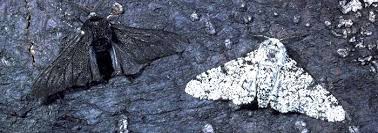
Predict which moth would increase in population
a)
light 
b)
dark
29.
_______________ is when an animal blends into its environment.
a)
camouflage
b)
mimicry
c)
warning coloration
30.
Which of the following is a physical adaptation for the underlined animal?
a)
A snake unhinges its jaw to eat a rabbit it just caught.
b)
A hognose snake rolls over, slows its breathing, and hangs its tongue out to pretend to be dead.
c)
A herd of buffalo encircle their young to protect them from a pack of wolves.
d)
A dung beetle rolls a piece of dung across the desert.
31.
How do adaptations help animals?
a)
to hide from predators
b)
to hunt for food
c)
to survive in their habitats
d)
All of these are correct
32.
An animal's color or pattern that helps it blend into its surroundings
a)
Environment 
b)
Mimicry
c)
Camouflage
d)
Habitat
33.
The source of all genetic material is...
a)
Protein
b)
cells
c)
DNA
d)
The brain
34.

Adaptation that refers to how an organism behaves and how interacts with other.

a)

adaptations

b)

mimicry

c)

behavioral

d)

camouflage

35.
When an organism copies a characteristic of something else in order to better its chances for survival and reproduction
a)
hibernation
b)
camouflage
c)
mimicry
d)
migration
36.
An animal that is hunted as food
a)
prey
b)
predator
c)
decomposer
d)
producer
37.
An organism that hunts and feeds on another organism is a ______________________.
a)
prey
b)
producer
c)
predator
d)
decomposer
38.
VARIATION
a)
The gradual change of species over time
b)
Differences in traits between members of the same species
c)
Organisms develop in similar ways in the womb
d)
Survival of the fittest
39.
Which of the following is a physical adaptation for the underlined animal?
a)
A butterfly has bright colors to warn predators that it is poisonous.
b)
A hognose snake rolls over, slows its breathing, and hangs its tongue out to play dead.
c)
A herd of buffalo encircle their young to protect them from a pack of wolves.
d)
A dung beetle rolls a piece of dung across the desert.
40.
The seasonal movement of an organism from one place to another
a)
camouflage
b)
migration
c)
hibernation
d)
function
41.
Which statement does not accurately describe natural selection?
a)
Individual organisms change their genes to adapt to their environment
b)
The genetic composition of a population changes from one generation to the next
c)
More advantageous traits become more common in population
d)
Beneficial and useful traits are inheritable