
 Worksheets
Chapter 12 Review - Colligative Properties
Total questions: 57
Worksheet time: 31mins
At the same concentration, which salt will have the largest effect on the freezing point? Remember the bigger the i value.... the more you multiply in the formula
ΔTf = − i Kf mC2H4O2
H2S
LiBr
CaF2

Using the graph above, which compound would dissolve the most at 60° C, KCl, NaCl, or KClO3?
KCl
NaCl
KClO3
Using the graph above, solubility of which compound is influenced the most by changes in temperature?
KCl
NaCl
K2Cr2O7
KClO3
A solution that has the maximum amount of solute dissolved in the solvent is called __________________.
saturated
supersaturated
unsaturated
suspension
A solution that has less than the maximum amount of solute dissolved in the solvent is called __________________.
saturated
supersaturated
unsaturated
suspension
Using the graph above, how many grams of KCl can be dissolved in 300g of water at 40° C? (Notice that the graph gives you amounts dissolves in 100 g of water.) (Because the graph says 100g and this asks for 300g you need to mulitply by 3.)
30g
50g
120g
40g
A solution that has more than the maximum amount of solute dissolved in the solvent is called __________________.
saturated
supersaturated
unsaturated
suspension
Dry air contains 78.09% nitrogen, 20.95% oxygen, 0.93% argon, 0.04% and carbon dioxide. What is the solvent in the solution we call air?
nitrogen
oxygen
argon
carbon dioxide
Chloroform (CHCl3) and water
Like dissolves like!
Soluble (miscible) CHCl3 is polar
Insoluble (immiscible) CHCl3 is not polar
Octane (C8H18) and water
Polar dissolves polar or ionic and non-polar dissolves non-polar
Soluble (miscible)
Insoluble (immiscible)
Partially soluble
NaCl in water
Soluble (miscible)
Insoluble (immiscible)
Partially soluble
NaCl in hexane (C6H14)
Soluble (miscible)
Insoluble (immiscible)
Partially soluble
Atoms of a polar molecule share their atoms ___________.
Equally
Unequally
Polar molecules will dissolve in other polar molecules and nonpolar molecules will dissolve in other nonpolar molecules.
True
False
Polar molecules have
no charges.
slight positive and negative charges on opposite ends of the molecules.
only positive charges.
either positive or negative charges, but not both.
Why is it difficult to wash oil from your hands with plain water?
Both substances are polar. Like polarities repel.
Both substances are nonpolar. Like polarities repel.
Water is nonpolar, and oil is polar, so they will not combine.
Water is polar, and oil is nonpolar, so they will not combine.
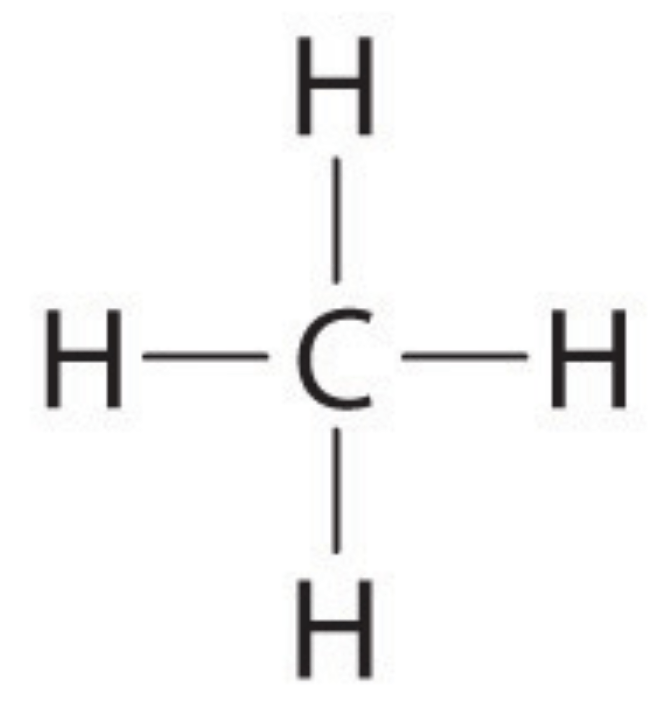
Why is the molecule nonpolar?
There are nonbonding pairs on the central atom.
There are different types of elements bonded to the central atom.
There are no nonbonding pairs on the central atom and all of the atoms bonded to the central atom are the same.

Why is the molecule polar?
There are nonbonding pairs on the central atom and it creates the bent shape.
There are different types of elements bonded to the central atom.
There are no nonbonding pairs on the central atom and all of the atoms bonded to the central atom are the same.

Why is the molecule polar?
There is a nonbonding pair on the central atom.
There are different types of elements bonded to the central atom.
There are no nonbonding pairs on the central atom and all of the atoms bonded to the central atom are the same.

Classify the following molecule.
polar
nonpolar

Name the effect
brownian
tyndall
suspension
colloidal
Which one is not a colloid
Foam
Gel
Emulsion
Coffee
A snow globe would be an example of a __________________.
colloid
solution
suspension
Milk is an example of a
solution
colloid
suspension
solid
Which of the following appear to be clear (are not cloudy)?
Solution
Suspension
Colloid

The process in which a solvent moves across a semipermeable membrane.
osmosis
dissolving
effusion
Is a colloid a solution?
No, it is a mixture that contains small particles dispersed in a medium.
Yes, because you can mix it with something.
Which contains the largest particles?
solution
colloid
suspension
When two liquids mix to form a homogeneous solution
solvation
Miscible
Immiscible
Amalgam
Octane (C8H18) and water
Soluble (miscible)
Insoluble (immiscible)
Partially soluble
Ethanol (CH3CH2OH) and water
Soluble (miscible)
Insoluble (immiscible)
Partially soluble
A mixture of medium-sized particles that do not settle out of solution is known as
Miscible
Immiscible
Colloids
Suspensions
Which of the following terms is the substance that does the dissolving in solution
Miscible
Immiscible
Solute
Solvent
What does "like dissolves like" mean?
polar solvents dissolve in polar solutes
polar solutes dissolve in polar solvents
non-polar solvents dissolve in polar solutes
non-polar solutes dissolve in polar solvents
____________ is the process whereby particles of a solvent completely surround the particles of a solute, disperse them throughout the solvent particles, and hold them in solution.
solvation
immisciblation
dissolution
saturation
Which one of the following should be increased in order to increase the solubility of a gas?
Temperature
Pressure
amount of solute in a given amount of solvent
concentration
saturated
solution
suspension
any solution that can dissolve more solute at a given temperature
saturated solution
unsaturated solution
supersaturated solution
suspension
As you put in more solute in the solution, the concentration of the solution will...
increase
decrease
stay the same
The separation of ions that occurs when an ionic compound dissolves is
ionization
dissociation
electronegativity
spectation
They process in which ions are formed from molecules when they are dissolved in solution.
dissociation
ionization
spetation
electronegativity
Which of the following would result in being able to dissolve a greater amount of solid in a solution?
Lower the temperature.
Decrease the pressure of the solution.
Increase the pressure of the solution.
Heat the solution.
Which of the following would result in being able to dissolve a greater amount of gas in a solution?
Lower the temperature of the solution.
Decrease the pressure of the solution.
Stir the solution.
Heat the solution.
Which of the following statements is true?
An increase in temperature decreases the solubility of most solids, but increases the solubility of gases.
An increase in temperature increases the solubility of most solids and gases.
An increase in temperature decreases the solubility of most solids and gases.
An increase in temperature increases the solubility of most solids, but decreases the solubility of gases.
Which of the following would increase the rate of dissolution of a solid?
Cool the solid solute and the solution.
Shake the solution.
Evaporate the solvent.
Break the solvent into smaller particles.
What is known as the universal solvent?
water
acetone
vinegar
soy sauce

Which factor is shown in the picture?
temperature
particle size
stirring
use of spoon
What are the factors that affect solubility?
rate of stirring
particle size
temperature
all of these

Which one of the following diagrams has the lowest vapor pressure?
1
2
3
4
5
Which of the following solutions will have the lowest freezing point?
1.0 mol/L sucrose (C12H22O11)
1.0 mol/L lithium chloride (LiCl)
1.0 mol/L sodium phosphide (Na3P)
1.0 mol/L magnesium fluoride (MgF2)
Which sample, when dissolved in 1.0 liter of water, produces a solution with the lowest freezing point?
0.1 mol of C2H5OH
0.1 mol of LiBr
0.2 mol of C6H12O6
0.2 mol of CaCl2

