Wayground logo

Free Printable Worksheets

Font size

S
M
L
XL
Worksheets

From Cells to Organ Systems

Total questions: 51

Worksheet time: 29mins

Name
Class
Date
1.

Cells form tissues, tissues form organs, organs work together to form

a)

lungs

b)

organ systems

c)

skin

d)

heart

2.

What is a group of cells that are alike and work together?

a)

a cell team

b)

a tissue

c)

a cell family

3.

A group of tissues that work together is a(n) ______________________.

a)

cell

b)

organ

c)

organ system

4.

Organs that work together are part of a(n) ________________________.

a)

cells

b)

tissue

c)

organ system

5.
 What do tissues form?
a)
Blood 
b)
Organ Systems
c)
Organs
d)
Nails
6.

What might the immune system protect our body from?

a)

sugars, fats, and carbs.

b)

viruses, bacteria

c)

lice, worms, fleas

d)

cough, sneeze, vomit

7.

What is the term for a group of organs that break down food so that it can be used for energy, cell growth and repair?

a)

circulatory system

b)

digestive system

c)

excretory system

d)

muscular system

e)

nervous system

8.

What is the term for the control center for the entire body that sends signals from throughout the body to the brain?

a)

circulatory system

b)

respiratory system

c)

excretory system

d)

muscular system

e)

nervous system

9.

What is the term for the group of organs that remove excess water and filter waste from the body?

a)

circulatory system

b)

respiratory system

c)

excretory system

d)

muscular system

e)

digestive system

10.

What is the term for the organ system that provides oxygen to the blood and removes carbon dioxide from the blood?

a)

circulatory system

b)

respiratory system

c)

nervous system

d)

muscular system

e)

digestive system

11.

What is the term for the organ system that allows for the body’s movement, including voluntary and involuntary movement?

a)

excretory system

b)

respiratory system

c)

nervous system

d)

muscular system

e)

digestive system

12.

What is the term for the organ system that moves blood, gases, and nutrients throughout the body?

a)

circulatory system

b)

respiratory system

c)

nervous system

d)

excretory system

e)

digestive system

13.

What organ system are lungs part of?

a)

digestive system

b)

respiratory system

c)

muscular system

d)

nervous system

e)

excretory system

14.

What organ system are the small and large intestine part of?

a)

digestive system

b)

respiratory system

c)

muscular system

d)

nervous system

e)

excretory system

15.

What organ system includes muscles in your arms and legs?

a)

circulatory system

b)

respiratory system

c)

muscular system

d)

nervous system

e)

excretory system

16.

What organ system are blood vessels, arteries, and capiliaries part of?

a)

digestive system

b)

respiratory system

c)

muscular system

d)

nervous system

e)

circulatory system

17.

What color is your blood?

a)

blue

b)

purple

c)

yellow

d)

red

18.

What is the name of the system that supports the weight of the entire body?

a)

Skeletal system

b)

Nervous system

c)

Digestive system

d)

Circulatory system

19.

Your skin is part of what system?

a)

Nervous system

b)

Digestive system

c)

Integumentary system

d)

Immune system

20.

Which is not part of the circulatory system?

a)

blood vessels

b)

heart

c)

blood

d)

liver

21.

This body system consists of the brain, nerves, spinal cord, and sensory organs.

a)

circulatory

b)

excretory

c)

respiratory

d)

nervous

22.

Which two body systems are most responsible for getting oxygen to the cells?

a)

skeletal and muscular

b)

circulatory and respiratory

c)

circulatory and reproductive

d)

nervous and excretory

23.

What do you think would happen if all your bones were made of ONLY cartilage?

a)

the skeleton would be too bendable and not provide enough protection around internal organs

b)

the skeleton would collapse

c)

our skeletons are made of only cartilage and we are just fine

d)

the skeleton would be too stiff and not provide enough protection around internal organs

24.

What is the correct order of organization?

a)

cells->tissue->organs->organ systems-> organism

b)

tissue->cells->organs->organ systems-> organism

c)

organs->organ systems-> organism->cells->tissue

25.

Which of the following tissues is made up of cells that contract to move substances through the body and help the body move?

a)

Epithelial

b)

Connective

c)

Muscle

26.

Blood is a type of .....

a)

Epithelial Tissue

b)

Connective Tissue

c)

Muscle Tissue

d)

Nervous Tissue

27.

What are the four main tissues found in the body?

a)

Epithelial, Connective, Bone, Blood

b)

Muscle, Connective, Blood, Epithelial

c)

Nervous, Muscle, Connective, Epithelial

28.

Which of the following is not one of the four main types of tissues?

a)

Blood

b)

Connective

c)

Epithelial

d)

Nervous

29.

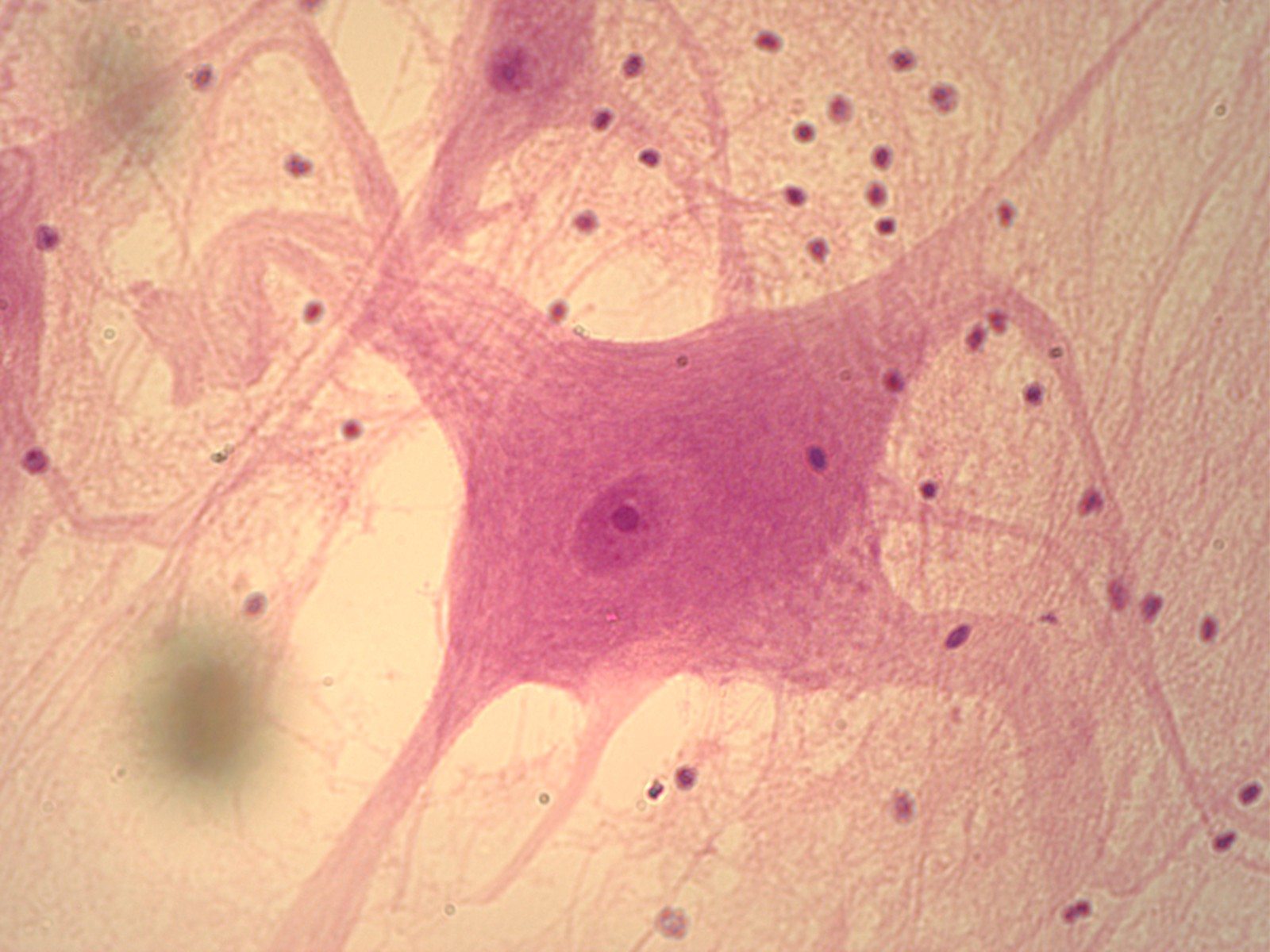
This type of tissue shown in the picture transmits information throughout the body to and from the brain.

a)

Nervous Tissue

b)

Connective Tissue

c)

Muscular Tissue

30.

What is the function of epithelial cells?

a)

Protects the body and organs

b)

Provide movement by pulling on bones

c)

Act as the messaging pathway between different areas of the body

31.
Which organ system is pictured?
a)
excretory system
b)
respiratory system
c)
digestive system
d)
muscular system
32.
Which organ system is pictured?
a)
excretory system
b)
muscular system
c)
respiratory system
d)
nervous system
33.
Which organ system is pictured?
a)
excretory system
b)
digestive system
c)
circulatory system
d)
muscular system
34.
Which organ system helps move and support the body?
a)
muscular system
b)
nervous system
c)
digestive system
d)
respiratory system
35.
The basic units of structure and function within the body
a)
Cells
b)
Tissue
c)
Organ
d)
System
36.
A group of 2 or more different types of tissue working together to perform the same function.
a)
cell
b)
tissue
c)
organ
d)
system
37.
A group of cells that work together to perform the same function.
a)
cells
b)
tissue
c)
organ
d)
system
38.
What is a group of similar cells?
a)
Tissue 
b)
Organ
c)
Cell group
d)
Organ system
39.
What does epithelial tissue do?
a)
carries messages to and from the brain
b)
provides structure and support
c)
causes movement
d)
forms the protective outer layer of skin
40.
What does connective tissue do?
a)
carries messages to and from the brain
b)
provides structure and support
c)
causes movement
d)
forms the protective outer layer of skin
41.
For the body to maintain homeostasis ...
a)
Just the digestive systems much be functioning properly.
b)
Some organ systems must function properly.
c)
Only the circulatory system must be functioning properly
d)
All organ systems must be functioning properly
42.
What does the Circulatory system do?
a)
Protects the body and maintains temperature
b)
exchanges gasses between blood and the environment
c)
break down food and absorb nutrients
d)
transports gasses, nutrients, and hormones
43.
What does the Skin system do?
a)
Protects the body and maintains temperature
b)
exchanges gasses between blood and the environment
c)
break down food and absorb nutrients
d)
transports gasses, nutrients, and hormones
44.
What does the Nervous system do?
a)
send and receive messages throughout the body
b)
exchanges gasses between blood and the environment
c)
break down food and absorb nutrients
d)
filter the blood and get rid of toxins, wast and excess water
45.
What does the Digestive system do?
a)
send and receive messages throughout the body
b)
exchanges gasses between blood and the environment
c)
break down food and absorb nutrients
d)
filter the blood and get rid of toxins, wast and excess water
46.
What does the Respirtatory system do?
a)
send and receive messages throughout the body
b)
exchanges gasses between blood and the environment
c)
break down food and absorb nutrients
d)
filter the blood and get rid of toxins, wast and excess water
47.
What does the Urinary system do?
a)
send and receive messages throughout the body
b)
exchanges gasses between blood and the environment
c)
break down food and absorb nutrients
d)
filter the blood and get rid of toxins, wast and excess water
48.
What does muscle tissue do?
a)
carries messages to and from the brain
b)
provides structure and support
c)
causes movement
d)
forms the protective outer layer of skin
49.
What does nervous tissue do?
a)
carries messages to and from the brain
b)
provides structure and support
c)
causes movement
d)
forms the protective outer layer of skin
50.
Organ system that takes nutrients from your food and absorbs it into your body.
a)
Circulatory
b)
Digestive
c)
Respiratory
d)
Endocrine
51.
Organ system that SENDS and RECEIVES MESSAGES to different parts of your body.
a)
Circulatory
b)
Nervous
c)
Integumentary
d)
Digestive