
 Worksheets
Key Concept 2.1: Classification and Interactions of Matter
Total questions: 61
Worksheet time: 2hrs 23mins

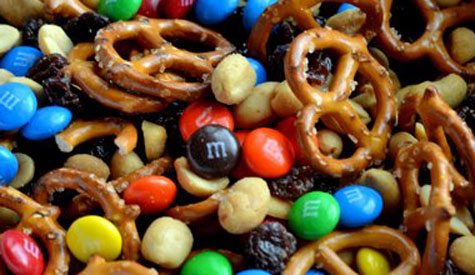
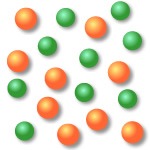
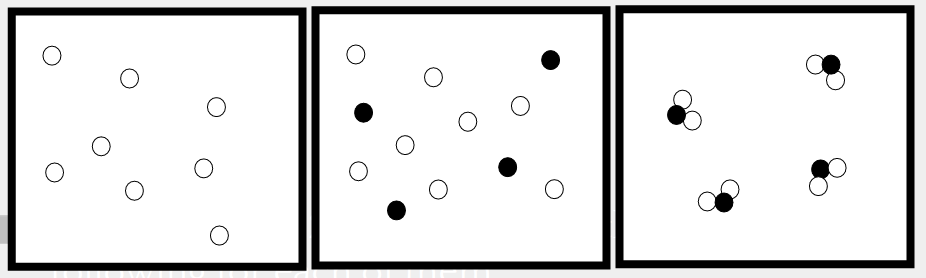


This is an example of what technique?
filtration
distillation
chromatography
sublimation
What is the difference between a mixture and a pure substance?
A mixture has only one type of particle present.
A pure substance has only one type of particle present.
The size of the particles.
There is no difference.
.
Which one of these is NOT a way to physically separate a mixture?
sublimation
distillation
filtration
chromatography
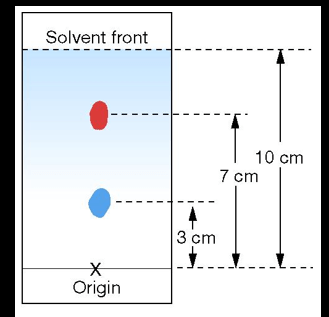
How can you tell which substance in a chromatography is the MOST polar? (The solvent is water.)
The substance with the smallests Rf.
The substance that DOESN'T move.
The substance that travelled the LONGEST DISTANCE from the starting point.
The substance that travelled the SHORTEST DISTANCE from the starting point.
What is the relationship between temperature and average kinetic energy?
The higher the temperature the higher the average kinetic energy.
The higher the temperature the lower the average kinetic energy
The lower the temperature the higher the average kinetic energy
They are only friends.
At the particle level, explain what MUST happen for a substance to boil?
The particles have to lose enough energy that they begin to stick together.
The particles have to gain enough energy that the INTERMOLECULAR forces holding them together break.
The particles have to gain enough energy that the INTRAMOLECULAR forces holding them together break.
The energy and the force are not related to this question.
The air in a pressurized SCUBA diving tank contains the following gases: oxygen at a pressure of 64 atm, nitrogen at a pressure of 130 atm, and argon at a pressure of 6 atm. What is the total gas pressure in the tank?
1 atm
60 atm
100 atm
200 atm
The formula for density.
mass/volume
temperature/volume

What is filtration?
A method used to separate a solid from a liquid that dissolves in the liquid
A separating technique used to separate a mixture of a solid and liquid where the solid does not dissolve in the liquid
Th components of filtration are separated based on
boiling point
solubility
particle size
Which process is faster?
Boiling
Evaporation
Both
Which process is the change of state from liquid to gaseous?
Boiling
Evaporation
Both

Which is NOT an intramolecular force?
Polar Covalent Bond
Nonpolar Covalent Bond
London Dispersion Force
Ionic Bond
Which structure consists of a giant lattice of regularly arranged cations surrounded by a sea of delocalized electrons.
ionic bonding
metallic bonding
covalent bonding
Which of the following is an intramolecular force?
hydrogen bonding
covalent bonding
Which intermolecular force is characterized by partially oppositely charged ions?
Dipole-dipole
Hydrogen bonding
London dispersion forces
Which substance has the weakest intermolecular forces?
Substance A, boiling point of 75 °C
Substance B, boiling point of 105 °C
Substance C, boiling point of 25 °C
Substance d, boiling point of 45 °C
The weaker the intermolecular forces of a substance the _____________ the boiling point
higher
lower
________________________ have the strongest intermolecular forces of attraction.
Dipole- Dipole
Dispersion
Hydrogen Bonds
covalent bond
London forces
hydrogen bond
dipole-dipole attraction

Ink can be separated by a method of -----------------------------------------------
distillation
filtration
chromatography
sedimentation
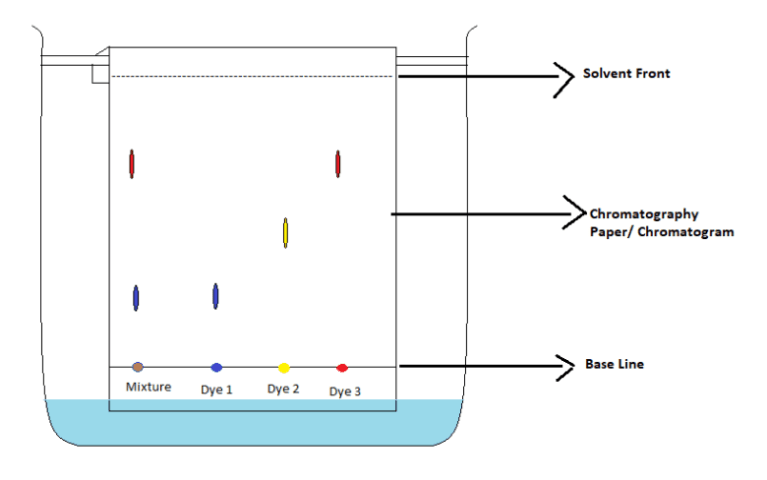
The mixture on the left contains...
All three dyes
None of the dyes
Dye 1 and Dye 2
Dye 1 and Dye 3
Dye 2 and Dye 3
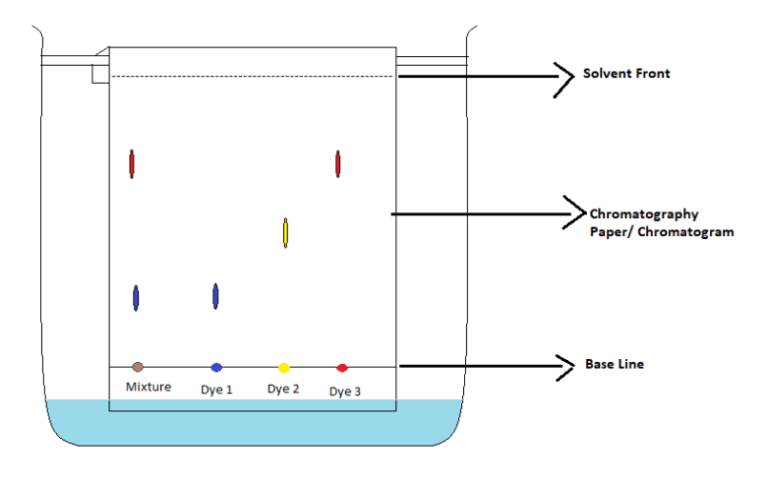
The dye with the HIGHEST Rf value will be...
Dye 1
Dye 2
Dye 3
All have the same Rf value
Which equation represents Dalton's Law?
E = mc2
PV = nRT
P1 / T1 = P2 / T2
Ptotal = P1 + P2 + P3
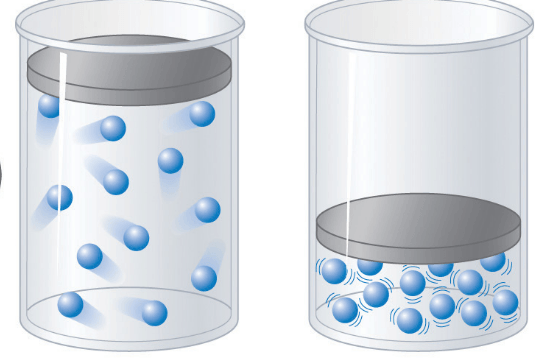
Which container will have a lower pressure?
left
right
they both have the same pressure
A mixture of H, Ne, & O has a pressure of 12.4 atm. If Hydrogen measures 5.6 atm and Oxygen measures 2.0 atm, what is the pressure of Neon?
7.6 L
4.8 L
5.4 L
12.0 L
In a mixture of gases at 32.3 atm, Nitrogen gas makes up 60%. What is the partial pressure of the N2?
5.38 atm
26.3 atm
19.4 atm
12.9 atm
A container holds three gases: oxygen, carbon dioxide, and helium. The partial pressures of the three gases are 2.00 atm, 3.00 atm, and 4.00 atm, respectively. What is the total pressure inside the container?
900 atm
0.90 atm
9.00 atm
920 atm
A mixture of nitrogen and oxygen gas has a total pressure of 4.2 atm. If 4/7 of the mixture is N2, what is the partial pressure of O2?
2.4 kPa
2.4 atm
1.8 kPa
1.8 atm
A mixture of two gases with a total pressure of 520 mmHg is enclosed in a sealed container. If 70% of the mixture is NO2, what is the partial pressure of the other gas?
520 mmHg
364 mmHg
156 mmHg
A sample of four mixed gases is at 760 mmHg. The partial pressures of gases A= 14. 8% and B = 41.6%. If gases C and D have equal partial pressures, what is the partial pressure of gas C?
331.36 mmHg
165.68 mmHg
428.64 mmHg

