wayground logo

Free Printable Worksheets

Font size

S
M
L
XL
Worksheets

Energy and Machines

Total questions: 55

Worksheet time: 1hrs 21mins

Name
Class
Date
1.
Which of the following is not an example of work?
a)
an ice hockey puck laying on an ice rink
b)
ship movement that causes ripples in the water
c)
a man pushing a heavy box across the floor
d)
a magnet repelling a compass needle
2.
In a first-class lever, ...
a)
the effort is located between the fulcrum and the resistance
b)
the fulcrum is located at the end of the lever
c)
the resistance is located between the fulcrum and the effort
d)
the fulcrum is located between the effort and the resistance
3.
First- and second-class levers amplify effort or force. Third-class levers amplify ...
a)
friction
b)
distance
c)
pitch
d)
power
4.
Mechanical advantage is expressed ...
a)
in newtons squared
b)
in joules
c)
without any units
d)
in joules squared
5.
Machines in the "real world" cannot produce as much energy as they receive because of the presence of ...
a)
work
b)
levers
c)
friction
d)
power
6.
In a second-class lever, ...
a)
the effort is located between the fulcrum and the resistance
b)
the resistance is located between the fulcrum and the effort
c)
the fulcrum is located between the effort and the resistance
d)
the resistance is located at the end of the lever
7.
The unit for power is the ...
a)
watt
b)
joule
c)
newton
d)
dyne
8.
Energy due to motion is ____________ energy. 
a)
Potential 
b)
Energy
c)
Kinetic
d)
Friction
9.
The faster an object moves, the ________ kinetic energy it has. 
a)
more
b)
less
c)
none of the above
d)
all of the above 
10.
What kind of energy is in a rock at the edge of a cliff?
a)
Potential
b)
Kinetic
11.
What kind of energy is in a moving skateboard?
a)
Potential
b)
Kinetic
12.
What kind of energy is in a person climbing a ladder?
a)
Potential
b)
Kinetic
c)
Both
13.
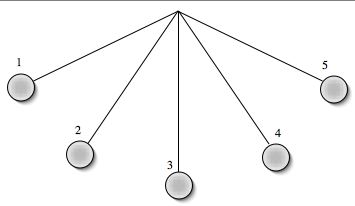
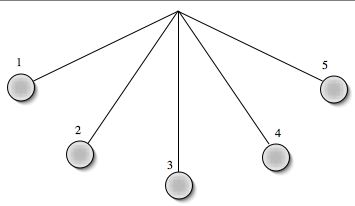
When a pendulum swings, at which point is kinetic energy highest?
a)
1
b)
2
c)
3
d)
4
14.
When a pendulum swings, at which point is potential energy at its greatest?
a)
1
b)
2
c)
3
d)
4
15.
A 0.40 kilogram bird is flying at a constant speed of 8.0 m/s. What is the bird's kinetic energy ?
a)
3.2 J
b)
4.2 J
c)
2.0 J
d)
12.8 J
16.

A 2600 kilogram car is moving at a speed of 25 m/s. How much kinetic energy does the car have?

a)

427,500 J

b)

237,500 J

c)

812,500 J

d)

537,500 J

17.
A 60.0 kg person walks from the ground to the roof of a 74.8 m tall building. How much gravitational potential energy does she have at the top of the building?
a)
43982.4 J
b)
63982.3 J
c)
43962.4 J
d)
83942.4 J
18.
A pitcher throws a 0.145 kg baseball at a velocity of 30.0m/s. How much kinetic energy does the ball have?
a)
65.35 J
b)
87.25 J
c)
23.45 J
d)
65.25 J
19.

Kinetic energy depends on

a)

mass and height

b)

height and speed

c)

mass and speed

d)

mass and force

20.

Potential energy depends on

a)

mass and height

b)

height and speed

c)

mass and speed

d)

height and force

21.

The sum of potential energy and kinetic energy equals

a)

work

b)

transformation

c)

total energy

d)

mechanical energy

22.

Energy and work are measured in

a)

kilograms

b)

meters

c)

Joules

d)

m/s

23.

If a crate is moved 10 m with a force of 50 N, how much work is done?

a)

40 Joules

b)

60 Joules

c)

500 Joules

d)

5 Joules

24.
True or false
You do work only when you exert a force on an object and move it
a)
true
b)
false
25.
Two factors that determine work are
a)
size of the force, and distance
b)
size of the force, and type of force
c)
mass, and distance
26.
if you push a cart with a force of 60 N for 2 m... how much work have you done
a)
120 J
b)
30 J
c)
120 N 
d)
30 N
27.

Which of the following is the best example of work being done.

a)

doing homework

b)

lifting a box

c)

pushing a stationary box

d)

holding a box

28.
A 5000N block is lifted 10 m. How much work was done?
a)
50000 J
b)
5000 J
c)
500 J
d)
50 J
29.
How much work is produced when 350 N is used to move a car 5 m?
a)
70 J
b)
1750 J
c)
355 J
d)
175 J
30.

25 Watts of Power are used to do 5000J of work. How long did this task take to complete?

a)

200 sec

b)

0.0005 s

c)

125000 s

d)

125 s

31.
How much time is needed to produce 720 Joules of work if 90 watts of power is used? 
a)
0.125 s
b)
8 s
c)
64800 s
d)
80 s
32.
If 150 Joules of work is needed to move a box 10 meters, what force was used? 
a)
1500 N
b)
15 N
c)
1.5 N
d)
150 N
33.

You push against the back of your friends car that is stuck. You push and be become very tired, but the car does not move. Did you do work?

a)

Yes, work was done

b)

No, work wasn't done

34.

If you increase your work and decrease your time, you will have

a)

more power

b)

less power

c)

same amount of power

d)

power rating can not be determined

35.

Person A and Person B are both using the same amount of work to lift something. Person A takes half as much time to do it. Who has greater power.

a)

Person A

b)

Person B

36.

A force of 4.6 N moves a 2.7 kg box a distance of 3.3 m in 6.8 s. How much power is exerted?

a)

2.23 W

b)

6.03 W

c)

17.4 W

d)

278.7 W

37.

How much work is done when 114 W of power is used over 0.62 s?

a)

70.68 J

b)

183.87 J

c)

57.62 J

d)

No work is done.

38.
How much work is done in holding a 15 N sack of potatoes while waiting in line at the grocery store for 3 minutes?
a)
15 J
b)
45 J
c)
0 J
d)
5 J
39.
The more POWER you use to move an object, the more work you do. 
a)
True
b)
False
40.

A crane lifts an 8-m long steel girder weighing 2600 N up 15 m off the ground. The crane did ___ of work.

a)

0 J

b)

39000 J

c)

20800 J

d)

2600 J

41.

How does conservation of energy explain why something that is falling should speed up?

a)

It gains kinetic energy because it gains potential energy.

b)

It loses kinetic energy because no work was done on it.

c)

It gains kinetic energy because it loses potential energy.

d)

It loses kinetic energy because the Earth gains potential energy.

42.

What is mechanical advantage?

a)

The advantage a machine has over a bicycle

b)

A measure of how much a simple machine reduces work

c)

A measure of when is the best time to use a simple machine

d)

the number of times a machine increases input force

43.

What is effort (input) force?

a)

the force one exerts on a machine

b)

the force which an effort force must overcome in order to do work on an object via a simple machine.

c)

the force the machine exerts on a object

d)

the output work times the input distance

44.

What is resistance (output) force?

a)

the force required by a machine in order to accomplish work (the force you put on the machine)

b)

The force that is exerted by a machine

c)

the force the machine exerts on a object

d)

the output work times the input distance

45.
No machine in existence has 100% efficiency due to ____________________.
a)
magic
b)
friction
c)
smoke
d)
input
46.
A machine's __________________ is the number of times the machine multiplies the input force.
a)
power
b)
force
c)
mechanical advantage
d)
efficiency
47.
If the weight of the block is 10N, how much force does one have to apply to lift it using this pulley (MA=2)?
a)
2N
b)
5N
c)
10N
d)
15N
48.

A box of weight W is lifted by a force F using a lever as shown below.

What is the mechanical advantage of the lever (IMA=Input Distance/Output Distance)?

a)

0.5

b)

2

c)

3

d)

6

49.

Using a lever, Joe is able to lift a 10,000 N car off of the ground with a force of 1000 N. What is the mechanical advantage of the lever (MA=Output Force/Input Force)?

a)

1

b)

10

c)

100

d)

1000

50.

if a load of a lever is 100 newtons and the force you apply is 20 newtons, what is your mechanical advantage?

a)

120

b)

5

c)

2000

d)

80

51.

The mechanical advantage of this inclined plane is...(MA=Resistance Force/Effort Force)

a)

2.4

b)

3.4

c)

4.4

52.
Jeff is a landscaping contractor and lifts a rock weighing 600 pounds by wedging a board under the rock. Jeff weighs 150 pounds and puts all of his weight on the lever. How much mechanical advantage did the lever provide to Jeff in lifting the rock?
a)
0
b)
2
c)
4
d)
8
53.

Which of the lever would it take less force to lift?

a)

Lever A

b)

Lever B

54.

How much effort would it take to lift Lever A?

a)

60 N

b)

50N

c)

40 N

d)

30 N

55.

How much effort would it take to lift Lever B?

a)

60 N

b)

50 N

c)

40 N

d)

30 N