wayground logo

Free Printable Worksheets

NEW

Font size

S
M
L
XL
Worksheets

Biochemistry 2021

Total questions: 36

Worksheet time: 12mins

Name
Class
Date
1.

Glucose is a _____.

a)

carbohydrate

b)

lipid

c)

protein

d)

nucleic acid

2.
Proteins are composed of what smaller building blocks?
a)
amino acids
b)
nucleic acids
c)
fatty acids
d)
nucleotides
3.

Which group of macromolecules serve as long-term energy storage and make the cell membrane is?

a)

proteins

b)

carbohydrates

c)

lipids

d)

nucleic acids

4.
Also known as simple sugars, these are the monomers of carbohydrates.
a)
lipids
b)
nucleotide
c)
monosaccharide
d)
monomer
5.

The bond between water molecules is called

a)

Covalent bonds

b)

Ionic bonds

c)

Polar bonds

d)

Hydrogen bonds

6.
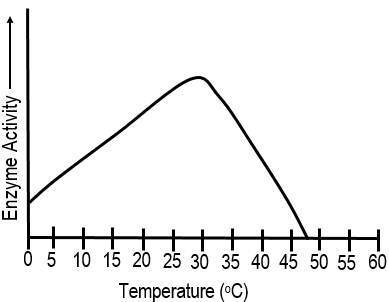
Based on the graph, what temperature does this enzyme work best? 
a)
15 C
b)
40 C
c)
30 C
7.
Which of the following binds to the active site of an enzyme? 
a)
substrate
b)
product
c)
codon
d)
none of the above
8.
What happens when enzymes are heated to a high temperature?
a)
The enzymes die.
b)
The shapes of the enzyme are altered or denatured
c)
The enzymes' amino acid sequence changes.
d)
The enzymes remain the same
9.
Letter D...
a)
active site
b)
enzyme
c)
substrate
d)
products
10.
Enzymes are
a)
nucleic acids
b)
proteins
c)
lipids
d)
carbohydrates
11.

Which of the following is NOT a biomolecule?

a)

Water

b)

Nucleic Acid

c)

Protein

d)

Lipid

12.
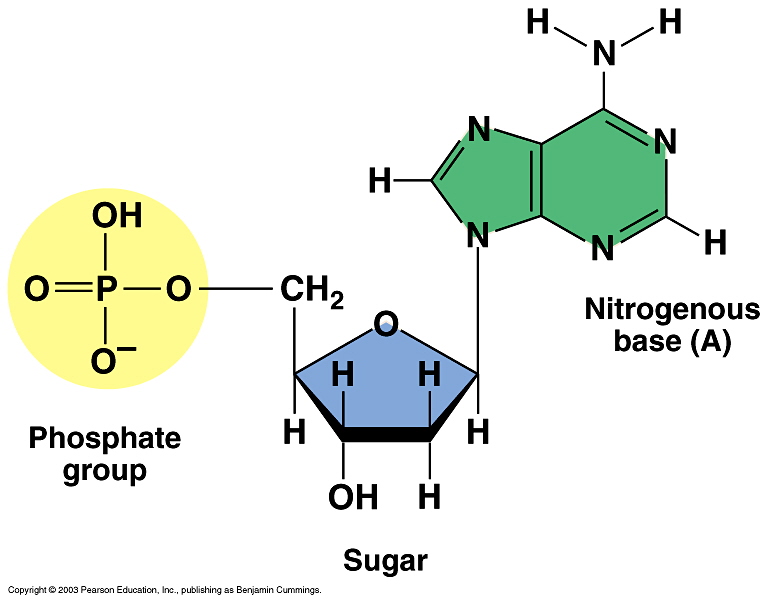
Identify the biomolecule
a)
Lipid
b)
Protein
c)
Carbohydrate
d)
Nucleic Acid
13.
Enzymes are _________ that __________ chemical reactions.
a)
proteins, slow down
b)
proteins, speed up
c)
lipids, slow down
d)
lipids, speed up
14.
The property where water molecules are attracted to other water molecules.
a)
adhesion
b)
capillary action
c)
cohesion
d)
universal solvent
15.
Carbohydrates are made of... 
a)
C H O
b)
C H O N
c)
C H O N P
d)
C H O N S
16.

What do disaccharides, such as sucrose, and polysaccharides, such as starch, have in common?

a)

They are lipids

b)

They are proteins

c)

They are nucleic acids

d)

They are carbohydrates

17.

Which molecule is organic?

a)

CH4

b)

CO2

c)

H2O

d)

NaCl

18.

Oil, butter, and wax are all examples of which macromolecule?

a)

lipids

b)

proteins

c)

carbohydrates

d)

salts

19.
The building blocks of nucleic acids are called ...
a)
amino acids
b)
nucleotides
c)
carbohydrates
d)
proteins
20.
Which of the following elements make up nucleic acids?
a)
C, H, O
b)
C, H, O, N
c)
C, H, O, N, P
d)
C, H, O, Ca, S
21.

The bond that joins two amino acids together to create proteins

a)

double bond

b)

hydrogen bond

c)

ionic bond

d)

peptide bond

22.

Which biomolecule contains Deoxyribonucleic acid and Ribonucleic acid, both of which carry genetic information?

a)

Nucleic Acid

b)

Lipid

c)

Carbohydrate

d)

Protein

23.
How do lipids function for cells?
a)
store information
b)
store energy
c)
breakdown wastes
d)
join with substrates
24.
What is the function of nucleic acids?
a)
store genetic information
b)
store energy (long-term)
c)
store energy (short-term)
d)
build skin, hair, nails, muscles
25.

When 2 monomers are linked together to build a bigger polymer water is released. What is this called?

a)

Dehydration synthesis

b)

Hydrolysis

c)

Enzomatic

d)

Tetratonic

26.
What two elements make up water?
a)
Helium and oxygen
b)
Hydrogen and oxygen
c)
helium and carbon
d)
oxygen and carbon
27.
Water is a universal solvent because it...
a)
It can be found anywhere
b)
It freezes when it gets cold
c)
floats when frozen
d)
Dissolves most substances
28.
The fact that ice floats on liquid water is due to the fact that water's solid is ___________ than it's liquid form
a)
less polar
b)
more polar
c)
less dense
d)
more dense
29.
The tightness across the surface of water that enables paper clips to float is ____________.
a)
adhesion
b)
capillary action
c)
surface tension
d)
polarity
30.
Which statement explains why water molecules stick together?
a)
both sides are negative
b)
one side has a positive charge and the other side has a negative charge
c)
one side has a negative charge adn the other side has a neutral charge
d)
both sides are positive
31.
When a molecule has an opposite electrical charge on each end, it is known as what?
a)
cohesion
b)
polar molecule
c)
hydrogen bond
d)
solution
32.
What word describes when water is attracted to other substances?
a)
cohesion
b)
adhesion
c)
capillary action
d)
surface tension
33.
Why does water move from the roots to the leaves of plants?
a)
Water is pushed by solutes
b)
Capillary action pulls the water molecules like a chain
c)
Water is pulled by gravity
d)
Water’s cohesion causes it to “pull” towards the leaves
34.
Large bodies of water, such as lakes and oceans, do not quickly fluctuate in temperature. What is the reason for this phenomenon?
a)
Water is an acid.
b)
Water is a versatile solvent.
c)
Water has a high heat capacity.
d)
 Water acts as a buffer.
35.
A(n) _______ is a substance with a pH greater than 7.
a)
Base
b)
Acid
c)
Buffer
d)
Water
36.
A(n) ______ is a substance with a pH less than 7
a)
Acid
b)
Alkaline
c)
Base
d)
Buffer