wayground logo

Free Printable Worksheets

NEW

Font size

S
M
L
XL
Worksheets

DNA Replication and Protein Synthesis

Total questions: 59

Worksheet time: 5hrs 55mins

Name
Class
Date
1.

DNA replication results in two DNA molecules

a)

A each with two new strands

b)

Each with two old strands

c)

Each with one old strand and one new strand

d)

One has old strands and the other has one old strand and one new strand

2.

The first step in DNA replication is to

a)

"Unzip" the DNA with helicase enzyme

b)

Match up base pairs with DNA polymerase

c)

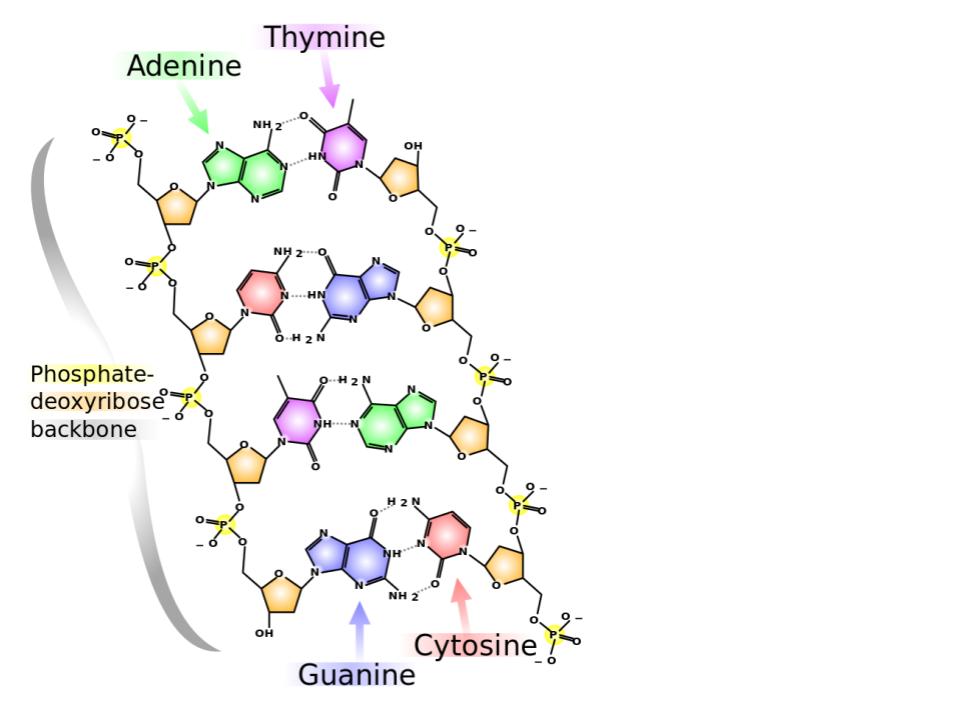
Use primase to place the codons for the lagging strand

d)

Use ligase to "glue" the fragments together

3.

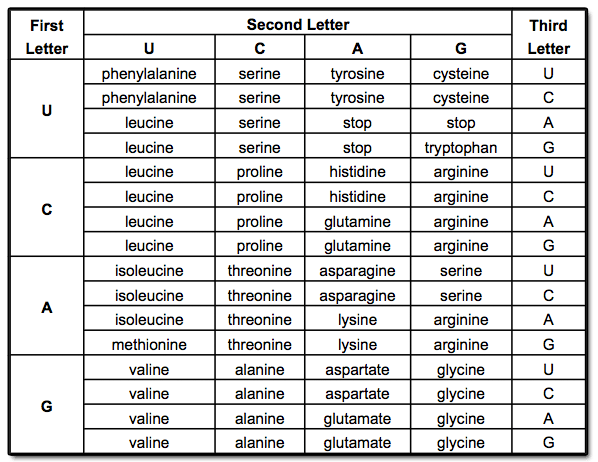
The process called ______________________ produces a new copy of an organisms genetic information

a)

Protein synthesis

b)

DNA polymerase proofreading

c)

DNA replication

d)

All of these

4.

This is the enzyme that links the correct nucleotides and then "proofreads" to make sure the new DNA strand was built correctly

a)

Helicase

b)

DNA polymerase

c)

ligase

d)

primase

5.

Which of the following would not be reason for DNA replication

a)

Growth

b)

Repair

c)

Replacement of worn out and broken cells

d)

All are correct

6.

Which is the correct complimentary strand for DNA replication?

ATTGCCAATGCC

a)

UAACGGUUACGG

b)

TAACGGTTACGC

c)

TAACGCTTACGG

d)

TAACGGTTACGG

7.

The Quagmire Duckalong has 32% thymine and 13% guanine according to Chargaff's research how much adenine and cytosine will the Duckalong have? (approximately)

a)

28% adenine and 17% cytosine = 100%

b)

13% adenine and 32% cytosine

c)

32% adenine and 32% cytosine

d)

32% adenine and 13% cytosine

8.

Which enzyme "unzips" the DNA to begin the process of replication?

a)

helicase

b)

primase

c)

ligase

d)

DNA polymerase

9.

Khan academy shows images of old and new strands. 5' to 3'. There are also images of 3' to 5'. We call these leading and lagging strands and discuss the importance of primase and ligase with the lagging strand. Which of the following statements would you say is "most" important in regards to DNA replication

a)

DNA polymerase needs to match up the correct nucleotides and "proofread" correctly so that DNA replication is done correctly and the cells can do their jobs

b)

Understanding which strand is leading and which strand is lagging (knowing the 5' to 3' or 3' to 5')

c)

Understanding how ligase "glues" the Okazaki fragments back together

d)

Knowing that primase "primes" the lagging strand as to where nucleotides are placed

10.
In a molecule of double-stranded DNA, the amount of Adenine present is always equal to the amount of
a)
cytosine
b)
guanine
c)
thymine
d)
uracil
11.
What determines the code, or information, of a DNA molecule?
a)
the shape (structure) of the nitrogen bases
b)
the order (sequence) of the nitrogen bases
c)
the color of the nitrogen bases
d)
the frequency (number) of nitrogen bases
12.
A process in which DNA has the unique ability to make an exact copy of itself.
a)
Replication
b)
Translation
c)
Transcription
13.
Replicate the following strand of DNA: 
AATCATGGA
a)
AATCATGGA
b)
TTAGTACCT
c)
UUAGUACCU
d)
GGATAUCUA
14.
DNA replication results in two DNA molecules,
a)
each one with two original strands
b)
each one with two new strands
c)
each one with one new strand and one original strand
d)
one with two new strands and the other with two original strands
15.
RNA contains the sugar
a)
ribose
b)
deoxyribose
c)
glucose
d)
lactose
16.

A ________________ molecule is the type of RNA that is responsible for transcribing the code of DNA in the nucleus and taking the message to the ribosome

a)

mRNA

b)

tRNA

c)

rRNA

d)

none of these

17.

It is the sequence, amount and shape that _______________ _____________ take that makes one protein different than the next. (these are the building blocks of proteins)

a)

enzymes

b)

amino acids

c)

nucleic acids

d)

nucleotides

18.

Transcription (the process of converting DNA language into RNA language) takes place in the ______________ of the cell.

a)

nucleus

b)

cytoplasm

c)

endoplasmic reticulum

d)

ribosome

19.

Translation (where the mRNA codons are read to match up the tRNA anticodons with their attached amino acids) takes place on the

a)

nucleus

b)

cytoplasm

c)

endoplasmic reticulum

d)

ribosome

20.

The process where the gene consisting of DNA is "read" by the RNA to make an RNA codon of mRNA is called_____________

a)

transcription

b)

translation

c)

replication

d)

dupication

21.

The process where the codons of mRNA are matched up the the anticodons of tRNA is called

a)

transcription

b)

translation

c)

replication

d)

duplication

22.

What is the place on chromosomes called that carries the information for making proteins?

a)

gene

b)

A is the correct answer

c)

I am not sure but I am going with A

d)

All of these

23.
At what point in the cell cycle does DNA replication occur and why?
a)
before a cell divides, to provide each of the two resulting cells with a complete set of DNA instructions
b)
before a cell divides, to ensure that the DNA will fit into the resulting cells
c)
during cell division, to ensure that the DNA will fit into the resulting cells
d)
after a cell divides, to provide each of the two resulting cells with a complete set of DNA instructions 
24.
Which choice describes DNA after replication has taken place?
a)
one molecule with two original strands and one molecule with two new strands
b)
two molecules, each with one original and one new strand
c)
two molecules, each with two new strands
d)
 two molecules, each with two old strands
25.
The sequence of DNA below is part of a gene. How many amino acids are coded for by this segment? 
a)
4
b)
8
c)
12
d)
20
26.
Which of the following carries amino acids to the site of protein synthesis? 
a)
mRNA
b)
rRNA
c)
tRNA
d)
nRNA
27.
Base your answer to the following question on the structures represented in the diagram below. What is the relationship between these three structures?
a)
 DNA is made up of proteins that are synthesized in the cell.
b)
Protein is composed of DNA that is stored in the cell.
c)
DNA controls the production of protein in the cell.
d)
 The cell is composed only of DNA and protein.
28.
How many base pairs would be needed to chain together 3 amino acids?
a)
3
b)
6
c)
9
d)
12
29.
What is assembled during transcription?
a)
transfer RNA
b)
messenger RNA
c)
DNA replication
d)
court proceedings
30.
What is made during translation?
a)
transfer RNA
b)
messenger RNA
c)
Proteins
d)
Spanish Rice
31.
What stores the code for making an individual protein?
a)
DNA
b)
a gene
c)
a chromosome
d)
transfer RNA
32.
The two strands of DNA are held together by:
a)
Hydrogen Bonds
b)
Phosphodiester Bonds
c)
Glycolsyl Bonds
d)
Glycosidic Linkages
33.
What determines the code, or information, of a DNA molecule?
a)
the shape (structure) of the nitrogen bases
b)
the order (sequence) of the nitrogen bases
c)
the color of the nitrogen bases
d)
the frequency (number) of nitrogen bases
34.
What determines the code, or information, of a DNA molecule?
a)
the shape (structure) of the nitrogen bases
b)
the order (sequence) of the nitrogen bases
c)
the color of the nitrogen bases
d)
the frequency (number) of nitrogen bases
35.

Transcribe the following DNA strand: CTG AAT

a)

GAC TTA

b)

CTG AAT

c)

GAC UUA

d)

CUG AAU

36.
What is the correct amino acid sequence for the mRNA code AUGCCAGUAUGA
a)
Met-Pro-Ala-Val
b)
Met-Pro-Val
c)
Tyr-Gly-His
d)
Tyr-Gly-Arg-His
37.
One difference between DNA and RNA is that RNA....
a)
is double stranded 
b)
contains the base Thymine
c)
contains the base Uracil 
d)
contained the base Guanine
38.
The anti-codon 
a)
contains a sequence the same as the codon
b)
contains a sequence complementary to the codon 
c)
contains the base thymine
39.
tRNA is involved in
a)
carrying amino acids 
b)
carrying ribosomes
c)
carrying glucose
d)
carrying lipids
40.
Which process is happening in this picture?
a)
Transcription
b)
Translation
c)
Replication
41.
Which of the following molecules is created during TRANSCRIPTION?
a)
Protein
b)
DNA
c)
mRNA
d)
tRNA
42.
Which of the following molecules is created during TRANSLATION?
a)
Protein
b)
DNA
c)
mRNA
d)
tRNA
43.
What is the three base sequence of mRNA that codes for a single amino acid?
a)
Anticodon
b)
Codon
c)
Protein
44.

Which of the following make up a nucleotide?

a)

Sugar, phosphate, and base

b)

Sugar, nitrate, and base

c)

Lipid, phospate, and sugar

d)

Protein, phosphate, and base

45.
During replication, the DNA template was exposed to show the sequence ACG. How will the complementary strand be arranged? 
a)
ACG
b)
CAT
c)
GTA
d)
TGC
46.
What are the primary components of a nucleotide? 
a)
base, phosphate, and sugar
b)
acid, base, and phosphate 
c)
base, oxygen, and phosphate
d)
acid, chlorine, and hydrogen
47.
Which nucleotide is complementary to adenine?
a)
adenine
b)
cytosine
c)
guanine
d)
thymine
48.
What is the complementary base to cytosine in DNA?
a)
uracil
b)
thymine
c)
guanine
d)
adenine 
49.
What statement best describes the role of DNA in protein synthesis? 
a)
DNA carries the amino acid to the ribosomes. 
b)
DNA forms the structural parts of the ribosomes.
c)
DNA joins the chains of amino acids to form a protein. 
d)
DNA contains the information for building individual proteins. 
50.
The DNA sequence ACTCG produces which mRNA sequence during transcription? 
a)
TGAGC
b)
UGAGC
c)
ACTCG
d)
ACUCG
51.
During transcription, the genetic information for make in protein is rewritten Which molecule is formed during transcription? 
a)
transfer RNA
b)
ribosomal RNA
c)
messenger RNA
d)
transcriptional RNA
52.
What is the function of transfer RNA?
a)
It is a part of the ribosome. 
b)
It delivers the correct amino acid to the ribosome. 
c)
It bonds to other RNA molecules, leading to their destruction. 
d)
It carries the information coding for the amino acid sequence of a protein. 
53.
Which best describes the process of translation? 
a)
Translation occurs within he nucleus. 
b)
Translation involves copying a DNA strand. 
c)
An mRNA strand is produced by the process of translation. 
d)
A growing protein chain is produced by the process of translation. 
54.
What is a possible DNA sequence for the amino acid sequence phenylalanine-glycine-threonine? 
a)
UUU GGG ACC
b)
AAA CCC UGG
c)
TTT GGG ACC
d)
AAA CCC TGG
55.
Which of these shows the correct order for the central dogma of molecular biology?
a)
DNA to protein to RNA
b)
RNA to DNA to protein
c)
protein to DNA to RNA
d)
DNA to RNA to protein
56.
During protein synthesis, the RNA sequence UAC GAU CUA, is produced from then DNA sequence ATG CTA GAT. Which process is occurring? 
a)
translation
b)
transcription
c)
transmutation
d)
transformation
57.
Which best describes the information contained in genes? 
a)
instructions for assembling pyrimidines
b)
instructions for assembling purines
c)
instructions for assembling proteins
d)
instructions for assembling plasmids
58.
Which type of RNA delivers the genetic code to the ribosome?
a)
rRNA
b)
mRNA
c)
tRNA
d)
tmRNA
59.
Which best describes the role of mRNA in protein synthesis? 
a)
mRNA brings amino acids to the ribosome where they are connected to construct a protein.
b)
mRNA forms the peptide bonds connecting amino acids together to construct a protein 
c)
mRNA decodes the sequence of tRNA into the amino acids used to construct a protein
d)
mRNA brings the code of DNA to the ribosome where it is used to construct a protein