wayground logo

Free Printable Worksheets

Font size

S
M
L
XL
Worksheets

Power tools

Total questions: 39

Worksheet time: 33mins

Name
Class
Date
1.
Before replacing parts such as bits, blades, or discs on any tool, you must _____.
a)
a. polish it with a fine steel wool
b)
b. recharge the tool's battery
c)
c. disconnect the power source
d)
d. inspect them for cracks
2.
Most hammer drills will not hammer until pressure is _____.
a)
a. released from the powder charge
b)
b. reached in the hydraulic cylinder
c)
c. detected at the trigger lock
d)
d. applied to the drill bit
3.
A pneumatic drill is commonly used _____.
a)
a. in areas where noise is a problem
b)
b. to supply compressed air to de-burr pipes
c)
c. when there is no source of electricity
d)
d. for intricate detail work
4.
Before you plug any saw into a power source, make sure the _____.
a)
a. speed is set to Low
b)
b. power switch is in the Off position
c)
c. work has been clamped down
d)
d. lower blade guard is pulled back
5.
Never use a circular saw that does not have an upper blade guard because the _____.
a)
a. trigger lock will not work properly
b)
b. saw will not cut cleanly
c)
c. guard protects you from touching the blade
d)
d. saw kerf will be too wide
6.
Before using a pneumatically powered nailer for the first time, it is important to _____.
a)
a. disassemble the nailer for inspection
b)
b. load the nails into the nailer
c)
c. ensure that a GFCI is in the power supply
d)
d. read the manufacturer's instructions
7.
A power tool that is well suited for breaking up concrete during demolition work is a(n) _____.
a)
a. saber saw
b)
b. impact wrench
c)
c. pavement breaker
d)
d. powder actuator
8.

Name this power tool

a)

miter saw

b)

table saw

c)

circular saw

d)

round saw

9.

Name this power tool

a)

Cordless drill

b)

Impact driver

c)

Screw driver

d)

Jig Saw

10.
What safety equipment are you required to wear when operating power tools?
a)
Eye protection
b)
Ear protection
c)
Closed toed shoes
d)
All of the above
11.
What should you do with jewelry, lanyards, and loose clothing before working with power tools?
a)
Push them back and out of the way
b)
Take them completely off
c)
Just be careful as you work
d)
Put the jewelry and lanyard into the loose clothing
12.
How do you clean up after using shop power tools?
a)
Sweep up saw dust
b)
Throw away scrap pieces
c)
Put away tools in their proper home
d)
All of the above
13.

You should read the power tool _____________ to know how to operate it correctly.

a)

model number

b)

safety sheet

c)

owner's manual

d)

SDS

14.

Do not use a tool that is not intended for the job at hand.

a)

True

b)

False

15.

PPE stands for

a)

Personal Professional Engineer.

b)

Professional Protective Engineer.

c)

Professional Protective Equipment.

d)

Personal Protective Equipment.

16.

PPE includes eye protection, face shields, steel-toe boots, ESD Shoes, gloves.

a)

True

b)

False

17.

Loose ___________ or ___________ has the potential to catch on power tools/equipment.

a)

hair; shoes

b)

clothing; jewelry

c)

hair net; necklace

d)

headphones; caps

18.

Grounding power tools helps in preventing ___________ .

a)

electric shock

b)

unintended accident

c)

faults

d)

static discharge

19.

Disconnect power tools when:

a)

before servicing

b)

charging/installing accessories

c)

not in use

d)

All answer are correct.

20.

Secure your work using _________ or _______ otherwise they may become loose and cause injury.

a)

hammer; vice

b)

nail; clamp

c)

vice; clamp

d)

pressure; hand

21.

Make sure the power switch is ________ before connecting a tool into an outlet.

a)

on

b)

off

c)

pressed

d)

secure

22.

Don't carry any tools with a finger on the switch.

a)

True

b)

False

23.

______________ any tool for defects before using.

a)

Test

b)

Inspect

c)

Repair

d)

Operate

24.

Keeping tools clean, sharp, and lubricated reduce the risk of injury.

a)

True

b)

False

25.
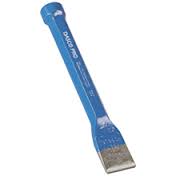
A metal tool that has a sharpened, beveled edge, and is used to cut and shape wood, stone, or metal is a _____.
a)
cat's paw
b)
rat-tail file
c)
screwdriver
d)
chisel
26.

Should safety rules be followed when using portable power hand tools?

a)

Yes

b)

No

c)

Maybe

d)

Not sure

27.

Portable power tools are dangerous.

a)

True

b)

False

28.
Use only the type of tools that are __________ for the work you are doing. 
a)
designed
b)
defects
c)
fingers 
fingers
d)
handle
29.
Always wear __________ when working in the shop
a)
behind 
b)
clean
c)
eye protection
d)
fingers
30.
Always use the right __________ tool for the job.
a)
storage
b)
never
c)
size
d)
behind
31.
Check tools to be sure they are sharp, __________ and in good shape
a)
dirt
b)
clean
c)
oiled
d)
dull
32.
Tools should always be carried by the __________. 
a)
bottom
b)
handle
c)
tip
d)
edge
33.
Plan the work so you can keep your __________ at all times. Plan it so you don't have to over-reach. 
a)
balance
b)
side step
c)
fall
d)
clean
34.
Never lay tools down near the __________ of the bench where they could roll off, or where someone could bump into them. 
a)
front
b)
top
c)
edge
d)
side
35.
 Tools that are not in use should be returned to the assigned __________ area
a)
storage
b)
locker
c)
box
d)
backpack
36.

What is it?

a)

hammer

b)

adjustable wrench

c)

nut

d)

utility knife

37.

What is it?

a)

Philips screwdriver

b)

pliers

c)

claw hammer

d)

bolt

38.

What is it?

a)

claw hammer

b)

slip-joint pliers

c)

Philips screwdriver

d)

flathead screwdriver

39.

What is it?

a)

slip-joint pliers

b)

long-nose pliers

c)

pincers

d)

tape measure