Wayground logo

Free Printable Worksheets

Font size

S
M
L
XL
Worksheets

C1 Atoms and the periodic table

Total questions: 83

Worksheet time: 42mins

Name
Class
Date
1.

What do protons, electrons and neutrons make?

a)

element

b)

compound

c)

atom

2.

What is the smallest piece of matter that still has properties of that matter?

a)

element

b)

atom

c)

proton

3.

Negatively charged particle

a)

proton

b)

neutron

c)

electron

4.

Neutral charge particle

a)

proton

b)

neutron

c)

electron

5.

Positively charge particle

a)

proton

b)

neutron

c)

electron

6.

Atomic number is

a)

Number of protons or electrons

b)

Number of protons and neutrons

c)

Your phone number

7.
Particles in an atom that are neutral and have no charge are 
a)
negatrons 
b)
electrons 
c)
neutrons 
d)
protons 
8.
The positive particles of an atom are 
a)
electrons 
b)
positrons 
c)
neutrons 
d)
protons 
9.
An atoms overall charge is 
a)
positive 
b)
depends on its mood 
c)
neutral 
d)
negative 
10.
The smallest particle of any particular type of matter is known by which of the following terms?
a)
Compound
b)
Atom
c)
Chemical
d)
Element
11.
all matter is made of what 
a)
energy 
b)
atoms 
c)
electrons 
d)
compounds 
12.
If an atom has 3 electrons, how many protons does it have?
a)
1
b)
2
c)
4
d)
3
13.
The subatomic particle with a negative charge is the
a)
electron
b)
proton
c)
neutron
d)
nucleus 
14.
If the number of protons equal the number of _____, the atom will have no charge
a)
protons
b)
neutrons
c)
electrons
d)
nucleus
15.
What is the atomic number?
a)
the number of protons
b)
the number of protons and neutrons
c)
the number of neutrons
d)
the number of protons and electrons
16.
What is the mass number?
a)
the number of protons
b)
the number of protons and neutrons
c)
the number of neutrons
d)
the number of protons and electrons
17.
Ions are: 
a)
atoms with a positive or negative charge
b)
atoms with no charge
c)
atoms with ONLY a positive charge
d)
atoms with ONLY a negative charge
18.
Two atoms of the same element but with different mass numbers are called________
a)
electrons
b)
isotopes
c)
variables
d)
electron cloud
19.
How many neutrons does the isotope of lithium have?
a)
8
b)
3
c)
4
d)
5
20.

Which of the labeled structures is a neutron?

a)

a

b)

b

c)

c

21.

Which of the labeled structures is an electron?

a)

a

b)

b

c)

c

22.

Scientist that proposed that electrons move in energy levels around the nucleus.

a)

Dalton

b)

Rutherford

c)

Thomson

d)

Bohr

23.

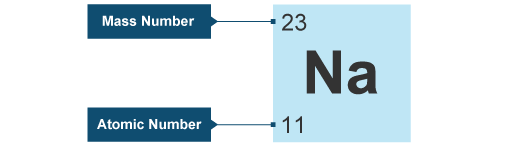
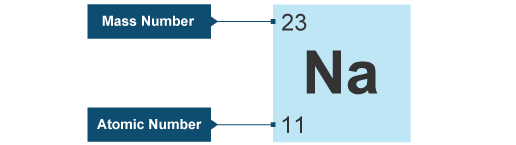
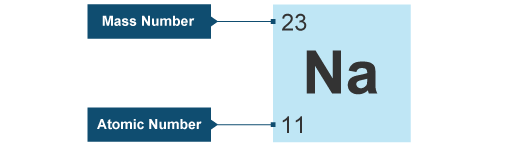
If an element has an atomic number of 11 and a mass number of 23, how many neutrons does it have?

a)

11

b)

12

c)

23

d)

34

24.

Scientist who discovered the neutron.

a)

Bohr

b)

Chadwick

c)

Rutherford

d)

Thomson

25.

Which of the following particles is NOT found in an atom's nucleus?

a)

proton

b)

neutron

c)

electron

26.

Scientist that discovered the proton.

a)

Bohr

b)

Chadwick

c)

Rutherford

d)

Thomson

27.

Which of the labeled structures is a proton?

a)

a

b)

b

c)

c

28.

What is the chemical symbol of this element?

a)

79

b)

Au

c)

AU

d)

gold

29.

Which TWO of the following subatomic particles are inside the nucleus?

a)

protons

b)

electrons

c)

neutrons

d)

There are no subatomic particles in the nucleus of an atom.

30.

The number of which subatomic particle determines the element of an atom (if it's carbon, oxygen, nitrogen, etc.)?

a)

proton

b)

neutron

c)

electron

d)

Subatomic particles do no determine the element of an atom.

31.

Use a periodic table to help you determine the element in the image. (Hint: Use the # of protons.)

a)

lithium

b)

oxygen

c)

magnesium

d)

carbon

32.

Use a periodic table to help you determine the element in the image. (Hint: Use the # of protons.)

a)

carbon

b)

lithium

c)

beryllium

d)

nitrogen

33.

Use a periodic table to help you determine the element in the image. (Hint: Use the # of protons.)

a)

boron

b)

beryllium

c)

neon

d)

lithium

34.

How many protons does fluorine have?

a)

19

b)

1

c)

9

d)

10

35.

How many neutrons does nitrogen have?

a)

7

b)

14

c)

0

d)

6

36.

How many electrons does silicon have?

a)

28

b)

14

c)

0

d)

10

37.

Using the diagram as a reference, how many electrons does lithium have in its OUTER shell?

a)

1

b)

3

c)

8

d)

2

38.

Using the diagram as a reference, how electrons does carbon have in its OUTER shell?

a)

2

b)

6

c)

4

d)

1

39.

Using the diagram as a reference, how electrons does neon have in its OUTER shell?

a)

10

b)

8

c)

2

d)

6

40.

What is the charge of the nucleus?

a)

+

b)

-

c)

0

41.

The Gold Foil Method through scattering of alpha particles was used to discover what part of the atom?

a)

protons

b)

electrons

c)

neutrons

d)

nucleus

42.
What scientist is best known for his "Plum Pudding" model of the atom?
a)
J.J. Tomson
b)
Ernest Rutherford
c)
John Dalton
d)
Democritus
43.
Place the following scientists in order, from earliest to latest: 
A) Ernest Rutherford
B) J.J. Thomson
C) John Dalton
a)
B,C,A
b)
C,A,B
c)
A,C,B
d)
C,B,A
44.
Which statement is true according to current thinking?
a)
An atom is mostly empty space.
b)
An atom is a collection of particles, so tightly packed that there is little empty space.
c)
The atomic nucleus is very mobile, and moves around inside a cloud of electrons.
d)
The size of atoms changes over time, pulsating from large to small to large again.
45.
What particle was used in the gold foil experiment?
a)
Beta Particle
b)
Alpha particle
c)
Gamma ray 
46.
Most of the alpha particles went straight through the gold foil.  This suggested that....
a)
There is no interference between alpha and gold.
b)
Most of the atom is made up of empty space.
c)
The alpha particles were very tiny.
d)
None of the above
47.
Some of the alpha particles fired at the gold foil were deflected at angles.  This was due to...
a)
reflection of the alpha source when it it the fluorescent screen.
b)
The alpha particles hitting the gold nucleus.
c)
Repulsion forces between the positively charged nucleus and the positively charged alpha particles. 
d)
A mis-firing of the alpha source
48.
Which of these is a property of metals?
a)
It's malleable
b)
It can't conduct electricity
c)
They are used in food
d)
It's very brittle
49.
Which elements are found on the left to middle of The Periodic Table? 
a)
Metals
b)
Nonmetals
c)
Metalloids
d)
Candles
50.
If you have a material that can conduct electricity well it is probably a...
a)
Metalloid
b)
Matter
c)
Non-metal
d)
Metal
51.
Unlike non-metals, most metals tend to —
a)
conduct electricity and heat well.
b)
be gases at room temperature.
c)
break easily when hammered.
d)
have less luster and shine.
52.

Metals are sonorous in nature. What is sonorous?

a)

Making into powder

b)

Drawn into wires

c)

Make sound on beating

d)

None of these

53.
What does malleable mean?
a)
able to bend
b)
will break easily
c)
can be used for wire
d)
is shiny
54.
What does ductile mean?
a)
electricity flows easily
b)
quacks like a duck
c)
can be drawn into a wire
d)
able to bend
55.
Where are the non-metallic elements found in the periodic table?
a)
In the middle
b)
In the top rows
c)
On the left-hand side
d)
On the right-hand side
56.
The list which contains only metals is .......
a)
aluminium, copper, nitrogen
b)
iron, oxygen, hydrogen
c)
iron, silver, aluminium
d)
iron, sulphur, copper
57.
Brittle
a)
Metal
b)
Nonmetal
58.
Sulfur
a)
Metal
b)
Nonmetal
59.
Good conductor of heat
a)
Metal
b)
Nonmetal
60.
Which of the following is a metal?
a)
chlorine
b)
sodium
c)
Oxygen
61.

Which alkali metal is most reactive out of the following

a)

rubidium

b)

potassium

c)

sodium

d)

lithium

62.

How many electrons do the alkali metals have in their outer shell?

a)

1

b)

2

c)

8

d)

7

63.

Which alkali metal has the symbol Cs

a)

Caesium

b)

Ceasium

c)

Calcium

d)

Sodium

64.

What happens to the melting point of the alkali metals as you move down the group?

a)

decreases

b)

increases

65.

Which gas is released when the alkali metals react with water?

a)

hydrogen

b)

oxygen

c)

hydroxide

d)

carbon dioxide

66.

How does a group 1 metal atom form an ion?

a)

lose 1 electron

b)

lose 2 electrons

c)

gain 1 electron

d)

gain 2 electrons

67.

Which alkali metal is the least reactive?

a)

lithium

b)

sodium

c)

potassium

d)

rubidium

68.

How many protons does a sodium atom have?

a)

11

b)

23

c)

12

69.

How many electrons does a sodium atom have?>

a)

11

b)

23

c)

12

70.

How many electrons does a sodium ION have?

a)

10

b)

11

c)

23

d)

12

71.

Which of the "Halogens" is found in liquid state at room temperature?

a)

Flourine

b)

Astatine

c)

Iodine

d)

Bromine

72.

Which of the "Halogens" has yellowish green color?

a)

Chlorine

b)

Bromine

c)

Flourine

d)

Iodine

73.

What group are the Halogens?

a)

6.9

b)

7

c)

8

d)

3

74.

Which of these elements are Halogens?

a)

Fluorine

b)

Helium

c)

Zinc

d)

Bromine

75.

How many electrons do Halogens have in their outer shell?

a)

0

b)

1

c)

6

d)

7

76.

You've seen the name many times, how do you spell it?

a)

Halogens

b)

Helogens

c)

Hallogens

d)

Halogans

77.
Which of these is not a noble gas?
a)
Helium
b)
Argon
c)
Nitrogen
d)
Krypton
78.

6.15: Which of these is not a property of noble gases?

a)

Colourless

b)

Odourless

c)

Flammable

d)

Gas at room temperature

79.
True or false: Noble gases react with water
a)
True
b)
False
80.
Where are the nonmetals located on the periodic table?
a)
top left corner
b)
bottom left corner
c)
top right corner
d)
bottom left corner
81.
Name the group that contains inert (nonreactive) elements.
a)
noble gases
b)
halogens
c)
alkali metals
d)
alkaline earth metals
82.
In which group would you find the Noble Gases?
a)
5
b)
6
c)
7
d)
8
83.
Which noble gas is found in signs or light displays?
a)
Krypton
b)
Helium
c)
Argon
d)
Neon