wayground logo

Free Printable Worksheets

Font size

S
M
L
XL
Worksheets

Unit 1 and 2

Total questions: 65

Worksheet time: 46mins
Name
Class
Date
1.
Relationship between mass and volume
a)
Volume
b)
Density
c)
Displacement
d)
Matter
2.
Characteristic that can be observed such as color, state, or hardness
a)
physical property
b)
chemical property
c)
density
d)
mass
3.
Example of a chemical change
a)
baking cookies
b)
grinding flour
c)
melting popsical
d)
cutting a piece of paper
4.
The total amount of mass in a system does not change during a chemical reaction
a)
Chemical Reaction
b)
Counting Atoms
c)
Law of Conservation of Mass
d)
Law of Conservation of Volume
5.
During physical changes, matter always retains its
a)
identity
b)
shape
c)
size
d)
color
6.
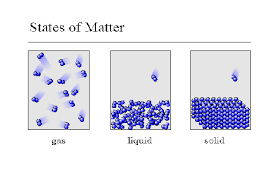
Which state of matter has the highest amount of energy?
a)
solid
b)
liquid
c)
gas
7.
When a solid turns into a liquid
a)
freezing
b)
melting
c)
evaporating
d)
condensing
8.
How many atoms are in CaCl2?
a)
2
b)
4
c)
1
d)
3
9.
How many atoms are in Al(NO3)3?
a)
9
b)
13
c)
15
d)
6
10.
At higher temperatures
a)
particles in an object have less energy
b)
particles in an object move faster
c)
a gas contracts
11.
Which state of matter has a definite shape?
a)
solid
b)
liquid
c)
gas
12.
Define a liquid.
a)
Indefinite shape, indefinite volume
b)
Definite shape, definite volume
c)
Found in stars
d)
Definite volume, indefinite shape
13.
What is the formula for density?
a)
density = mass x volume
b)
density = mass / volume
c)
density = mass + volume
d)
density = mass - volume
14.

The amount of matter in an object is its _______________.

a)

mass

b)

volume

c)

density

d)

weight

15.

The amount of space an object takes up is its ________________.

a)

mass

b)

volume

c)

density

d)

weight

16.
Which of the following is a negatively charged subatomic particle?
a)
Electron
b)
Proton
c)
Neutron
d)
Quark
17.
All matter is made of what?
a)
energy 
b)
atoms 
c)
electrons 
d)
compounds 
18.
The particles that are found in the nucleus of an atom are
a)
neutrons and electrons
b)
electrons only
c)
protons and neutrons
d)
protons and electrons
19.
These elements are ductile
a)
Metals
b)
Nonmetals
c)
Metalloids
20.
What are the horizontal rows on the periodic table called?
a)
Groups
b)
Periods
c)
Rows
d)
Classifications
21.
An atoms overall charge is 
a)
positive 
b)
depends on its mood 
c)
neutral 
d)
negative 
22.
How are elements and compounds different?
a)
A compound is a combination of two or more types of matter, an element is one type.
b)
Compounds are represented by chemical symbols of one letter, elements by two.
c)
There are an infinite number of elements, but a limited number of compounds.
d)
Elements are always larger units of matter, and compounds are smaller.
23.
In a neutral atom, what needs to be true?
a)
The number of protons and neutrons are the same
b)
The number of protons and electrons are the same
c)
The number of neutrons and electrons are the same
d)
None of the above
24.
Subatomic particle that determines the identity of the atom
a)
proton
b)
nucleus
c)
electron
d)
neutron
25.

Why do elements bond?

a)

To be friends

b)

To create a new element

c)

To become stable

d)

To get bigger

26.
Ionic bonds are between...
a)
nonmetals and nonmetals
b)
carbon and oxygen
c)
metals and nonmentals
d)
hydrogen and chlorine
27.
Covalent bonds are between...
a)
two or more nonmetals
b)
sodium and chlorine
c)
metals and metals
d)
metals and nonmetals
28.
What kind of bond forms when atoms exchange electrons?
a)
ionic
b)
covalent
c)
artificial
d)
univalent
29.
If an atom loses two electrons what charge will it have?
a)
-2
b)
-1
c)
+1
d)
+2
30.
If an atom gains two electrons what charge will it have?
a)
-2
b)
-1
c)
+1
d)
+2
31.

Which of the following describes covalent bonds?

a)

Bonds form because of opposite charges

b)

electrons are shared to fill outer electron shells

c)

Electrons are transferred between atoms

d)

Covalent bonds are magical

32.

The octet rules states that most elements want to have _____ valence electrons.

a)

2

b)

4

c)

6

d)

8

33.
What is the basis of a metallic bond?
a)
the attraction of neutral metal atoms.
b)
the attraction between protons and neutrons.
c)
the attraction between positive metal ions and interlocking electrons.
d)
the attraction between positive metal ions and free floating electrons.
34.

Chemical bond is ...

a)

the physical mixing of two different atoms.

b)

the force that holds two atoms together

c)

the energy used up when two atoms combined.

d)

the temperature that changes the phase of matter.

35.

Which statement best describes the relationship between atoms & molecules.

a)

molecules are made of atoms that are chemically bonded together.

b)

atoms are made of molecules that are chemically bonded together.

c)

molecules are made of a mixture of atoms and compounds.

d)

atoms are made of protons, neutrons & electrons.

36.

True or False: In a complete chemical equation, there must be the same number of atoms of each element on the reactants and products side.

a)

True

b)

False

37.

Look at the chemical equation.


How many atoms of mercury (Hg) are in the reactants?

(a)  

38.

Look at the chemical equation.


Is it written correctly to show the Law of Conservation of Mass?

a)

Yes

b)

No

39.

Look at the chemical equation.


How many atoms of nitrogen (N) are in the reactants?

(a)  

40.

Look at the chemical equation.


Is it written correctly to show the Law of Conservation of Mass?

a)

Yes

b)

No

41.
A scientist combines chemicals and produces an exothermic reaction. What byproduct of this reaction would show that it is exothermic?
a)
heat
b)
coolness
c)
a precipitate
d)
gas bubbles
42.
Increasing the concentration of a reactant in a chemical reaction will _____________.
a)
decrease the rate of the reaction
b)
stop the reaction from happening
c)
increase the rate of the reaction
d)
have no effect on the rate of the reacion
43.

Which type of chemical reaction has two or more reactants to make one product?

a)

combustion

b)

single displacement

c)

double displacement

d)

synthesis

e)

decomposition

44.

Identify the following chemical reaction.

2 NaBr + 1 Ca(OH)2 ----> 1 CaBr2 + 2 NaOH

a)

Synthesis (or combination)

b)

Decomposition

c)

Single displacement

d)

Double displacement

45.

Identify the following chemical reaction.

3 HBr + 1 Al(OH)3 ----> 3 H­2O + 1 AlBr3

a)

Synthesis (or combination)

b)

Decomposition

c)

Single displacement

d)

Double displacement

46.

Identify the following chemical reaction.

Pb + FeSO4 ----> PbSO4 + Fe

a)

Synthesis (or combination)

b)

Decomposition

c)

Single displacement

d)

Double displacement

47.

What reaction has the following general formula:

AB --> A + B

a)

Combination

b)

Decomposition

c)

Single Replacement

d)

Double Replacement

e)

Combustion

48.

Which chemical reaction always starts with a hydrocarbon that reacts with oxygen and produces carbon dioxide and water?

a)

Decomposition

b)

Synthesis

c)

Combustion

d)

Single Replacement

49.

Which phrase describes what happens to atoms in a chemical reaction?

a)

never lost or gained, just rearranged

b)

sometimes lost, never rearranged

c)

sometimes lost, gained, or rearranged

d)

lost or gained, never rearranged

50.
A ______________ is a substance that increases the rate of a reaction without being used up during the reaction. 
a)
catalyst
b)
product
c)
reactant
d)
solute
51.

Smaller particle size allows for a _________ surface area to be exposed for the reaction.

a)

larger

b)

smaller

c)

rectangular

d)

spherical

52.
What is a substance that is dissolved in another substance? 
a)
solution
b)
solute
c)
solvent
d)
compound
53.
What is a solvent?
a)
The substance that does the dissolving in a solution.
b)
The substance that is being dissolved in a solution.
c)
The mixing of different substances.
d)
The process in which neutral molecules lose or gain electrons
54.
A saturated solution is______
a)
No more solute can be dissolved
b)
More solute can be dissolved
c)
The solvent and solution
55.
Amount of solute in a given amount of solvent or solution
a)
Concentration
b)
Miscible
c)
Solute
d)
solubility
56.
What might happen if you mixed a strong acid with an equally strong base?
a)
You would see an explosive chemical reaction.
b)
The acid would destroy the base.
c)
The base would destroy the acid.
d)
You'd wind up with a pH-neutral substance.
57.
An extremely strong base would have a pH of:
a)
1
b)
7
c)
9
d)
14
58.
This piece of pH paper has been dipped into:
a)
An acid
b)
A base
c)
A pH-neutral substance
d)
A buffer
59.
Which of the following substances is basic?
a)
soda
b)
lemon juice
c)
soap
d)
vinegar
60.
What is a property of bases?
a)
Slippery touch
b)
Sour taste
c)
Ability to dissolve metal
d)
Ability to form hydronium ions
61.
Which of the following organic compounds is the main source of energy for living things?
a)
carbohydrates
b)
lipids
c)
nucleic acids
d)
proteins
62.
Which macromolecule is made of simple and complex sugars?
a)
lipids
b)
proteins
c)
carbohydrates
d)
nucleic acids
63.
What is a polymer?
a)
a group of atoms
b)
a long chain molecule with identical group of atoms
c)
a long chain of molecules
d)
a long chain of different atoms
64.
Small molecules that make up larger molecules.
a)
monomer
b)
polymer
c)
synthetic
d)
plastic
65.

Fossil fuels are organic compounds that are made from __________.

a)

halogens

b)

hydrocarbons

c)

metals

d)

polyethylenes