Worksheets
Cell
Total questions: 37
Worksheet time: 48mins
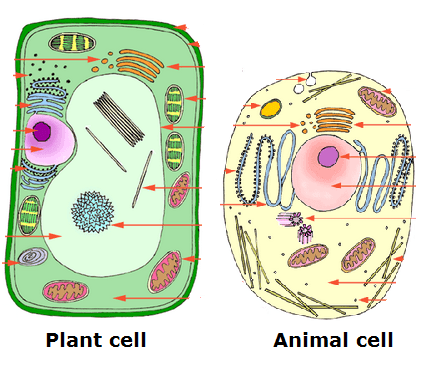
What distinguishes a plant cell from an animal cell? (How do you tell them apart) Hint: There's 3 ways (Check all 3)
Central Vacuole
Mitochondria
Cell Wall
Ribosomes
Chloroplasts

The 3 parts of the Cell Theory are...?
All living things are composed of cells
Cells are the basic units of structure and function in living things
All cells are produced from other cells
All living things are composed of cells
Cells are the basic units of dance and vibes in living things
All cells are destroyed from other aliens
All living things are composed of Jell-O
Cells are the basic units of structure and function in living things
All cells are produced from factories in Canada
All living things are composed of cells
Cells do karate and practice eating whole pies in their free time
All cells are produced from other cells
____ is credited with being the first scientist to observe cork cells.
Leewenhoek
Shleidon
Hooke
Cells that are only made of (a) cell are called unicellular.
Which of the following statements is true?
Plants and animal cells have cell walls for protection.
Animal cells have one large vacuole; the plant cell has tiny ones.
Plant cells contain chlorophyll; animal cells have lysosomes.
Animal cells are box shaped; plant cells are circular
Check all the boxes for each organelle that plant and animal cells both have.
lysosomes
cell membrane
mitochondria
nucleus
cell wall
Sometimes called the “powerhouse” of the cell, this organelle is where respiration takes place.
Mitochondria
Nucleus
Vacuole
Bacteria is classified as a what?
Prokaryote
Eukaryote
If it does not rain for a long period of time, plants’ leaves will begin to wilt or sag. They have used up the water that they stored in their ___________
Vacuole
Chloroplast
Mitochondria
Which organelle is the command center for eukaryotic (plant and animal) cells?
Cell wall
Nucleus
Mitochondria
Lysosome
what is the function of a lysosome?
To create energy for the cell
To command the cell what to do
To remove waste using digestive enzymes from the cell
To protect the cell
Which of the following are prokaryotic cells?
Plant
Animal
Bacteria
Plant and Animal
What is the difference between a prokaryotic cell and a eukaryotic cell?
Prokaryotes do not have a nucleus or organelles, but a eukaryotic cell does
Eukaryotic cells do not have a nucleus or organelles, but prokaryotes do
What is the purpose of the nucleus?
It is the command center, contains DNA, and cell division
It protects the cell
It stores energy for the cell
It gets rid of waste in the cell
What is the difference between mitochondria and chloroplast?
Mitochondria produces energy and chloroplasts breaks down energy
There is no difference. They are the same.
Mitochondria breaks down energy from food and chloroplasts produce energy from sunlight.
Mitochondria contains DNA and chloroplasts are green
The outermost layer of a plant cell and animal cell is...
Plant cell - cell membrane, animal cell - cell wall
Plant cell - cell wall; animal cell - cell membrane
Plant and animal cell - cell wall
Plant and animal cell - cell membrane
What is the jelly-like substance that keeps the organelles floating?
Cell Membrane
Nucleus
ER
Cytoplasm
What are the "protein-makers" of a cell?
Ribosomes
Mitochondria
ER
Golgi Body
What is the smallest LIVING unit of LIVING THINGS?
a cell
a mitochondria
a brick
a protein
The cell membrane...
is like a wall that blocks everything from going into the cell
controls what can go into or out of a cell
is hard and rigid, and gives the cell its shape, like an exoskeleton
Which part of the cell CONTROLS everything that happens in the cell?
mitochondria
nucleus
cell membrane
vacuole
Which part of the cell STORES water and minerals?
mitochondria
nucleus
cell membrane
vacuole
Where do cells come from?
They come from eggs.
They come from minerals in water.
They come from other cells.
How do cells reproduce?
They lay eggs.
One cell divides to make 2 cells (etc.)
Two cells combine and then make 4 cells.
In PLANT cells, which part is the rigid outer layer that supports and protects the cell?
cell membrane
cell wall
chloroplast
nucleus
Where does PHOTOSYNTHESIS happen in plants?
in the nucleus
everywhere in the cell
in the cytoplasm
in the chloroplasts
Which thing is NOT made of cells?
A dog
A carrot
A piece of candy
A piece of wood from a tree
What instrument do you need to use to see cells?
A microscope
A telescope
A periscope