wayground logo

Free Printable Worksheets

Font size

S
M
L
XL
Worksheets

Heat & conductor & insulator

Total questions: 102

Worksheet time: 2hrs 21mins

Name
Class
Date
1.

Is energy that flows from something warm to something cool

a)

air

b)

Thermal energy

c)

vapor

d)

Light energy

2.

To transfer to thermal energy between matter or different temperatures is called ______________.

a)

air

b)

heat

c)

water

d)

matter

3.

__________________ is present whenever there is heat.

a)

Energy

b)

matter

c)

water

d)

any of them

4.

Daniel uses a thermometer to take a single reading of the water in a beaker. What is Daniel measuring?

a)

conduction rate

b)

amount of energy transferred from the water to the beaker

c)

amount of energy transferred from the beaker to the water

d)

amount of heat energy of the water

5.

Abd Elrahman knows that heat energy can move between substances. For example, warm water can warm his hands. Which condition must be present for the transfer of energy between two substances to take place?

a)

The objects must both be solids.

b)

The objects must transfer energy without the use of matter.

c)

The objects must be different temperatures.

d)

The objects must be the same temperature.

6.

On a warm sunny day, a lizard sits on a rock. Which word explains why the lizard feels heat from the sun?

a)

convection

b)

radiation

c)

gravity

d)

friction

7.

Maya knows that conduction is a form of heat energy transfer. Which transfer of heat energy is made through conduction?

a)

hand heats a snowball

b)

sun warms a greenhouse

c)

boiling water heats pasta

d)

radiator warms a home

8.

Each picture shows a source of heat. Which picture shows heat transfer through convection?

a)
b)
c)
d)
9.

This table shows some sources of heat.

Which source(s) will transfer heat through convection?

a)

1 only

b)

3 and 4 only

c)

2 and 3 only

d)

1 and 2 only

10.

Daniel holds an ice cube in his hand. After some time passes, the ice cube begins to melt. Which term describes the process of heat transfer?

a)

conduction

b)

radiation

c)

insulation

d)

. convection

11.

Look at the picture below. As the soup gets hotter, it heats up the spoon.


Which explains why the spoon gets hot?

a)

conduction

b)

radiation

c)

insulation

d)

convection

12.

Identify a heat source in your home. Then give an example of how this heat source transfers heat energy.

4 lines
13.

Each picture shows a source of heat. Which picture shows heat transfer through conduction? select all that apply.

a)
b)
c)
d)
14.

Each picture shows a source of heat. Which picture shows heat transfer through RADIATION? select all that apply.

a)
b)
c)
d)
15.
 Ryan rubs two sticks together quickly. When he stops rubbing the sticks, he notices that they are warm to touch where he rubbed them. Which type of energy has been produced?
a)
sound energy
b)
electrical energy
c)
light energy
d)
heat energy
16.
Betty knows that different types of energy are produced by many objects around the house, such as a light bulb.
Which types of energy does the bulb give off?
a)
heat and electric
b)
light and mechanical
c)
light and heat
d)
electric and light
17.

To transfer to thermal energy between matter or different temperatures is called ______________.

a)

air

b)

heat

c)

water

d)

matter

18.

__________________ is present whenever there is heat.

a)

Energy

b)

matter

c)

water

d)

any of them

19.

A ________________ is anything that gives off energy that particles of matter can take in.

a)

the sun

b)

water

c)

convection

d)

heat source

20.

________________ is the transfer of heat that occurs when one thing touch another one.

a)

conduction

b)

convection

c)

radiation

21.

Mark two examples of conduction.

a)

putting your warm face in the fresh pillow

b)

a bird warming its eggs in a nest

c)

placing ice in a glass

d)

pouring water to the flowers

22.

________________ is the transfer of thermal energy as matter moves. In convection, a gas or a liquid moves from place to place.

a)

conduction

b)

convection

c)

radiation

d)

thermal energy

23.

___________ is energy that is sent out in waves.

a)

convection

b)

radiation

c)

conduction

d)

heat

24.

Mark two examples of radiation energy.

a)

the refrigerator

b)

the microwave

c)

the sun

d)

a guitar

25.

The movement of energy from one object to another.

a)

Energy

b)

Convection

c)

Radiation

d)

Heat

26.

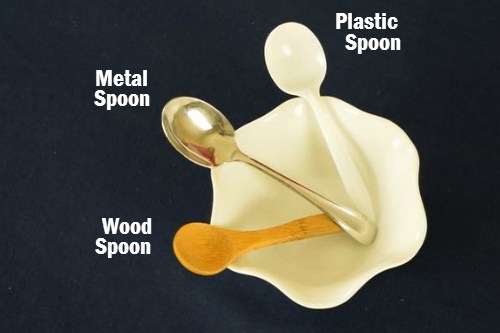
Which material will heat travel through the fastest?

a)

Plastic

b)

Wood

c)

Metal

27.

What is Convection?

a)

When heat is passed from particle to particle through an object.

b)

When particles get heated, expand, and become less dense.

c)

When heat transfers by waves through empty space.

28.

What is heat?

a)

The temperature of hot objects

b)

The energy transferred between hot objects

c)

The fire hot objects give off.

d)

All of the above

29.

Heat moves from ____________ to _____________.

a)

any way it wants

b)

cold to hot

c)

warm to luke warm

d)

hot to cold

30.

Think about a pan of water sitting on an electric stove. The stove is then turned on to high.

How is heat transferred from the stove to the pan?

a)

conduction

b)

convection

c)

radiation

d)

temperature

31.

Suppose that you are at the beach.

Energy from the Sun reaches you mainly through

a)

conduction

b)

convection

c)

radiation

d)

temperature

32.

Water currents can transfer heat by

a)

conduction

b)

convection

c)

radiation

d)

temperature

33.

Two objects are touching.

How is heat transferred from one object to the other?

a)

conduction

b)

convection

c)

radiation

d)

reflection

34.

George touches a metal spoon is in a hot bowl of soup. It burns his hand.

This is an example of heat transfer by:

a)

convection

b)

radiation

c)

conduction

d)

temperature transfer

35.

A boy sits to the side of a campfire. He is 4 feet away, but still feels warm.

What type of heat transfer is the boy experiencing?

a)

conduction

b)

convection

c)

radiation

d)

reflection

36.

Heat energy moves from a __________________ object to a _________________ object.

a)

warmer, cooler

b)

cooler, warmer

c)

bigger, smaller

d)

smaller, bigger

37.
What is a insulator?
a)
a material that slows the transfer of heat
b)
a material that transfers heat easily
c)
a material that is fluffy
d)
a material that is temperature controlled
38.
What is a conductor?
a)
a material that slows the transfer of heat
b)
a material that transfers heat easily
c)
a material that is fluffy
d)
a material that is temperature controlled
39.
What is the BEST example of a conductor? 
a)
A wooden block
b)
A ceramic mug
c)
A glass cup
d)
A metal bowl
40.
A jacket is a good example of an . . .
a)
Insulator
b)
Investigator
c)
Conductor
d)
Interrogator
41.
True or False: An insulator is a type of material that allows heat to escape from an object quickly.
a)
True
b)
False
42.
What is the BEST example of a conductor?
a)
A plastic spatula
b)
An aluminum pie plate
c)
A styrofoam cup
d)
A copper pan
43.
Which is NOT an insulator.
a)
Wool
b)
Plastic
c)
Iron
d)
Glass
44.
Rubber is a insulator.
a)
true
b)
false
45.
Heat always travels from ______________ to ____________ objects.
a)
hot to cold
b)
cold to hot
c)
cold to cold
d)
hot to hot
46.
What is NOT an example of an insulator in the kitchen?
a)
an oven mitt
b)
pots and pans
c)
wooden spoons
d)
a plastic measuring cup
47.
Mittens help keep your hands warm in winter because
a)
they are colorful
b)
they are fuzzy
c)
they are conductors
d)
they are insulators
48.
What is a conductor?
a)
a material that slows the transfer of heat
b)
a material that transfers heat easily
c)
a material that is fluffy
d)
a material that is temperature controlled
49.
All of the following are conductors except _______.
a)
metal spoon
b)
wire
c)
iron nail
d)
plastic spoon
50.

Which of the following is a good conductor of heat and electricity?

a)

newspaper

b)

copper wire

c)

glass plate

d)

plastic bottle

51.

Which is TRUE about an insulator?

a)

It can be a good conductor.

b)

It allows heat to pass through easily.

c)

It slows energy transfer.

d)

It provides heat to keep materials warm.

52.

The following are conductors EXCEPT-

a)
b)
c)
d)
53.

The electrical wires in many homes are made of copper and covered with plastic. Why are copper and plastic good choices for electrical wires?

a)

Copper is a conductor of electricity, and plastic is an insulator of electricity.

b)

Copper is an insulator of electricity, and plastic is a conductor of electricity.

c)

Copper is a conductor of electricity, and plastic is an insulator of heat.

d)

Copper is an insulator of electricity, and plastic is a conductor of heat.

54.
wood is a _____?
a)
conductor
b)
insulator
55.
Which of these substances conducts electricity the best?
a)
wood
b)
brick
c)
copper
d)
plastic
56.
What is NOT an example of an insulator in the kitchen?
a)
An oven mitt
b)
Pots and pans
c)
A wooden spoon
d)
A plastic measuring cup
57.
The handle of a frying pan is often coated in rubber because rubber provides...
a)
Heat insulation
b)
Heat conduction
c)
A low melting point
d)
A nonstick surface
58.
Mittens help keep your hands warm in winter because:
a)
They are conductors of heat.
b)
They are fuzzy.
c)
They are conductors of electrical energy.
d)
They are insulators.
59.
Conductors are materials that...
a)
Allow heat to pass through
b)
Stop heat from passing through
c)
Allow cold to pass through
d)
Stop cold from passing through
60.

A material that prevents heat or an electric current from flowing

a)

Conductor

b)

Insulator

c)

Magnetism

d)

Electric Circuit

61.

Jennifer is cooking using a metal pot which has plastic coverings on the handles. Why is she able to pick up the pot after it has been heated?

a)

The plastic handles act as an insulator.

b)

The metal pot acts as an insulator.

c)

Both the pot and the handles are conductors.

d)

Both the pot and the handles are insulators

62.

Which materials allow heat to pass through them easily?

a)

Conductors

b)

Transferals

c)

Insulators

d)

Conveyors

63.

What do we call objects that do not easily allow heat to travel through them? (2 points)


a)

Insulators

b)

Idolaters

c)

Protectors

d)

Transfers

64.

Which object would make the best conductor?

a)

An aluminum can

b)

A cardboard box

c)

A plastic spoon

d)

A foam cup

65.

Which material would make the best insulator in a cooler?

a)

Foam

b)

Metal

c)

Iron

d)

Steel

66.

Monica is using a metal spoon to stir the soup she is cooking. What material does the spoon need so she can hold onto it without burning her hand?

a)

A cardboard conductor

b)

A plastic insulator

c)

A metal insulator

d)

A foam conductor

67.

Why do people wear a sweater or coat when the temperature outside drops?

a)

It acts as a conductor to keep you warm.

b)

It acts as a conveyor to keep you warm.

c)

It acts as a transferal to keep you warm.

d)

It acts as an insulator to keep you warm.

68.

Which object is a good conductor?

a)

An iron frying pan

b)

A plastic cup

c)

A foam cup

d)

A wooden spoon

69.

What object is the best conductor of heat?

a)

A silver fork

b)

A pipe cleaner

c)

A plastic glass

d)

A wooden spoon

70.
What is a example of a conductor?
a)
wood 
b)
metal
c)
rubber
d)
rock
71.
What is a example of a insulator?
a)
metal 
b)
rubber
c)
water
72.
a)
conductor
b)
insulator
73.
Material that allow heat and electricity to pass through them easily are called _________ 
a)
Conductors
b)
Insulators
c)
D-cell
74.
Material that do not allow heat and electricity to pass through them easily are called _________ 
a)
Conductors
b)
Insulators
c)
D-Cell
75.
Conductors are made out of _________ 
a)
Metal
b)
plastic
c)
wood
76.
a)
conductor
b)
insulator
77.
a)
conductor
b)
insulator
78.
a)
conductor
b)
insulator
79.
Why are metals useful for making electrical wire?
a)
Metals do not bend.
b)
Metals hold much heat.
c)
Metals are insulators.
d)
Metals are conductors.
80.
Which is NOT an insulator.
a)
Wool
b)
Plastic
c)
Copper
d)
Glass
81.
Something electricity can't move through is called a(n) ______.
a)
conductor
b)
wire
c)
shoe
d)
insulator
82.
What is a example of a conductor?
a)
wood 
b)
metal
c)
rubber
d)
rock
83.
What is a example of a insulator?
a)
metal 
b)
rubber
c)
water
84.
Water is a insulator.
a)
True
b)
False
85.
Water is a insulator.
a)
True
b)
False
86.
Rubber is a insulator.
a)
true
b)
false
87.
What are Conductors?
a)
A conductor is a material that allows electric charge to move through it as an electric current. Usually the charge is carried by electrons, and the conductor is a metal.
b)
an insulator
c)
an conductor 
d)
A material or an object that does not easily allow heat, electricity, light, or sound to pass through it. Air, cloth and rubber are good electrical insulators; feathers and wool make good thermal insulators. Compare conductor.
88.
What are insulators?  
a)
A conductor is a material that allows electric charge to move through it as an electric current. Usually the charge is carried by electrons, and the conductor is a metal.
b)
An object that is really, really, really, and I mean really truely, awesome.
c)
A material or an object that does not easily allow heat, electricity, light, or sound to pass through it. Air, cloth and rubber are good electrical insulators; feathers and wool make good thermal insulators. Compare conductor.
89.
What is the difference between a conductor and an insulator?
a)
An insulator allows electricity to flow through it easily and a conductor does not
b)
A conductor allows electricity to flow through it easily and an insulator does not.
c)
An insulator is magnetic and a conductor is not
d)
A conductor is magnetic and an insulator is not
90.
A conductor allows energy to easily pass by.  
a)
True 
b)
False
91.
A insulator does not let energy flow through easily 
a)
True 
b)
False
92.
Which one is an insulator? 
a)
Silver 
b)
Copper 
c)
Mechanical pencil
d)
plastic 
93.
Which one is a conductor? 
a)
wood 
b)
iron 
c)
plastic spoon 
d)
paper 
94.
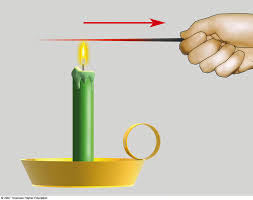
The candle will slowly heat the metal and transfer the heat directly to the mans hand.
a)
conduction
b)
convection
c)
radiation
95.
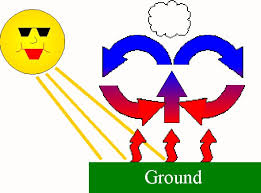
Warm air rises and the cool air sinks.
a)
conduction
b)
convection
c)
radiation
96.
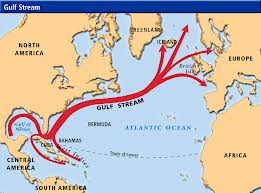
The Gulf Stream is a current that brings warm ocean water from the south to the north.
a)
conduction
b)
convection
c)
radiation
97.
A group of friends gather around a fire to stay warm.
a)
conduction
b)
convection
c)
radiation
98.
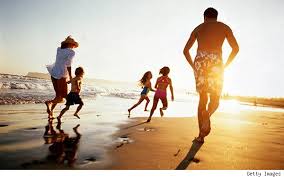
The sun shines down on this family as the play on the beach.
a)
conduction
b)
convection
c)
radiation
99.
Blow drying your wet hair.
a)
conduction
b)
convection
c)
radiation
100.
In this experiment, the WARM red dye and the COLD blue dye was placed in the water at the same time. The warm red dye rose to the top while the cold blue dye sank to the bottom.
a)
conduction
b)
convection
c)
radiation
101.
Heat transfers from an area of ____temperature to an area of ___ temperature.
a)
high to low
b)
low to high
c)
high to high
102.
This is a lava lamp. When the light bulb heats the wax, the wax rises. When the wax cools, it falls. This cycle of rising/falling is an example of:
a)
Conduction.
b)
Convection.
c)
Radiation.