
Font size
 Worksheets
Unit 4: Changing Populations in the Environment
Total questions: 40
Worksheet time: 28mins
Scientists have a theory about the relationship between climate and biodiversity. Which best describes this theory?
Warmer climates promote higher biodiversity, allowing plants to grow year-round. This supports more organisms that rely on plants.
Colder climates promote higher biodiversity, reducing the competition among organisms for food. This supports stronger organisms that live longer.
Warmer climates promote higher biodiversity because they tend to receive more rainfall. This provides a source of water for more organisms.
Colder climates promote higher biodiversity because they are usually larger in size. This provides space for more organisms.
Why are nonnative species a threat to biodiversity?
They are not able to successfully breed in the wild.
They often use up resources that other organisms need.
They release pollution into many environments.
They easily contract and spread diseases to other organisms.
Which best protects animal species that are endangered due to overhunting?
increased biodiversity
poaching
laws
captive breeding

Which best describes what the picture shows?
an organism
a community
a niche
a population

Which is the best example of an organism’s niche shown in the picture?
The environment contains several of the same species of coral.
The shallow area of the ocean meets the needs of the coral and the fish.
The ocean has fish and coral that live in the same area.
The coral take in food from the water and provide shelter for the fish.

Although it is against the law, people hunt and capture mountain gorillas in Africa. They sell the baby gorillas for large sums of money.
This is an example of which factor that affects biodiversity?
pollution
nonnative species
habitat destruction
poaching
Which best compares habitat and niche?
Niche is a place in which organisms live, and habitat is the way in which an organism fits into its habitat.
Habitat is a place in which organisms live, and niche is the way in which an organism fits into its habitat.
Habitat is a group of organisms that live in an area, and niche is a specific species that lives in that area.
Niche is a group of organisms that live in an area, and habitat is a specific species that lives in that area.

Kayla is learning about ecology and made a study chart.Which headings best complete the chart?
X: Abiotic
Y: Biotic
X: Biotic
Y: Abiotic
X: Niche
Y: Habitat
X: Habitat
Y: Niche
Which are examples of abiotic factors? Select three options.
sunlight
oxygen
rotting leaves
stones
fungi
Which is an example of biodiversity contributing to the sustainability of an ecosystem?
A meadow covers a large area of land, providing shelter to many organisms.
The ocean can only support organisms that can survive salty conditions.
One species of plant has been growing in a field for several years.
Many kinds of fruit trees support a variety of birds and other animals in a forest.

A large manufacturing company releases chemicals into the air every day. The chemicals eventually make their way into local bodies of water, killing many of the organisms that live in these areas.
Which best describes this situation?
poaching due to habitat destruction
habitat destruction due to pollution
habitat destruction due to poaching
pollution due to poaching
Which graph best represents the relationship between niche diversity and biodiversity?


In a given year, which would result in the greatest increase in population size?
high birth rate, high death rate, high immigration, high emigration
high birth rate, zero death rate, high immigration, zero emigration
zero birth rate, low death rate, zero immigration, low emigration
zero birth rate, zero death rate, low immigration, high emigration

An adult panda bear must eat at least 30 pounds of bamboo in a day. There are 12 adult pandas living in part of a bamboo forest.
How many pounds of bamboo, at minimum, must be available each day in order to support the population of pandas?
12
30
348
360

The tropical pitcher plant is a unique plant that obtains its nutrition by digesting insects. The plant traps insects in its pitcher-shaped leaves and dissolves them as part of the digestion process. Tropical pitcher plants grow in warm, moist places in which the soil is poor in nutrients. Because of their feeding habits, pitcher plants are able to control the insect populations in the areas in which they live.Which best describes the pitcher plant’s niche?
controlling insect populations
sharing a habitat with insects
having pitcher-shaped leaves
being a unique type of plant
All of the populations living together in the same area are called a(n)
organism
population
community
Ecosystem

The picture shows a giraffe eating leaves. Which describes the interaction?
abiotic interacting with abiotic
biotic interacting with biotic
abiotic interacting with biotic
biotic interacting with abiotic

Which two levels of ecological organization include members of only a single species?
population and community
organism and population
community and organism
ecosystem and population
Which scenario would result in a positive population growth?
Use this formula:
population growth = (birth rate + immigration) – (death rate + emigration)
30 individuals emigrate, 30 individuals die, 30 individuals are born, 0 individuals immigrate
22 individuals emigrate, 10 individuals are born, 12 individuals immigrate, 0 individuals die
15 individuals immigrate, 9 individuals emigrate, 6 individuals are born, 0 individuals die
18 individuals immigrate, 20 individuals die, 1 individual is born, 0 individuals emigrate
A group of organisms of the same species that live in an area is called a(n)
Organism
Population
Community
Ecosytem
Which statements describe the relationship between the area and the biodiversity of an ecosystem? Check all that apply.
Large ecosystems always have higher biodiversity than smaller ecosystems.
A large area of a forest will likely have higher biodiversity than a smaller area of the same forest.
A half acre of rainforest would likely have greater biodiversity than a full acre of desert.
Small ecosystems always have low biodiversity.
The same area of two different types of ecosystems will have the same biodiversity.

Which is the best way to describe the biodiversity of an area?
A grassland has organisms that live on hundreds of acres of land.
A desert has 10 species of animals that can survive dry conditions.
A rainforest has fertile soil that supports many kinds of plants.
A pond has 12 species of organisms, including 300 animals and 40 plants.

Which scenario would result in a population growth of zero?
Use this formula:
population growth = (birth rate + immigration) – (death rate + emigration)
12 individuals emigrate, 12 individuals die, 12 individuals are born, 0 individuals immigrate
16 individuals emigrate, 3 individuals die, 13 individuals are born, 0 individuals immigrate
8 individuals emigrate, 0 individuals die, 20 individuals immigrate,12 individuals are born
10 individuals emigrate, 4 individuals die, 14 individuals immigrate, 0 individuals are born
Which shows the levels of organization within an ecosystem from largest to smallest?
organism, population, community, ecosystem
organism, community, population, ecosystem
ecosystem, community, population, organism
ecosystem, population, community, organism

Earthworms are a species of worms that lives in moist soil along with other organisms like tiny insects and bacteria. Earthworms obtain water and nutrients by eating dead plant material found in the soil. Earthworms also release waste materials that help enrich the soil.
Based on this information, which sentence is correct?
The earthworms are an environment.
The earthworms are a community.
Soil is the earthworm’s habitat.
Soil is the earthworm’s niche

A bird population only eats a certain type of plant. One year, flooding washes away most of these plants in an area. What will most likely result?
immigration followed by competition
competition followed by immigration
emigration followed by competition
competition followed by emigration

Population X and Y live in the same area. The size of population X increases over time. As a direct result, the size of population Y decreases.
Which is most likely the limiting factor of population Y?
Individuals of population X are predators.
Individuals of population X are prey.
Individuals of population Y caught and spread a disease.
Individuals of population Y lost their shelters after a flood.

Which best describes the carrying capacity of an environment?
An area of a desert can support a population of 320 cactus plants.
Over 1,500 species of birds live in a tropical rain forest.
About 500 fish in part of a river died as a result of water pollution.
A vegetable garden is six feet long and 10 feet wide.
Which represents the size of a population?
the birth rate
number of species in an area
the death rate
number of indivduals in a species

During one year, eight moose in a population died and two moose were born. Three moose immigrated from another population and five emigrated to find mates.
What was the population growth during this year?
Use this formula:
population growth = (birth rate + immigration) – (death rate + emigration)
–8
–3
2
18

What has a higher biodiversity: a temperate forest or a frozen tundra?
Frozen Tundra
Temperate Forest
They have a similar biodiversity
A population is
a group of similar species in different areas
a group of the same species in the same geographic area.
a group of several species in the same geographic area
a group of several species along with their abiotic factors in a small area.
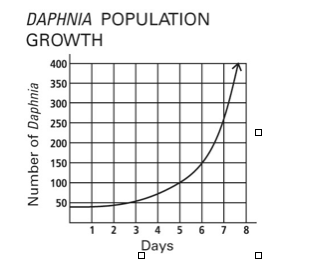

Identify which image below is showing a population:


Biodiversity, aka biological diversity, usually refers to
the same species in a general location
the number of different species in a given area
the number of animal species in a given area
the number of plant species in a given area

A species of rabbit lives in a meadow where grass plants are readily available during summer months. The rabbits do not stray far from the meadow because the plants supply food and protection from predators. One summer, a fire destroys the plants in the meadow. As a result of the absence of plants in the meadow, the rabbit population will probably...
decrease in size
increase in size
increase reproduction
switch to a different type of food

