
 Worksheets
Circulatory System
Total questions: 66
Worksheet time: 52mins
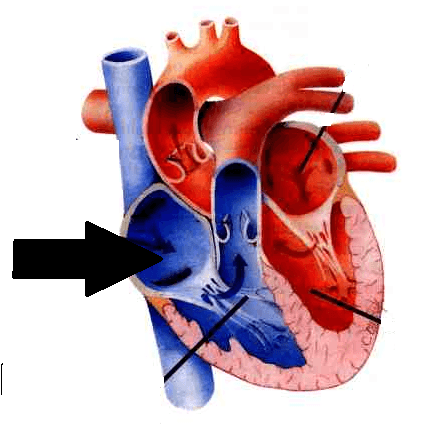
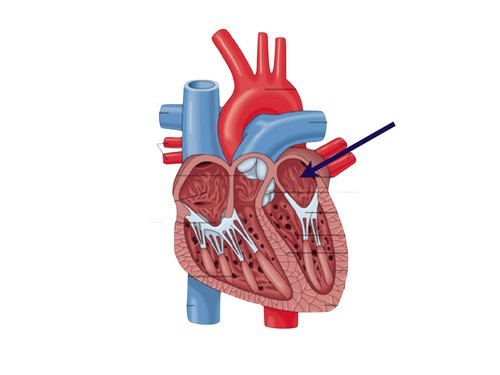
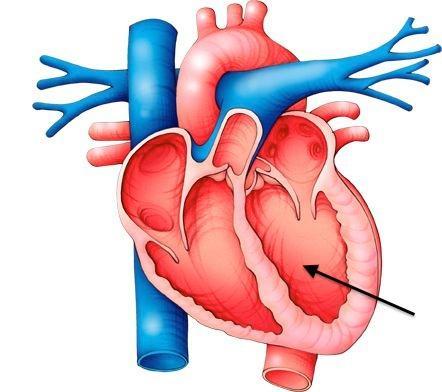
This chamber of the heart RECEIVES oxygen rich blood back from the lungs
Right Atrium
Left Atrium
Right Ventricle
Left Ventricle
This chamber of the heart pumps the blood from the heart to the lungs through the pulmonary artery
Right Atrium
Left Atrium
Right Ventricle
Left Ventricle
This chamber of the heart pumps the blood back out to the body cells through the Aorta
Right Atrium
Left Atrium
Right Ventricle
Left Ventricle
Type of circulation that refers to blood flow from the heart to the lungs and back to the heart again?
Systemic circulation
Renal circulation
Portal circulation
Pulmonary circulation
Type of circulation that refers to the blood flowing through the entire body?
Systemic circulation
Renal circulation
Portal circulation
Pulmonary circulation
The contraction/emptying phase of the cardiac cycle?
Systole
Diastole
Coronary arteries...
supply the heart muscle cells with a supply of blood.
supply the brain cells with a supply of blood.
contain deoxygenated blood.
when clogged, cause a stroke.
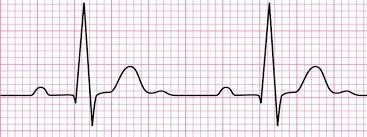
Type of device that measures the electrical currents created by the SA and AV nodes?
AED
MRI
ECG
CAT Scan

The main vein(s) that brings blood to the right atrium?
Aorta
Pulmonary veins
Superior and Inferior vena cava
Jugular vein

Which choice below correctly identifies the layers of the heart from the most outer layer to the most inner layer?
epicardium, myocardium, endocardium
endocardium, myocardium, epicardium
myocardium, endocardium, epicardium
myocardium, epicardium, endocardium
The sac that surrounds and protects the heart?
endocardium
epicardium
myocardium
pericardium

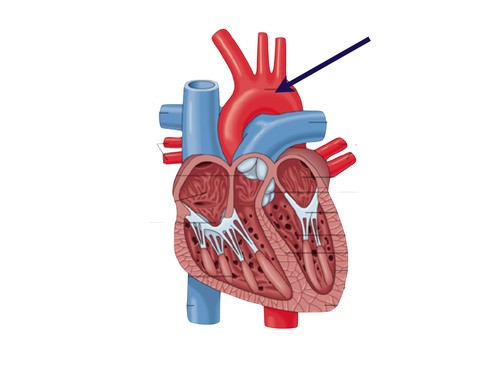
Name part B.
Pulmonary arteries
Pulmonary veins
Superior Vena cava
Aorta

Name part M.
Tricuspid valve
Semilunar valve
Bicuspid valve
Mitral valve
True or false:
Blood traveling in veins is blue.
True
False
True or false:
Arteries always carry oxygenated blood.
True
False
The blood in the vena cava is...
oxygenated, returning to the heart
deoxygenated, returning to the heart
oxygenated, leaving the heart
deoxygenated, leaving the heart
The myocardium is composed of:
An outer fibrous layer and an inner serous layer.
Cardiac muscle tissue.
A simple squamous epithelium and a layer of areolar connective tissue.

Which phase of an ECG signals when the ventricles contract?
P
QR
QRS
T
S
Which phase of an ECG signals when the ventricles relax?
P
QR
QRS
T
S

The pacemaker of the heart is the
SA Node
AV Node
Bundle of His
Purkinje Fibres
Electrical fibres running through the ventricles are called
SA Node
AV Node
Bundle of His
Purkinje Fibres


Pressure exerted on the walls of the blood vessels is termed
Hypertension
Vesicular pressure
Blood Pressure
Heart pressure
When measuring arterial pulse, why is it recommended not to use your thumb:
The tip of the thumb is too thick to feel the pulse.
Most people have experienced nerve damage in their thumb and cannot feel the pulse.
The thumb also has a pulse and can cause counting confusion.
It is recommended to use your thumb when measuring arterial pulse.
When measuring blood pressure, you are measuring the ____ of blood flowing through arteries
rate
quality
force
regularity

What is heart rate?
Oxygen going to the heart
The number of times your heart beats in a minute
Blood pumping though the body
Carbon dioxide leaving the body
The correct sequence of the three events in ECG
P wave , T wave , QRS complex
QRS complex , P wave , T wave
T wave , QRS complex , P wave
P wave, QRS complex, T wave
P wave is
Repolarization of atria
Repolarization of ventricles
Depolarization of atria
Depolarization of ventricles
T wave is
Repolarization of atria
Repolarization of ventricles
Repolarization of ventricles and atria
Depolarization of atria and ventricles

Which one is represent QRS complex
A
B
C
E
Which one is represent T wave
A
B
C
E
A heart rate 100 bpm or above is called _______.
bradycardia
tachycardia
arrhythmia
fibrillation
Which vessels maintain the highest blood pressure?
Veins
Capillaries
Arteries
How many layers of cells make up the wall of a capillary?
1
2
3
4

Large amounts of elastic fibers help arteries to
not burst under high pressure.
stretch and recoil to help push blood along it.
help maintain blood pressure.
carry out peristalsis.

#2
pulmonary artery
pulmonary veins
aorta
superior vena cava

#3
pulmonary artery
pulmonary veins
aorta
inferior vena cava

#7
mitral/bicuspid valve
tricuspid valve
aortic valve
pulmonary valve

#4
pulmonary valve
aortic valve
mitral/bicuspid valve
tricuspid valve


Which type of vessels have the smallest diameter?
arteries
venules
capillaries
arterioles
Choose the characteristics of arteries...
Have very thick, strong, elastic walls.
Have thin walls, made up of only
one layer of cells.
Have thinner walls, large space inside the vessel.
Choose the characteristics of veins.
Have very thick, strong, elastic walls.
Have thin walls, made up of only
one layer of cells.
Have thinner wall, large space inside the vessel.
What is the function of valves?
To prevent mixing of oxygenated and deoxygenated blood
To transport blood in one direction
To prevent backflow of blood
What are present in veins but absent in arteries?
smooth elastic tissues
muscular tissues
valves
What is the function of capillaries?
Transports deoxygenated blood
Transport oxygenated blood
Site for exchange of materials
How are capillaries adapted for their function?
Have partially permeable walls
One-cell thick endothelium
Presence of valves
Large lumen

A= (a)
B = (b)
C= (c)
D= (d)
E = (e)

Is this an artery or a vein?
artery
vein
Reorder the following zones of the blood vessel wall SUPERFICIAL (1) to DEEP (3).
tunica externa
tunica media
tunica intima

Match the following numbers in the diagram to their correct label.
arteriole
1
precapillary sphincters
2
vascular shunt
3
true capillaries
4
venule
5

