wayground logo

Free Printable Worksheets

Font size

S
M
L
XL
Worksheets

Earth/Space Science Review

Total questions: 44

Worksheet time: 56mins

Name
Class
Date
1.
What type of plate boundary created the Himalaya mountains?
a)
Continent-Continent Divergent
b)
Continent-Ocean Convergent
c)
Ocean-Ocean Convergent
d)
Continent-Continent Convergent
2.
What is a difference between spring and neap tides?
a)
Spring tides occur when the earth and sun are IN LINE with the new or full moon. 
b)
Spring tides occur when moon in 3rd or 1st quarter phases
c)
Spring tides are LOWER than neap tides
3.
Which body has the greater effect on Earth's tides?
a)
Sun
b)
Saturn
c)
Moon 
d)
Venus
4.

Wha type of tide would this arrangement of earth-moon-sun create?

a)

full moon tide

b)

new moon tide

c)

neap tide

d)

spring tide

5.
What is evaporation?
a)
The part of the water cycle when the sun heats up water, turning it from a liquid into water vapor or steam. It rises from the ground into the air.
b)
The part of the water cycle when the water vapor in the air gets cold. The water turns back into a liquid and forms clouds.
c)
The part of the water cycle when clouds get heavy and can no longer hold the liquid water. This causes the water to fall from the sky to the earth as rain, snow, sleet, or hail.
6.
What is precipitation?
a)
The part of the water cycle when the sun heats up water, turning it from a liquid into water vapor or steam. It rises from the ground into the air.
b)
The part of the water cycle when the water vapor in the air gets cold. The water turns back into a liquid and forms clouds.
c)
The part of the water cycle when clouds get heavy and can no longer hold the liquid water. This causes the water to fall from the sky to the earth as rain, snow, sleet, or hail.
7.
For a solar eclipse to occur, what has to happen?
a)
The sun must be directly between Earth and the moon.
b)
The moon must be directly between Earth and the Sun.
8.
Name the phase of the moon for letter a
a)
First Quarter
b)
Last Quarter
c)
Waxing Gibbous
d)
Waning Gibbous
9.
What is illuminating the Moon?
a)
Nuclear Fusion
b)
Sunlight
c)
Mirrors
d)
Flood Lights
10.
Daily temperature, daily rainfall, daily amount of sunshine
a)
Weather
b)
Climate
11.
The tropical rainforest has experienced 50 to 260 inches of rainfall annually for the last  few decades.
a)
Weather
b)
Climate
12.

In what layer of the atmosphere do all weather events occur?

a)

Stratosphere

b)

Exosphere

c)

Mesosphere

d)

Troposphere

13.

The ozone layer is a sublayer of the ________ layer.

a)

Troposphere

b)

Stratosphere

c)

Exosphere

d)

Mesosphere

14.
In winter, the axis of the earth is pointed away or toward the sun?
a)
towards
b)
up
c)
down
d)
away
15.
What process is used to form sedimentary rocks?
a)
Lava cools and hardens to form a rock.
b)
Weathering, Erosion, Deposition, Compaction, Cementation
c)
Extreme heat and pressure from inside the Earth turn rocks into new rocks.
d)
Magma trapped under the Earth's surface cools and solidifies.
16.
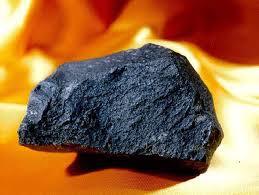
This rock was found near the mouth of a volcano. What type of rock is this?
a)
Sedimentary
b)
Igneous
c)
Metamorphic
17.
Which type of rock results from melting and cooling of magma?
a)
Igneous
b)
Metamorphic
c)
Sedimentary
d)
Extrusive
18.
Which type of rock forms from extreme heat and pressure?
a)
Igneous
b)
Sedimentary
c)
Organic
d)
Metamorphic
19.
Wind, water, and ice breaking down rock is called
a)
Erosion
b)
Deposition
c)
Compaction
d)
Weathering
20.
The process by which sediment is moved from one place to another.   Can be caused by water, wind, ice, and gravity.
a)
Rock Cycle
b)
Uplift
c)
Deposition
d)
Erosion
21.
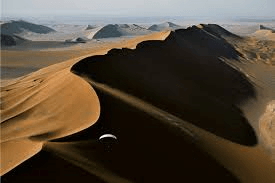
Hills formed by the wind blowing or depositing sand are called
a)
dunes
b)
rivers
c)
lakes
d)
mountains
22.
In the diagram given, what happens as we move to the left?
a)
Stars Get Larger
b)
Stars get Colder
c)
Stars get hotter
23.
Which star is the coldest?
a)
Yellow Star
b)
Red Star
c)
Orange Star
d)
Blue Star
24.
Compared to the rest of the stars, our sun is considered...
a)
Extremely Large and Cold
b)
Small with a medium temperature
c)
Medium size with medium temperature
25.
The type of plate boundary where two plates come together is a .....
a)
Convergent Boundary
b)
Divergent Boundary
c)
Transform Boundary
d)
Plate Boundary
26.
What type of event will occur at this boundary?
a)
Earthquake
b)
Volcano Eruption
c)
Tornado
d)
Mountain Building
27.
A subduction zone is formed...
a)
when one tectonic plate sinks below another
b)
at every type of convergent plate boundary
c)
at every type of divergent plate boundary
d)
at transform boundaries
28.

The core is made up mostly of _______________.

a)

oxygen

b)

magnesium

c)

iron

d)

carbon

29.
What is the transfer of heat by movement of liquids or gases?
a)
conduction
b)
convection
c)
radiation
30.
The inner planets are closer to the sun so
a)
they take longer to orbit the sun.
b)
they orbit the sun faster.
31.
The spinning of an object on its axis is called______
a)
orbit
b)
rotation
c)
revolution
d)
tide
32.
This picture best describes which connection?
a)
Atmosphere-Biosphere
b)
Hydrosphere-Atmosphere
c)
Hydrosphere-Geosphere
d)
Geosphere-Biosphere
33.
Composed of all the water on or near the earth
a)
Hydrosphere 
b)
Biosphere 
c)
Atmosphere 
d)
Geosphere 
34.

What evidence is most important when using relative dating?

a)

the half-life of a radioactive element

b)

the position of sediment in petrified rock

c)

the types of minerals in a petrified fossil

d)

the position of fossils in sedimentary rock layers

35.

How does the fossil record help to support the theory of evolution?

a)

the fossil record shows that organisms slowly change over time

b)

The fossil record shows that species evolve very quickly

c)

The fossil record does not support the theory of evolution
36.

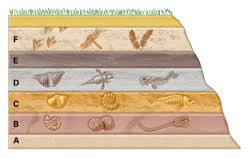
Which rock layer contains the newest fossils?

a)

B

b)

C

c)

D

d)

E

e)

F

37.
The sun centered view of the universe
a)
Galaxy
b)
Geocentric
c)
Astonomy
d)
Heliocentric
38.
This image shows the:
a)
Geocentric Solar System
b)
Heliocentric Solar System
39.
The energy that drives the water cycle comes from the...
a)
Sun
b)
Moon
c)
Clouds
40.

Which of the following correctly orders the size of the universe from smallest to largest? (Topic: Solar System)

a)

Planet, galaxy, solar system, universe

b)

Universe, solar system, galaxy, planet

c)

Galaxy, solar system, planet, universe

d)

Planet, solar system, galaxy, universe

41.

Which one shows a warm front?

a)
b)
c)
d)
42.
What symbol is this?
a)
warm front
b)
cold front
c)
stationary front
d)
occluded front
43.
_____________ air is more dense and tends to sink
a)
cold
b)
warm
c)
moist
d)
dry
44.
When a cold front is approaching, what happens?
a)
warm air is pushing under cold air causing humid weather and lower temperatures
b)
warm air is pushing under cold air causing humid weather and higher temperatures
c)
warm air rises, cools, and causes rain and thunderstorms
d)
cold air is pushed over warm air causing rain and thunderstorms