
 Worksheets
Unit #1 Science Skills & MN Ecosystems
Total questions: 37
Worksheet time: 1hrs 24mins
Which of the following is NOT a Metric unit of measurement?
meters
grams
miles
liters
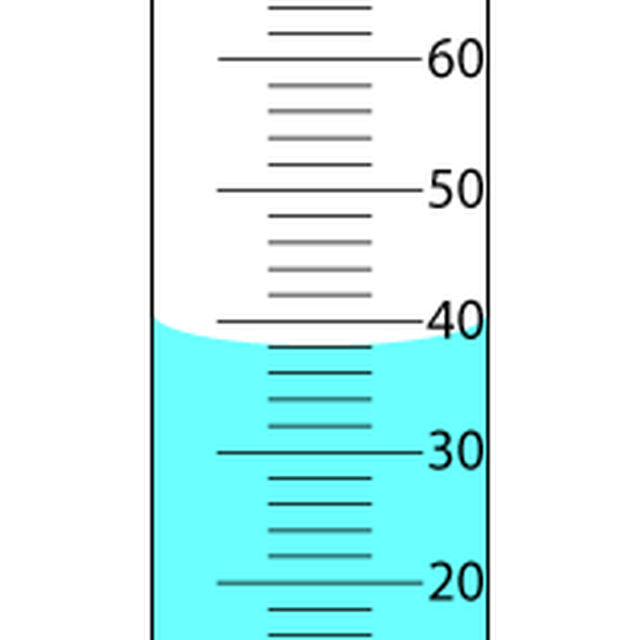
Which recorded measurement is correct?
39mL
40mL
38mL
34mL
Which of these contains the steps of the scientific method in the correct order?
Ask a question, do background research, state your hypothesis, conduct an experiment, analyze data, make a conclusion
State your hypothesis, ask a question, do background research, conduct an experiment, analyze data, make a conclusion
Ask a question, state your hypothesis, do background research, conduct an experiment, make a conclusion, analyze data
State your hypothesis, ask a question, do background research, make a conclusion, conduct an experiment, analyze data
The __________________________________ is the organized way scientists answer questions and solve problems.
scientific method
scientific explanation
scientific notation
scientific guesses

This graph shows the population of the town of Golden Hills, modeled as a function of time since the town's found.
The population is increasing throughout the time period.
The greatest growth in population was from year 5 to 15.
The population has a constant rate of change.
The population was about 9,000 when the town was founded.


7,000 g = ____ kg
70
700
7
0.07

648 g = ____ mg
6,480
64,800
648,000
64.8

240 cm = ___________ m
2400
24
2.4
0.24

68 cm = ___________ mm
0.68
6.8
68
680
Select the largest unit.
kilogram
centigram
decigram
decagram

1000 grams = _____ kilograms
0.0001
1,000,000
10
1
Energy enters an ecosystem as...
chemicals
food
minerals
sunlight
On a food web, the arrows show...
what eats what.
where the energy is going.
what each organism hunts.
who is friends with whom.
how much of a good or service consumers want
demand
spending
producer
scarcity
The amount available
supply
demand
import
natural resource
Why is Thomas Malthus important to environmental science?
He developed the theory of evolution
He wrote an essay on population and resources
He developed the Tragedy of the Commons
He developed the Law of Gravity
Which of the following would be considered a non-renewable energy source?
Sunlight
Wind
Soil
Coal
What biome in Minnesota is full of tall grasses and rolling, flat hills with little rain?
Tallgrass Aspen Parkland
Deciduous Forest
Prairie Grassland
Coniferous Forest
What is a non-market value?
Something included in the price of goods
Something NOT included in the price of goods
Another word for supply
A concept economists are still trying to understand
The study of behavior in philosophy that deals with right vs wrong & good vs bad is called what?
Ethics
Economics
Earth Science
Psychology
Controlled fires are a _______________ part of some biomes in Minnesota.
Unnecessary
Necessary
Why is Garrett Hardin important in Environmental Science?
He wrote On the Origin of Species
He developed theories on pollution
He coined the term "environmentalism"
He wrote a paper on the Tragedy of the Commons
What biome in Minnesota is known for its trees that lose their leaves in the fall & have warm summers with humid conditions?
Tallgrass Aspen Parkland
Deciduous Forest
Prairie Grassland
Coniferous Forest
What viewpoint gives value to all living things?
Anthropocentrism
Ecocentrism
Biocentrism
Allcentrism
What is one way to stop the Tragedy of the Commons from occurring?
Have everyone think of themselves first
No regulations
Yearly reviews of conditions of Earth
Regulations & laws
Which microscope is best used for observing a small specimen on a slide?
Light microscope
Dissecting scope
Which organism creates its own food through photosynthesis and using the sun's energy?
Carnivore
Herbivore
Producer
Consumer
How many different biomes are there in Minnesota?
2
3
4
5

