
 Worksheets
Science SOL Review
Total questions: 110
Worksheet time: 2hrs 48mins
Two wires carrying electricity can create a spark if they come too close together. This spark can start a fire. Wires carrying electricity are usually covered with plastic to keep them from starting a fire. Why does the plastic keep the electricity from starting a fire?
Plastic is a good insulator.
Plastic can melt when heated.
Plastic is softer than wire.
Plastic conducts electricity.
A science class tested three properties of different materials. They wanted to know whether the items were conductors of electricity and heat and whether their items were flexible? Which material would be best to use to insulate electrical wires?
Wood
Copper
Plastic
Steel
A teacher wears protective gloves to lift a metal pan filled with boiling water from a hot plate. Why are the protective gloves necessary?
The metal pan creates thermal energy.
The metal pan insulates thermal energy.
The metal pan conducts thermal energy.
The metal pan reduces thermal energy.
Objects that are dropped into a swimming pool need to be removed. These objects include foam cups, keys, and coins. Which of the following explains a useful method for removing some of these objects?
The keys and coins are less dense than water, so they can be easily picked up off the bottom of the pool by divers.
The foam cups have the same density as water, so they can be crumbled up for removal by the pool filter.
The foam cups are less dense than water, so they can be fremoved from the surface with a pool cleaning net.
The keys and coins have the same density as water, so they can be washed away when the pool is drained.
A teacher mixes a white powder into a beaker of water. The powder cannot be seen in the water. The teacher then heats the mixture until the water evaporates and the powder can be seen again. Which property of the powder is the teacher demonstrating?
Solubility
Density
Conductivity
Mass
In addition to mechanical energy, which is produced as electrical current passes through the circuit of a fan?
mass
heat
light
water vapor
Which of these demonstrates the reflection of light?
Looking through the glass of a large window
Looking at a star on a clear night
Looking at a lightbulb that is glowing
Looking at an image formed on a shiny aluminum foil
Which object requires only mechanical energy to perform its main function?
Hammer
Thermometer
Fan
Iron
A student uses a set of headphones to listen to music. Which of these uses the same source of energy as the headphones?
A flute using wind energy
A piano using mechanical energy
A keyboard using electrical energy
a teapot using thermal energy
When a bat searches for prey at night, it makes sounds as it flies, and it uses the sounds' echoes to find its prey. When the bat flies and listens to echoes to locate prey, it is using -
thermal energy and light energy
mechanical energy and sound energy
sound energy and thermal energy
light energy and mechanical energy
A student observes an object closer than it appears using a hand lens. This is an example of -
reflection
refraction
absorption
transparency
Which list contains only processes that must occur in order for fossil fuels to form?
Formation of faults, burial, glacier formation
Organism growth, burial, volcanic eruptions
Organism growth, burial, compaction
Erosion, burial, earthquakes
Erosion is one of the processes involved in the formation of sedimentary rock. Which of these best describes the process of erosion?
Pieces of rock or soil are carried from one place to another.
Rocks are broken into smaller pieces that remain in the same location.
Pressure compacts layers of sediment and turns them into rock.
Sediment grains fall to the bottom of a lake to form sedimentary layers
All of these are related to the formation of oil or natural gas EXCEPT -
decomposed animals
decayed plants
sedimentary rocks
active volcanoes
Monahans Sandhills State Park in Texas has almost 4,000 acres of sand dunes. Some of the dunes are as tall as a six=story building. The dunes in the park are formed by -
rainstorms
tornadoes
earthquakes
strong winds
A student hiking in a rocky area on a mountain notices that wide, deep cracks have formed in some of the large rocks. Some of the cracks are sol large that the rocks have broken apart. Which process most likely caused these rocks to crack and break?
Erosion by wind
Water freezing and thawing
Erosion by fast-moving water
Sediments being deposited
Students measured and recorded local rainfall amounts and water levels at several local dams over the school year. They compared their measurements with data from the past 20 years. The students plan to continue recording these measurements each school year for the next decade. What characteristic of the area are the students studying?
Climate, because they are making more than one type of measurement
Climate, because they are comparing rainfall amounts over a long period of time
Weather, because they are tracking changes only to their local environment
Weather, because they expect rainfall amounts and water levels to continue to decrease
Which of these best describes climate rather than weather?
Wind speed is changing as a storm moves through an area.
The temperature is decreasing in a slow-moving cold front.
Annual high temperatures in the summer have increased over many decades
The rainfall during one year was greater than the rainfall during the following year.
When Earth is seen from outer space, it looks mainly blue. This is because most of Earth is covered with -
ice
mountains
oceans
deserts
Select the term that correctly labels this statement.
If plants are watered every day, then they will grow faster than plants watered once a week.
Inference
Hypothesis
A fungus is found growing on dead leaves on the forest floor. The fungus is an example of a -
decomposer
carnivore
predator
producer

Based on the table, how much rainfall should a scientist have predicted for May of 2011 in Norfolk?
12-17 in
15-20 in
18-23 in
21-26 in
Which of these best explains why the sun is not visible during the night?
The moon blocks the sun from view.
That side of the sun faces away from Earth.
The sun stops creating light at night.
That side of Earth faces away from the sun.

A model of a plate boundary is shown. What most likely happens as the plates slide past each other?
A mountain forms.
An earthquake occurs.
The ocean floor widens.
Magma comes to the surface.

During pollination, pollen is transferred from stamen to a -
petal
stem
sepal
stigma
Which of these is an impact made by humans?
Marble being dug from a rock quarry
Marble forming sedimentary rock
Oceans drying and exposing limestone
Limestone forming from shells of ocean animals
Lobster pots are used by fishermen to catch lobsters in shallow water. In which area of the ocean would commercial fishermen most likely place their lobster pots?
On the bottom of an ocean trench
On top of a mid-ocean ridge
On the continental slope
On the continental shelf

Choose the list that will correctly fill in the spaces on the rock cycle.
1 Igneous; 2 Metamorphic; 3 Sedimentary
1 Metamorphic; 2 Igneous; 3 Sedimentary
1 Sedimentary; 2 Metamorphic; 3 Igneous
1 Igneous; 2 Sedimentary; 3 Metamorphic


Which three structures are found in both animal and plant cells?
nucleus, cell membrane, and cytoplasm
cell membrane, chloroplasts, and mitochondria
cytoplasm, a cell wall, and nucleus
nucleus, chloroplasts, and cell wall
Which cell structure is found in plant and animals cells and controls what can come into or leave a cell?
cell membrane
cytoplasm
nucleus
cell wall
What is the function of the nucleus?
to produce energy
to control cell activity
to remove waste products
to allow molecules to enter the cell
What is the function of a cell wall?
to protect and support the cell
to make food for the cell
to prevent water from passing through it
to prevent oxygen from entering the cell
This organelle directs all the cell's activities.
cytoplasm
chloroplasts
cell wall
nucleus
What are organisms that eat other organisms?
Consumers
Producers
Omnivores
Decomposers
______ are animals that eat both plants and animals
Producers
Consumers
Omnivores
Herbivores
Matter from dead organisms is broken down and consumed by organisms called ______________.
consumers
producers
carnivores
decomposers
The main source of energy for producers in an ecosystem is the sun.
True
False
Plants are a type of _________ because they make their own food.
decomposer
producer
herbivore
system
An __________ is a complex community made up of living and non living things.
system
environment
ecosystem
subsystem
Arrows on a food chain and food web show __________________________________.
the direction that the animals walk
the other animals favorite animal
the direction food (matter and energy) move
their allies
The higher the frequency the higher the _______________.
Sound
Pitch
Volume
What is the layer of the Earth that is the thickest?
Crust
Mantle
Inner Core
Outer Core
How long is the Earth's rotation?
One year
One day
One month
88 days
Where does energy in a food chain come from?
Consumer
Producer
Sun
Decomposer
What kind of data does a Quantitative graph have?
Senses
Numbers
Animals
Colors
Which of the following animals are vertebrates?
insects
plants
mammals
plankton
What kind of cell has chloroplasts?
Animal
Plant
None of the above
What is the deepest point in the Pacific Ocean?
Seamount
Continental Shelf
Mariana's Trench
Volcanic Island
Where is most plant life located in the ocean?
Abyssal plain
seamount
continental rise
continental shelf
What is an example of a decomposer?
deer
fungus
sunflower
vulture
What makes it harder to push something?
Friction
Wind
Force
Speed
Sound travels best through...
liquid
solid
gas
all of the above
What plate boundary moves apart?
Divergent
Transform
Convergent
What layer of the Earth is solid iron and nickel?
Crust
Mantle
Outer core
Inner core
Which of these is opaque?
window
wood
glasses
screen
Electricity travels through a ________ circuit.
Closed
Open
What part of an atom does not have a charge?
electron
proton
neutron
none of the above
What are the three states of matter?
solid, volume, mass
solid, liquid, gas
density, volume, mass
density, gas, volume
To make an electromagnet, a conductor should be coiled around —
a glass tube
iron nail
a roll of paper
a wooden stick
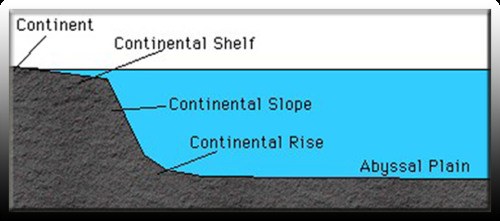
Which ocean floor feature is the steep cliff-like drop beyond the continental shelf?
Continental Shelf
Continental Slope
Abyssal Plain
Ocean Trench

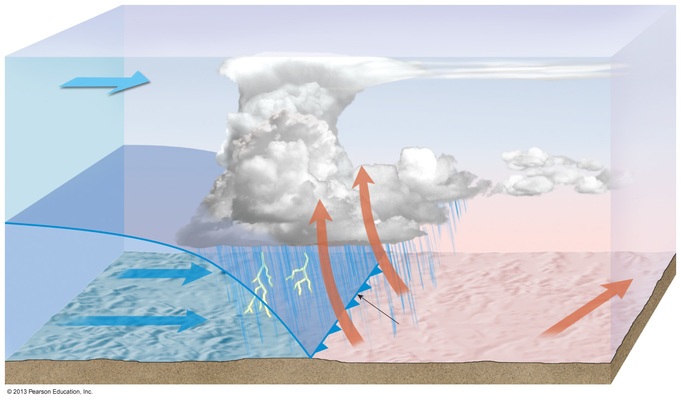
(Hint: Think about our sound song.)

Which of the following explains why we have night and day?
the phase of the moon
the rotation of Earth on its axis
the revolution of Earth around the sun
the alignment of planets
Sheila is classifying the rocks in her collection. She knows that limestone often contains fossils. In which category of rock should she classify these rocks?
igneous
granite
metamorphic
sedimentary

The picture shows coal, one of Earth's energy resources.
Why is coal a nonrenewable resource?
It is difficult to mine because it is deep inside Earth.
It is a resource that can easily be replaced as it is used.
It is a resource that cannot be replaced as fast as people use it.
It is the resource that fuels many power plants that make electricity.
Plants need many things in order to make their own food. Which of the following best describes what plants need to make their own food?
a plant uses soil, sunlight and oxygen
a plant uses sunlight, carbon dioxide and water
a plant uses sunlight, carbon dioxide and oxygen
a plant uses soil, sunlight and water

Kofi wants to know how two magnets behave when they are together. The magnets below show her experiment.
What must be true of the magnets shown?
The poles of the magnet attract each other
The poles of the magnet repel each other
The two poles are opposites, south and north.
The two poles are opposites, north and south.
Lu Chen is comparing the physical properties of water as a gas and as a solid. Which of the statements best describes how these two are different?
Solid water is much warmer than water vapor.
Solid water has its particles farther apart than water vapor.
Solid water has a definite shape and water vapor does not.
Solid water has the same mass as the same volume of water vapor.
Pete likes to play the drums. When he strikes the drum with a drumstick, a sound is made. Which of these explains why sound is produced?
The drumstick vibrates the air.
The drum absorbs energy from the air.
The drum transfers vibrations into the air.
The drum releases potential energy into the air.

The silk tree that grows in Florida can grow as high as 15 meters (about 50 feet). This tree also produces colorful flowers in fall and winter. Look at the parts of the flower. Think about the part of the flower that is identified in the illustration.
What process does the identified part of the plant play a role in?
germination
transpiration
seed dispersal
reproduction

In order to find out which towel brand holds the most water, we should do an ____________________.
hypothesis
investigation
science project
conclusion

You need to collect ____________ in your experiment that supports your hypothesis.
graphs
plants
microscopes
data
You use this instrument to measure temperature.
sieve
hot plate
anemometer
thermometer
If you want to make tiny objects look bigger in the science lab you will use a _______________.
rain gauge
microscope
telescope
timer
What are the poles of a magnet called?
East and South
South and North
North
I don't know
Conductors ________ electrons to flow through
Allow
Do not allow
Insolators____________ electrons to flow through.
Allow
Don not allow.

Sugar dissolved in water is an example of a
Solution
Mixture

what is it called when this happens?
refraction
reflection
bent light
light

what is this object classified as? (one piece of paper)
opaque
transparent
translucent
erosion

what color has shortest wavelength in the visible light spectrum
blue
green
orange
red
violet

the rainbow is also known as visible light
true
false
Light is a form of
energy
wave
ray
prism

