Worksheets
Science Ch 3 and 4
Total questions: 107
Worksheet time: 1hrs 2mins
Mass is the amount of _______ an object takes up.
gas
atom
matter
Property that can be observed and measured without changing the identity of the subtance?
physical property
chemical property
The ability of a substance to conduct electricity or heat is _______.
boiling point
solubility
conductivity
An object or material that allows heat or electricity to pass through it is a _____.
conductivity
insulator
conductor
wood
An object or a material that resists the transfer of heat and electricity is an _______.
iron
conductivity
conductor
insulator
An example of insulator material.
plastic
iron
Temperature at which a solid changes into a liquid
melting point
boiling point
freezing point
Temperature at which a liquid changes into a gas
melting point
boiling point
freezing point
100 ºC for water
melting point
boiling point
0 ºC for ice
melting point
boiling point
Water undergoes a physical change when it changes its ____. This change is possible due to changes in ________.
state/temperature
shape/temperature
state/shape
A paper undergoes a physical change when it is folded. The size and ____ of the paper change.
temperature
color
shape
all of the above
Choose the physical properties (all that apply)
boiling
conductivity
solubility
melting point
Choose the physical changes (all that apply)
ripping
melting point
sanding
cutting
boiling
A substance that dissolves in another substance is a ______.
solubility
solute
solvent
A substance that dissolves another substance is a ______.
solubility
solute
solvent
The ability to bend is ______.
conductivity
solubility
flexibility
The metric system is a system of measurement based on ____.
hundreds
tenths
tens
units
Each type of measurement in the SI system has a _____ unit
extra
prefix
base
Base units are made to show smaller or larger amounts using ______.
suffixes
prefixes
words
Mass can be measured with a ________.
spring scale
kilogram
balance
calibrated cylinder
Weight is a measure of the pull of _____ on an object.
mass
conductivity
gravity
solubility
Weight can be measured with a _______.
spring scale
scale
calibrated cylinder
beaker
The SI unit of mass is ______.
meter
Newton
liter
gram
The SI unit of wight is ______.
meter
Newton
liter
gram
Choose the correct statement.
The weight of an object is greater where gravity is stronger.
The weight of an object is less where gravity is stronger.
The measure of mass per unit volume is _______.
mass
density
flexibility
conductivity
An object less dense than water ____ in water.
sinks
floats
both
An object denser than water ____ in water.
sinks
floats
both
A change in which one or more new substances are made is a _____.
physical change
chemical property
physical property
chemical change
A chemical change that changes the substances that make up food is _____.
cooking
rusting
decaying
burning
A chemical change in which wood is transform into ash is _____.
cooking
rusting
decaying
burning
A chemical change in which substances are broken down is _____.
decaying
rusting
burning
cooking
A chemical change in which iron changes into a brown crumbly material is _____.
decaying
rusting
burning
cooking
Choose any possible evidence of a chemical change
releasing heat or light
bubling
changing size
changing color
The ability of a substance to undergo a chemical change is a ____
Chemical property
physical property
chemical change
Iron is a metal that has the ability to ______.
decay
burn
combustible
rust
The process of burning something is _____.
boiling
combustion
blending
cooking
Substances that can burn are said to be combustible.
True
False
How can you slow down the speed of a chemical change? Choose 2
by increasing the temperature
by lowering the temperature
by creating mor matter
by putting food in the refrigerator
Which of the following is a physical change?
cooking meat
rusting iron
boiling water
burning wood
Which substance is formed when wood is burned?
oxygen
ash
rust
paper
Which property differs between 10 g of iron and 100 g of iron?
melting point
boiling point
density
volume
Plastic is a good material for pots handles because it is
a good conductor
flexible
a good insulator
dense
Melting happens when a solid is cooled.
True
False
Chemical changes cause substances to change into new substances.
True
False
Density is a mesure of the amount of weight in a given volume.
False
True
Milk turning sour is an example of a physical change.
True
False
(a) is the ability to cause a change.
Choose the statements that describe energy.
The ability to cause a change
Light and sound are forms of energy
food contains electrical energy
People need energy to move
A property of matter that can be either positive or negative is _____.
electric charge
current electricity
static electricity
neutral
Objects that have the same number of positive and negative charges are ____.
electric charge
positive
static electricity
neutral
A buildup of positive or negative electric charges is _____.
electric charge
current electricity
static electricity
neutral
A balloon rubbed with a wool cloth acquires a _____ charge.
positive
negative
neutral

How will these charges interact?
Repel
Attract
No interaction

How will these charges interact?
Repel
Attract
No interaction

How will these charges interact?
Repel
Attract
No interaction
Repel means
To pull toward each other.
To push away from each other.
Neither positive nor negative.
Either a negative (-) or positive (+) charge.
Attract means
To pull toward each other.
Either a negative (-) or positive (+) charge.
To push away from each other.
Neither positive nor negative.
Uncharged objects can be ______ to charged objects.
repelled
attracted
The energy of moving negative electric charges is ______.
current electricity
static electricity
magnetism
In current electricity, the negative electric charges flow from one place to another through a _______.
insulator
conductor
plastic
switch
The human body is a good electrical _____ of current electricity.
charges
magnetism
conductor
insulator
A pathway that electric charges flow through is an ______.
electromagnet
electric circuit
hammer
screw
Opens and closes the circuit
switch
battery
wire
light bukb
Supplies energy and pushes the electric charges through the circuit.
switch
battery
wire
light bukb
Carries electric charges
switch
battery
wire
light bukb
A device that uses electricity to light up.
switch
battery
wire
light bukb
Electric charges cannot flow through an _____ circuit.
open
closed
semi-open
A _____ circuit has a continuous path.
open
closed
semi-open
A device that limits the amount of current is a(n) ______.
electric circuit
resistor
switch
A circuit that has a single pathway for the charges to flow through is a _____ circuit.
series
parallel
open
closed
if a device is removed from a series circuit, the circuit becomes ____ and electric charges cannot flow anymore.
series
parallel
open
closed
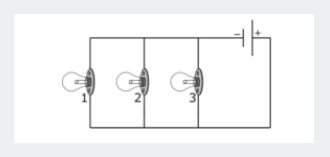
A circuit that has more than one pathway for the charges to flow through is a _____ circuit.
series
parallel
open
closed
if a device is removed from a one loop in a parallel circuit, the other devices are not affected and _____ can still flow through them.
mass
electric charges
conductibility
closed
A(n) ________ attracts iron all the time.
magnet
electromagnet
circuit
boiling water
physical change
physical property
chemical change
chemical property
freezing point
physical change
physical property
chemical change
chemical property
a change in size, shape, or state of matter
physical change
physical property
chemical change
chemical property
sharpening a pencil
physical change
physical property
chemical change
chemical property
The ability of a substance to conduct electricity or heat is _______.
boiling point
solubility
conductivity
An object or material that allows heat or electricity to pass through it is a _____.
conductivity
insulator
conductor
wood
An example of insulator material.
plastic
iron

milk going sour
physical change
physical property
chemical change
chemical property

What type of circuit is in this picture?
Open
Closed
Incomplete

What component in the circuit controls the flow of electricity?
Bulbs A and B
Wire
Switch
Battery
The strength of an electromagnet can be ____________ by reducing the number of turns on the wire coil.
increased
decreased
expressed
found
Choose the correct sentence.
A magnet is a mineral.
A magnet is an object that can attract all materials.
A magnet is an object that can attract certain metals.
A magnet is an object that can attract all metals.
What are the names of the poles in a magnet?
North and South
Positive and negative.
Positive and north.
South and negative.
True or false: when you cut the current in an electromagnet, it stops working.
True
False
What would happen is a north pole of a magnet came close to a north pole of another magnet?
they would be attracted to each other
they would be repelled from each other

The area around a magnet is called the .....
attraction zone
work area
magnetic field
hot zone


What would happen with the magnets in the picture above?
They would repel
Nothing
They would attract
They would repel and then attract

Which electromagnet is stronger?
A
B