
 Worksheets
Interwar/WWII/Japan Geography
Total questions: 77
Worksheet time: 54mins
The term appeasement is best defined as
an attempt to avoid conflict by meeting the demands of an aggressor
a period of peace and prosperity, resulting in cultural achievement
a declaration of war between two or more nations
an agreement removing economic barriers between nations
Which situation is an example of totalitarianism in Germany in the 1930s?
frequent meetings of the German Reichstag
decline of the German economy
strict government control of the press
negotiation of a nonaggression pact with the Soviet Union
The 1930s depression in Germany contributed to the rise of the Nazi Party because
economic hardships increased political instability
five-year plans of the communists failed
the Reichstag nationalized private property
the Weimar Republic imposed totalitarianism
Which geographic factor was most significant in helping the Soviet Union withstand German attacks in World War II?
The Ural Mountains served as a barrier to advancing German armies.
Distance and harsh winters disrupted German supply lines.
Extensive food-producing areas kept the Soviet armies well fed.
Numerous ports along the Arctic Sea allowed for the refueling of Soviet transport ships.
Which headline is most closely associated with the cities of Hiroshima and Nagasaki?
"Japan Signs Treaty of Kanagawa"
"Nuclear Bombs Dropped on Japan"
"Japan Invades Korea"
"Japan Hosts Discussion on Greenhouse Gases"
Which type of political system did V. I. Lenin, Adolf Hitler, and Benito Mussolini establish in their countries?
constitutional monarchy
totalitarianism
representative democracy
theocracy
During World War II, which event occurred last?
German invasion of Poland
Russian defense of Stalingrad
United States bombing of Hiroshima and Nagasaki
Japanese invasion of Manchuria
During World War II, the Allied invasion of France on D-Day (June 6, 1944) was significant because it
demonstrated the power of the atomic bomb
resulted in a successful German revolt against Hitler and the Nazi Party
led to the immediate surrender of German and Italian forces
forced Germans to fight a two-front war


True


When did pearl harbor happen
July 4, 1776
December 25, 2016
March 17,1971
December 7,1941
Which of these is a map of japan?


Officially, World War II began with Germany's invasion of
Czechoslovakia.
Poland.
France.
Austria.
The Japanese attack on Pearl Harbor, Hawaii,
brought the United States into the war
ended U.S. interference in Asia and the Pacific
brought the war to an end.
tested the destructive power of its bombers.

What was the name of the event when Germany bombed London?
Battle of Britain
British Assault
Blitzkrieg of Britain
Enclosure of England

Which two cities were attacked with atomic bombs by the United States?
Nagasaki & Hiroshima
Tokyo & Kyoto
Tokyo & Yokohama
Osaka & Kyoto

Which country experienced high inflation?
Germany
Japan
United States
Britain

Who is the leader for Fascist Italy?
Benito Mussolini
Guiseppe Garibaldi
Camillo di Cavour
Giorgio Napolitan

Why did Japan invade surrounding countries?
Natural Resources
Nationalist Pride
Spread Democracy
Reduce Inflation

What treaty weakened economic and political conditions in Europe?
Treaty of Versailles
Treaty of Paris
Armistice
Nonaggression Pact

Which military leader took power in Japan?
Hideki Tojo
Mao Zedong
Jiang Jieshi
Emperor Hirohito

Which organization was created to prevent future wars?
League of Nations
Axis Alliance
Triple Alliance
Mandate system
Which is the highest mountain in Japan?
Mt. Makalu
Mt. Fuji
Mt. Kosciusko
Mt. Logan
Which of the following countries is geographically closest to Japan?
Indonesia
Malaysia
South Korea
Vietnam


How did Japan's geography influence its development? select all that apply
The oceans isolated the islands.
The mountainous, rocky terrain made it difficult to farm.
The lush green land made it easy to farm.
The ocean provided food.

What years did WWII begin and end?
1938-1951
1945-1951
1939-1945
1936-1944

The Soviet Union entered World War II ---
in response to United States involvement
after the D-Day invasion of Normandy
after the defeat of the Bolshevik party
in response to German invasion

The term appeasement refers to ---
giving in to an aggressor to avoid war
depending on allies to fight for you
disarming to show your unwillingness to fight
standing up for one's beliefs

Which of the following are not Allied leaders of World War II?
Winston Churchill
Franklin Roosevelt
Joseph Stalin
Woodrow Wilson
What was the long-term impact of D-Day?
the liberation of France from the Germans
the separation of the Italian and German forces
the punishment of the Japanese for Pearl Harbor
the termination of the Italian aggression in Africa
What were the two major 'theaters' of World War II?
European & African
European & Pacific
European & South American
European & North American
Which country was not a member of the Axis Alliance?
Germany
Italy
Japan
Soviet Union
Where did the British and French appease Hitler by allowing him possession of the Sudetenland?
Berlin Conference
Congress of Vienna
Treaty of Paris
Munich Conference
Which was a cause of President Truman’s decision to drop atomic bombs on Japan?
There were not enough soldiers to fight on the ground.
The United States had run out of regular bombs.
Using the atomic bomb would save the lives of American soldiers.
The Japanese were making their own nuclear weapons.
In a totalitarian government, a book that teaches democracy is the best type of government is burned. Why?
propaganda
to keep warm
censorship
free speech
Totalitarianism is a form of government that
asserts total control over the lives of its citizens
allows for individuality
equality distributes the wealth of the nation to its people
does not have any historical examples
After WWI, hyperinflation in Germany...(select ALL that apply)
led incredibly high costs for items
was caused by an increase in printing more money
caused money to be more valuable
led people to use the paper money to fuel fires

The compensation for war damage paid by the defeated state
Totalitarianism
treaty
Reparations
Fascism

In the 1920’s and 1930’s, the rise of totalitarian governments in Germany, Italy, and Spain was largely the result of?
the success of the Communists in establishing a command economy in the Soviet Union
Movements demanding the return of the old monarchies
The active support of the United States
severe economic and social problems that arose in Europe after World War I

Why did Japan follow imperialist policies after World War I?
To obtain natural resources for manufacturing
To attack the Soviet Union for oil
To convert people to Shinto (their religion)
To compete with China in trade

While Japan kept their Emperor after the depression, they looked to Military leaders such as ____________ to guide Japan's government.
Hideki Sado
Hideki Tojo
Hanako Takahasi
Akihiko Suzuki
Use of spying, imprisonment, and violence to cause fear in people is called...
Police Terror
Persecution
Propaganda
Censorship
Indoctrination
Government creating obedient citizens by teaching you what to believe is called...
Police Terror
Persecution
Propaganda
Censorship
Indoctrination
Use of media to persuade people to believe or do something is called...
Police Terror
Persecution
Propaganda
Censorship
Indoctrination
Hatred and mistreatment of a group different than your own is called...
Police Terror
Persecution
Propaganda
Censorship
Indoctrination
Suppression of speech, ideas, books, and public communication is called...
Police Terror
Persecution
Propaganda
Censorship
Indoctrination
During the global depression, Germany’s economy suffered due to hyperinflation which is when…
too little money is printed and prices drop
too much money is printed and prices drop
too little money is printed and prices rise
too much money is printed and prices rise
The capital of Japan is...
Hiroshima
Tokyo
Nagasaki
Iwo Jima
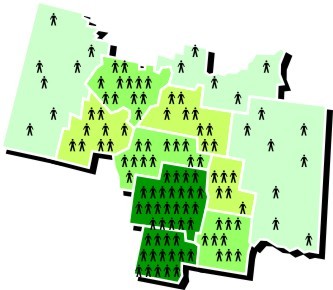
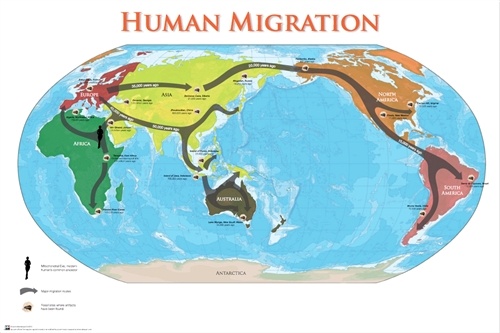
All of the people in a particular area
migration
demographics
population
census
the number of people in a defined area such as a square kilometre
population density
birth rate
death rate
population
Population divided by Area =
population density
population growth
Why would an area be sparsely populated?
lack of natural resources
land is covered with ice
land cannot be developed
all of the above
Define population density and distribution.
The average number of people in a given unit area and how a population is spread over an area.
The number of houses per square kilometre and urbanisation rates.
Where people live on the surface of the earth.
The number of a people in a country and where they are situated.
When an area is crowded with many people per km², it is said to be...
Isolated
Densely populated
Sparsely populated
Minimally populated

