
 Worksheets
Energy and Mining
Total questions: 221
Worksheet time: 4hrs 31mins
Why are fossil fuels used so widely?
they are clean
they are cheap
all of the above
they are renewable
One benefit to renewable energy is
the resources used are replenished in a short amount of time
renewable energy plants require no resources to build
solar and wind are always available
they have no environmental consequences

In 2018, which green energy source is growing SECOND fastest?
solar PV
hydropower
wind power
bio-power & other
What is a disadvantage of coal?
it causes toxic waste spills
it causes acid rain
it contributes to global warming
all of the above
Which is an advantage of nuclear power?
it can produce a lot of energy
it causes no solid waste
it poses no safety risks
all of the above
To increase the EFFICIENCY of energy use, we could...
Turn off lights when not in use
Keep the car running as you go into the store
Water the plants in a drought
Take a bath instead of a shower

Which of these statements about renewable energy are TRUE. You may click one or more boxes.
It produces more carbon emmissions than non-newable energy forms
It is sometimes found underground
It can be used again and again
It is very reliable
It can be difficult to store
Which of the following statements about non-renewable energy is FALSE
These energy sources have lower carbon emmsions than renewbale energy sources
Non-renewable energy sources include oil and gas
Non-renewable energy sources are also said to be examples of chemical energy
Non-renewable energy can be stored more easily than renewable energy
Which of these statements about renewable energy are TRUE. You may click one or more boxes.
It produces more carbon emmissions than non-newable energy forms
It is sometimes found underground
It can be used again and again
It is very reliable
It can be difficult to store
Which energy source does not originate from the sun?
Coal
Solar
Oil
Nuclear
Which is the cleanest burning fossil fuel?
Coal
Oil
Natural Gas
Biomass

On a waterwheel, the water falls and causes the wheel to turn. What form of energy is being used to turn the wheel?
electrical energy
mechanical energy
thermal energy
sound energy

Renewable energy resources produce less_____________ than fossil fuels.
pollution
energy
wind
light
What is a renewable resource?
A resource you can reuse over and over
An object you cannot replace
Fossil fuels
A resource that has a nearly unlimited supply

Another way to preserve those resources is to __________ energy whenever possible.
Turn it off
Run the water
Conserve
Use only what you need
One benefit to renewable energy is
the resources used are replenished in a short amount of time
renewable energy plants require no resources to build
solar and wind are always available
they have no environmental consequences

Energy is the ability to do ______ and cause _________.
Work and cause Change
Change and cause Work

What form of energy caused the bread to bake?
Electrical
Light
Sound
Thermal
Match the following forms of energy.

Sound

Electric

Mechanical

Thermal

The person in the picture is listening to sound made by someone talking. This is evidence that energy can be
Transferred from place to place
Transferred through contact between objects
Transformed from sound to work
First created and then destroyed.

What energy takes place when you use a fan?
Electical to Mechanical, Sound, and Thermal
Mechanical to Electrical, Sound, and Thermal
Electrical to Sound and Radiant
Radiant to Sound and Electrical
Which of the following is an example of the law of conservation of energy?
Your mom turns on the stove to cook food
You play an instrument in Strings class
A football player throws the ball
All of the above answers.
In the evening/night, Anthony used a flashlight to go on a walk with his family. Sadly, he forgot to turn the flashlight off. In the morning, his father said, "The flashlight has a dead battery now. We need to replace it."
This means the energy that was stored in the battery -
Disappered into nowhere
Was destrogy
Was changed into other forms of energy
Was used to create a new forms of energy
1. Which form of energy does a moving object possess?
light energy
sound energy
mechanical energy
chemical energy
Which is the best example that something has kinetic energy?
a car parked on a steep hill
a tennis ball rolling across the court
a picture hanging on the wall
a piece of coal before it's burned

Kinetic energy is...
energy carried in ultraviolet waves
energy stored in food
energy in motion
energy from splitting an atom

The faster an object moves, the ________ kinetic energy it has.
more
less
none of the above
all of the above
Which of the following are examples of kinetic energy? (check all that apply)
an arrow flying through the air
a book on a shelf
kicking a soccer ball
chewing gum
sitting at a stop light

Click to look at the picture.
The picture is an example of _____ .
gravity
potential energy
kinetic energy
friction
What is potential energy?
The energy an object has due to its atomic structure.
The energy an object has due to its chemical composition.
The energy an object has due to its motion.
The energy an object has due to its position or condition.
When does an object have no kinetic energy?
When it's at rest.
When it's moving very slowly.
When the only force that's acting on it is gravity.
When it has no electrical charge.
Which object has the most potential energy?
A ball resting on the ground.
A ball being thrown at 100 miles per hour.
A ball on top of a refrigerator.
A ball resting on the edge of a cliff.
When does a yo-yo have the most potential energy?
When it's at its highest point.
When it's at its lowest point.
When it's moving between its highest and lowest points.
When it's moving at its top speed.
When is potential energy transformed into kinetic energy?
When an object at rest is lifted to a higher elevation.
When an object at rest remains at rest.
When an object at rest is put into motion.
When an object in motion is stopped and put at rest.
Which of the following is a non-renewable resource?
Water
Sun
Coal
Win
Which of the following is a renewable resource?
Oil
Solar
Coal
Natural Gas
__________ is an energy resource that WILL run out in the next several hundred years.
Renewable Energy Resource
Non-renewable Energy Resource
__________ is an energy resource that WILL NOT run out in the next several hundred years.
Renewable Energy Resource
Non-Renewable Energy Resource

Which of the following are Non-Renewable energy resources? (Check all that apply.)
coal
wind
solar
nuclear

One advantage of solar and wind power over fossil fuels is that
wind and solar are presently much less expensive than fossil fuels.
wind and solar come from natural processes and fossil fuels do not.
wind and solar are nonrenewable resources and fossil fuel are renewable.
wind and solar are continuously renewable and fossil fuels take millions of years to be formed.

Renewable or Nonrenewable: Coal
Renewable
Nonrenewable

Renewable or Nonrenewable: Natural Gas
nonrenewable
renewable

Renewable or Nonrenewable: Oil
Nonrenewable
Renewable

Renewable or Nonrenewable: Sunlight
Renewable
Nonrenewable

Renewable or Nonrenewable: Water
Nonrenewable
Renewable

Renewable or Nonrenewable: Wind
Renewable
Nonrenewable

This energy is from moving air.
Wind Energy
Geothermal Energy
Fossil Fuel Energy
Biofuel

This is electrical energy that comes from the force of energy of moving water. It is the most widely used type of renewable energy.
Coal
Hydroelectric Power
Wind Energy
Geothermal Energy

This is a liquid fuel derived from plant materials.
wind energy
biofuel (from biomass)
geothermal energy
solar energy

This is the energy generated in the Earth's core and produces steam and hot water.
Solar Energy
Hydroelectric Power
Fossil Fuels
Geothermal

Solar energy is a completely renewable resource.
Advantage
Disadvantage

Fossil Fuels produce carbon dioxide that pollutes the atmosphere.
Advantage
Disadvantage

Nuclear Power can generate high amounts of electrical energy in a single plant.
Advantage
Disadvantage

Biomass requires a lot of space.
Advantage
Disadvantage

Wind energy is pollution free.
Advantage
Disadvantage

Hydropower can have a negative impact on river wildlife.
Advantage
Disadvantage

Geothermal power is geographically limited-not available in many locations.
Advantage
Disadvantage

Fossil Fuels are a nonrenewable resource.
Advantage
Disadvantage

a renewable resource is ....
a resource that forms much more slowly than it is consumed
a natural resource that can be replaced at the same rate at which it is consumed
any natural material that is used by humans
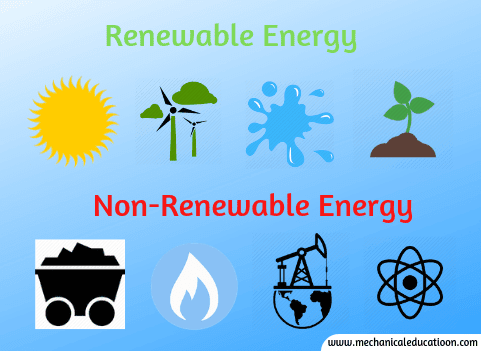
a nonrenewable resources is...
any natural material that is used by humans
a natural resource that can be replaced at the same rate at which it is consumed
a resource that forms much more slowly than it is consumed

Choose ALL the ways that using natural resources can be harmful...
mining and oil spills can damage ecosystems
they make our lives easier
burning coal or other fossil fuels can cause air and water pollution
used products can fill landfills or litter beaches and other natural areas

Hydroelectric energy can be found throughout earth? Is this a pro or con?
Pro
Con

Hydroelectric dams and their technology are expensive to build. Is this a pro or con?
Pro
Con

Wind Energy is available as long as the sun warms the earth. Is this a Pro or Con?
Pro
Con

Wind energy equipment to collect and convert wind energy is expensive to produce and maintain. Is this a pro or con?
Pro
Con

Choose ALL of the renewable resources
sun
coal
wind
fossil fuels
Earth (geothermal)

Fossil Fuels are inexpensive to obtain and use. Is this a pro or con?
Pro
Con

Fossil Fuels can cause acid rain and smog. Is this a pro or con
Pro
Con

Nuclear fuel produces a large amount of energy and does not cause air pollution
Pro
Con

Nuclear Fuel produce dangerous wastes that remain radioactive for thousands of years
Pro
Con

Choose ALL of the nonrenewable energy resources
sun
fossil fuels
nuclear fuel
wind
natural gas

Choose ALL the advantages of using a hybrid car
produces fewer emissions than a gas car
costs more than a gas car
made with recycled parts
gets higher gas mileage than a gas car

When we ______ products, we avoid using resources to make new products.
Using a water bottle, instead of buying bottled water, conserves water and oil.
Reduce
Reuse
Recycle

Electricity is produced by using steam to _____________.
Energy sources for creating electricity can are described as renewable or non-renewable. Which one of the following is a non-renewable energy source?
tidal
wind
nuclear
solar
All of the following are non-renewable energy sources, EXCEPT
oil
coal
wind
natural gas
All of the following are non-renewable energy sources, EXCEPT
oil
coal
wind
natural gas
What does non-renewable mean?
Something that lasts forever
Something that can be replenished
Something that is not expensive
Something that is limited and cannot be replaced quickly
What is a renewable resource?
A resource that can regenerate or be replenished by natural cycles
A resource that exists in a finite amount
A resource that cannot be regenerated or replenished
Both b and c
What are the 3 main fossil fuels?
Coal, Oil, and Gasoline
Uranium, Gasoline, Petroleum
Coal, Oil, Biomass
Coal, Oil, Natural Gas
This picture shows a turbine generator used to produce electricity at a coal burning power plant.
Electricity is produced by using steam to _____________.
heat the turbine generators
spin the turbine generators
reduce friction in the turbine generators
reduce emissions from the turbine generators
Most of the energy in the United States comes from
Renewable Energy Resources
Solar Energy
Fossil Fuels
Hydro power
What do wind turbines, hydro electric dams, and ethanol plants have in common
All produce electrical current without pollution
All use generators to produce electrical current
All convert gravitational potential energy to electric current
All convert thermal energy to electrical energy

Humans dig up (a) and burn it. The fire heats (b) into (c) . The steam shoots against giant (d) which spins (e) to make electricity.
What is the problem with using fossil fuels?
They are renewable
They create a lot of pollution
They are cheap
They don't create a lot of energy
Nuclear Power Plants have many advantages. One of those advantages is...
nuclear weapons
nuclear waste
reduced CO2 emissions
reactor meltdowns

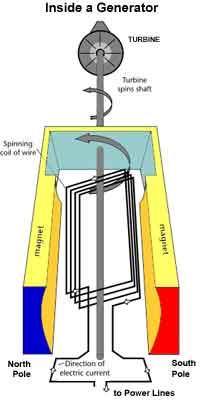
Examine the diagram shown. Which part provides the mechanical force to spin magnets around a coil of wire?
generator
turbine
boiler (furnace)
transformer

Nuclear reactors make heat, which warms water into steam, which turns a _______
Waterwheel
Windmill
Hydroelectric Plant
Turbine
What is a problem commonly associated with nuclear power facilities?
A small quantity of energy is produced.
Reaction products contribute to acid rain
It is impossible to control nuclear fission.
It is difficult to dispose of wastes.

Water flows down tunnels and spins the (a) which spins the (b) . This makes (c) .
What happens when water flows through a dam?
falling water turns a turbine
electricity is generated

The (a) pushes blades of (b) round and round, spinning the energy to (c) which make (d) .
Which one of the following is not true about wind energy
Its unlimited energy
Its environment friendly
It creates pollution
It doesn't rely on fossil fuels and coal
Light and heat from the sun is called...
solar energy
fossil fuel
oil
What is an advantage to using solar energy?
It is renewable and produces NO pollution
It is expensive to install
It is non-renewable but produces no pollution
Current technology is not advanced enough to use all the solar energy
How is wind caused?
There's a giant fan in Afghanistan where it cools the earth
Unequal heating
When clouds cover a certain area
Hot air rises

A
B
C
D

Type ONLY the letter of your answer.
(a)

(a)
A
B
C
D

A
B
C
D

A
B
C
D

Type ONLY the letter of your answer.
(a)

Type ONLY the letter of your answer.
(a)

My answer is (a)

A
B
C
D

A
B
C
D

Type ONLY the letter of your answer.
(a)

A
B
C
D

My answer is (a)

A
B
C
D

A
B
C
D

Type ONLY the letter of your answer.
(a)

A
B
C
D

My answer is (a)

Type ONLY the letter of your answer.
(a)

A
B
C
D
What do you call the process of drilling and injecting fluid into a ground at a high pressure in order to break or fracture the shale rocks to release natural gas inside?
Drilling
Fracking
Perforation
Sedimentation
This fossil fuel has been created by the remains of plants and must be mined from deep within the Earth.
oil
coal
natural gas
solar
The ADVANTAGES of Fossil Fuels include: (Choose ALL that apply)
low cost
produce a lot of energy
cause air pollution
high cost
Some DISADVANTAGES of Fossil Fuels are (Select ALL that apply)
air pollution
Non-Renewable
contributes to climate change
low cost
What is reclamation?
Taking the land back from the British
Putting the land back to what it was before mining
Planting trees on the remains of dead plants and animals
Putting coal back into the soil after mining


What are the most common sources of energy used in automobiles?
Wood and coal
Petroleum and diesel
LPG and cow dung
Natural gas and coal
Coal is burned to heat water so that the _______ can turn turbines.
fire
steam
water
heat
Mining only affects the land directly around the mining sites.
True
False
What do Federal Regulations require mining companies to do after collection is complete at a site? (Choose 2)
Resculpt the land to look exactly the same as it was before mining began
Replant trees and other vegetation
Resculpt the land to have features similar to those prior to mining
Put up warning signs of toxic materials
Only to put up fences or doorways to prevent trespassing in dangerous areas
Which of the following ways are used to help clean up and reclaim mining sites?
Replanting vegetation
Smooth hillsides to decrease erosion
Control grazing
Setting up hiking trails and camping sites
Draining runoff
(a) Nuclear power can be used to create weapons of mass destruction
(a) Nuclear power produces no air particulates that damage lungs like burning fossil fuels does
(a) New nuclear technology has proven to be difficult to turn into weapons
(a) When rules aren't followed, melt downs can occur releasing radioactive material into environment
(a) Nuclear energy can fill the gaps in energy provided by renewable energy resources
(a) Nuclear waste is toxic and must be stored far away from people, and food and water supplies
(a) Newer reactor types are able to reduce nuclear waste by recycling the reaction products
(a) When following regulations, there is little risk for nuclear power plant workers
(a) The output of energy from a nuclear power plant is relatively high (a lot of energy is produced with a small amount of fuel)
(a) No carbon dioxide, CO2, or other main greenhouse gases are emitted from a nuclear powerplant
(a) Nuclear waste must be stored for thousands of years
(a) Land exposed to a nuclear melt down will be unused for decades
(a) Technology used to develop nuclear power plants has been used to develop technologies in other areas such as pharmaceuticals and medicine
(a) Technology used to develop nuclear power plants has been used to develop technologies in other areas such as pharmaceuticals and medicine
(a) Building new nuclear power plants is expensive
Choose THREE benefits of using nuclear power
no CO2 emitted to the atmosphere to cause global warming
no fossil fuels are burned
there is no waste with nuclear power
it provides a large amount of electricity
the waste stays radioactive for thousands of years

What does this picture show about nuclear power?
it shows that nuclear waste is dangerous
it shows that nuclear power provides a lot of electricity
it shows that nuclear power happens in a reactor
it shows that we have to dig uranium out of the ground
A fuel formed from living organisms such as plants & animals.
Fossil Fuel
Bio Fuel
Eco Fuel
Plant Fuel
Benefits of Bio Fuels are:
They are renewable
They take thousands of years to form.
Can be produced in the United States
They are obtained mainly in foreign countries.
Select ALL of the FOSSIL FUELS (you will choose more than one):
Ethanol
Coal
Natural Gas
Biodiesel
Petroleum
Fuel is used for:
Heating homes
Providing power to electricity plants
Transporting food, clothing, and other necessetits
All answers are correct
What happens when water flows through a dam?
The water evaporates.
The water turns a turbine.
The water is pumped back up.
The water creates sparks making electricity.
What is the job of a turbine?
When it spins, it makes sparks causing electricity.
It moves the energy from the flow of water to a generator.
It slows down the speed of the water to keep it at a steady pace.
It controls the water so it can be pumped back up the dam.
What are some concerns about building dams to create hydropower? Check all that apply.
Dams change the environment.
There are no concerns.
Dams change fish swimming patterns.
Dams store too much water.
Which of the following is NOT a benefit we derive from our dams and reservoirs?
Recreation
Flood management
Irrigation
Endangered species protection
Hydropower

The following picture is an example of what energy source?
Wind
Biomass
Coal
Hydropower
Hydropower is one of the cheapest ways to produce energy.
True
False
What is one cost of building a hydroelectric dam?
Many people go hungry.
People are sometimes forced to move.
The cost isn't as high.
It controls flooding.
What are 2 cons (disadvantages) of using water power?
Expensive to build
It's renewable
It uses up the water
environmental impacts and consequences
Most hydropower is created by....
Water being still
Water spinning a turbine
Fish and animals moving in the water
Pumping chemicals into the water to give it energy
What are two pros (advantages) to hydropower?
It's expensive to build
It's renewable
water doesn't get used up
can negatively impact local ecosystems
What are some concerns about building dams to create hydropower? Check all that apply.
Dams change the environment.
There are no concerns.
Dams change fish swimming patterns.
Dams store too much water.
Which is NOT a benefit of hydropower?
cost-competitive
reliable
flood control
loss of animal homes
Solar Energy is created by what?
Moon
Sun
Wind
Water
Someone wants to put solar panels on their house. They live in a location where it is cloudy a lot and their house is shaded by trees. Should this person be putting solar panels on their house?
Yes
No
Cons (Disadvantages) of using Solar Energy include:
SELECT ALL THAT APPLY
It's Renewable
Expensive to Install
It is not a constant source of energy
All the Above
Pro (Advantages) of using solar energy include:
SELECT ALL THAT APPLY
Renewable
Expensive to Install
Produces no pollution during its operation
Expensive to store energy

What is the most abundant resource on Earth?
Wind Power
Water Power
Solar Power
The Power of Grayskull
Why are fossil fuels more widely used than solar energy?
Solar energy is harder to find.
Fossil fuels are much cheaper.
Fossil fuels are more abundant.
The sun's energy can never be harnessed.

Wich one is an advantage in solar energy
Reduce the use of fossil fuels
Contaminated
Destroy the planet.
All are correct

Which one is a disavantage in solar energy
Does not emit toxic substances to air
High investment cost
Is free
Always is the sun
How do wind turbines affect the environment.
Can harm birds and other wildlife
Cuts the clouds which affects the water cycle.
Hits trees around them
They are perfect for the environment.

The diagram above shows a wind turbine. Which section of the wind turbine converts wind energy to electrical energy?
blades
generator
rotor
pitch system
Why is wind energy considered a renewable resource?
It can be harnessed by human beings.
It's related to the weather
It's unlikely that humans will run out of it anytime soon.
It can be used to generate electricity.
Which of the following is a drawback to wind energy?
Wind turbines can cause cancer among people who live near them.
Wind turbines can hurt flying animals
There aren't enough suitable sites in the U.S. to build wind farms
Wind turbines emit greenhouse gases.
How Does A Wind Turbine Make Electricity?
Robots Inside Do Push-Ups Inside
Tiny Elves Inside The Blades Run On Treadmills
They Raise Water That Then Flows Downhill
The Spinning Blades Turn A Shaft That Connects To Generator
Which of the following is a DISADVANTAGE to Wind Turbines?
They can be a threat to wildlife (aka birds).
They can pollute the air.
There are not enough places to build Wind Turbines.
They are too tall.


Mining that is done above ground is called...
surface mining.
subsurface mining.
Mining that is done below ground is called...
surface mining.
subsurface mining.
This type of mining involves moving HUGE amounts of Earth to access ore.
surface mining
subsurface mining
When ore is extracted from near the surface by digging deep into the ground.
Strip Mining
Contour Mining
Mountaintop Removal
Open Pit Mining
When ore is removed in layers by removing the soil that is on top.
Open Pit Mining
Oil Derricks
Strip Mining
Fracking
This form of mining uses tunnels and shafts to bring ore to the surface.
surface mining
subsurface mining
Removing ore along a seam in a hillside.
Open Pit Mining
Fracking
Mountaintop Removal
Contour Mining
A natural resource that can only be replaced only through geological, physical, and chemical processes that take millions of years.
Renewable Resource
Nonrenewable Resource
Removing a mountaintop to reach the ore that lays underneath.
Open Pit Mining
Fracking
Mountaintop Removal
Contour Mining
How can miners be responsible?
Leave open-pit mines alone when they're finished taking all the minerals.
Reclaim, or clean up the land when they're finished taking all the minerals.
Only mine the valuable minerals.
Only dig surface mines.



