
 Worksheets
APES Unit 6 Pollution Study Game
Total questions: 80
Worksheet time: 7hrs 40mins
The 3 main anthropogenic sources of gaseous air pollutants in the US are
soil erosion, volcanoes, and forest fires
transportation, soil erosion, and energy production
industry, transportation, and energy production
industry, transportation and agriculture
a secondary pollutant
forms in the stratosphere
is transformed by sunlight, water, or other elements in the atmosphere
cannot be directly tracked to its source
forms primarily from incomplete combustion
Which is a source of sulfur dioxide found in nature?
forest fires
lightning
plant emissions
volcano
Thermal inversions
increase the rate of smog formation
trap high concentrations of pollution at ground level
result in increased levels of acid deposition
reduce the negative effects of VOC's
The effects of acid deposition include
increased cancer rates in aquatic organisms
increased pH of lake water
decreased mobilization of metals
decreased aquatic biodiversity
Which is NOT used to prevent the emission of particulate matter?
gravitational settling
fabric filters
electrostatic precipitators
catalytic converters
Which method is used to reduce the nitrogen oxide emissions
installation of catalytic converters
increased temperature of combustion
the use of calcium carbonate to absorb the emissions
the use of fluidized bed combustion
Smoke from forest fires is most likely to affect air quality over larger areas for many days when
smog is produced due to chemical reactions in the atmosphere
a persistent atmospheric inversion exists in the region
it emits primary pollutants
it emits secondary pollutants
The Clean Air Act- regulates vehicle emissions.
true
false
A type of pollution found both indoors and outdoors, which includes pollen, dander, soot, carbon, and dust.
Water droplets
Allergens
Particulate matter
Combustibles

Which of the following are examples of VOC's ? (Select 3)
paint and paint thinners
gasoline
water vapor
formaldehyde
smog
Which of the following is NOT a primary pollutant?
nitric oxides
smog
sulfur dioxide
volatile organic compounds
Uranium 238 decays to make this carcinogenic gas found in the bedrock
Asbestos
Radon
Lead
Thalidomide
Which is NOT used to prevent the emission of particulate matter?
gravitational settling
fabric filters
electrostatic precipitators
catalytic converters
What can you predict about indoor air pollution in India and Sub-Saharan Africa?
Homes have more efficient insulation and increased ventilation decreasing indoor air pollution
Use of biomass fuel sources such as wood and charcoal for cooking increases indoor air pollution
Industrial power plants burning fossil fuels for electrical energy generation decreases indoor air pollution
Use of chemical pesticides on croplands increases indoor air pollution

______ is an unwanted sound that is harmful to people and animals.
Noise pollution
Air pollution
Water Pollution
Land Pollution
One of the effects of noise pollution is _______
Happy sleep
Respiratory infection
Poor communication
Thermal inversions _________________________.
increase the rate of smog formation
trap high concentrations of pollution at ground level
result in increased levels of acid deposition
reduce the negative effects of VOC's
Which size of particulate matter causes the greatest health concerns?
PM2.5
PM10
PM100
PM30
Two major factors involved in the conversion of primary pollutants into secondary pollutants are __________.
sunlight and water
sulfates and sunlight
water and volatile organics
nitrogen oxides and sulfates
Radon is usually found in this location in your home.
attic
basement
bathroom
kitchen
Exposure to too much radon gas can cause
lung cancer
sun burn
blindness
acne
Ozone caused by light, heat, and burning fossil fuels leading to NOx and CO2
trophospheric
stratospheric
mesospheric
thermospheric
Point source pollution example
a neighborhood with overfertilized lawns
all the cars in a city during rush hour
a factory not using scrubbers
wildfires across California
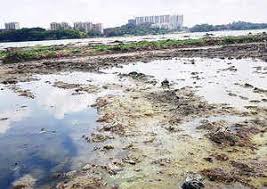
Type of aquatic ecosystem that was once viewed as wasteland and drained by the government
estuaries
coral reefs
open ocean
wetlands
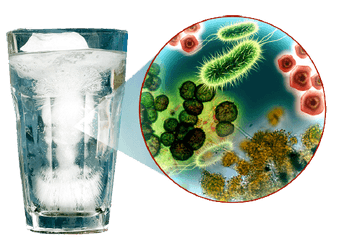
Presence of fecal coliform bacteria suggests that
a factory polluted the river
a nearby treatment plant added chlorine to the waste water
the water is safe for drinking
untreated animal waste contaminated the water
Which of the following describe the relationship between D.O. and B.O.D.?
When D.O. decreases, the B.O.D. decreases
When D.O. decreases, the B.O.D. increases
When B.O.D. decreases, the D.O. decreases
When B.O.D. increases, the D.O. decreases
What is an effect of land pollution?
no clean drinking water
loss of habitat for animals
diseases from breathing in poor quality air
The federal legislation that sets standards for wildlife and recreation in surface bodies of water in the US
Water Quality Act
Clean Water Act
Pollution Prevention Act
National Environment Policy Act
Safe Drinking Water Act
Which of the following is a point-source pollutant?
Sediment loading from erosion
Runoff of pesticides from croplands
Animal wastes from feedlots
Fertilizer runoff from urban areas
A sewage treatment plant effluent pipe
Which of the following would most likely cause metabolic stress in aerobic lake organisms?
Variation in conductivity
Dissolved oxygen levels at or below 2 ppm
Influx of dissolved solids
A 1 to 2 -degree change in water temperature
An increase in pH from 6-7
Which of the following river conditions would yield the highest dissolved oxygen content?
Fast-moving cold water, large amounts of submerged vegetative biomass
Stagnant, warm water with large clumps of algae
Slow- moving warm waters, low amounts of submerged vegetative biomass
Warm water with little vegetative biomass
Which pollutant or pollutants are most likely to create eutrophic areas?
nitrates and phosphates
heavy metals
synthetic organic compounds
pharmaceuticals
Acid deposition


Endocrine disruptors cause the following impacts to organisms
increased respiratory rate
damage to the cardiovascular system
increased size of individual organisms
birth defects and cancer
The process of human activities in urban or agricultural areas that load nutrients into surface bodies of water is known as
artificial fertilization
cultural eutrophication
thermal pollution
lake stratification
synthetic primary productivity
Organic matter like yard waste in landfills is a problem primarily because
there is a high risk of toxic leaching
it contains bacteria that spreads disease
as it breaks down it can dissolve the containment
it produces methane gas

Ecosystems such as wetlands filter both human and animal waste and act as a natural buffer to the surrounding environment.
Provisioning
Regulating
Supporting
Cultural
What is the first step in the water treatment process?
coagulation
filtration and removal of debris, sand, grit, etc.
flocs
concentation
In which part of the wastewater treatment process are bacteria introduced to the wastewater to feed on organic particles, such as food and feces? (Select 2 choices)
sedimentation
aeration
disinfection
primary treatment
secondary treatment


Which method introduces microorganisms to break down hazardous organic compounds?
Sanitary landfill
Incineration
Discharge to sewers, streams, and rivers
Chemical treatment
Biological treatment
List the following steps of Water purification in the correct order
Step P: Water is passed through a screen to remove debris.
Step Q: Pathogenic organisms are killed by chlorination, UV, or ozone.
Step R: Suspended particles clump and settle out.
Step S: A flocking agent, such as alum, is added to the water.
P, Q, R, S
S, P, R, Q
P, S, R, Q
R, P, S, Q
S, R, P, Q
Caffine has an LD50 of 130ppm for mice. Which is the best reason that coffee and caffinated soft drinks are not considered dangerous?
Caffine is only toxic to mice and not to humans
You would have to drink an enormous amounts of caffinated drinks to consume a dose that would amount to that concentration
LD50 is a rating only used for mice.
Caffine is popular, so a high toxicity is acceptable.
What is more dangerous LD50 of
0.04 ppm
1.29 ppm
1.04 ppm
0.40 ppm
Dose causing death of half of the organisms exposed at this level.
LD50
LC50
TC50
TD50
The LD50 for acetaminophen is 2404 mg/kg (rat, oral). 1 kg = 2.2 pounds. How many milligrams of acetaminophen would be a lethal dose for a 150 lb adult? (rounded to the nearest tenth)
360600.0 mg
16.0 mg
2404 mg
163928.8 mg

