
 Worksheets
Waves: Properties, Behavior and Interactions
Total questions: 45
Worksheet time: 22mins


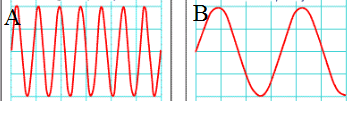
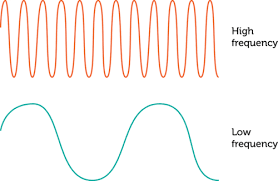
If a wave has a greater frequency, what happens to the wavelength?
increases
decreases
stays the same
If a wave has a greater frequency, what happens to the wavelength?
increases
decreases
stays the same

How are Electromagnetic waves different from Mechanical waves?
EM waves have very short wavelengths
EM waves transmit energy instead of matter
EM waves can travel through the vacuum of space (without particles)
EM waves can change direction by reflection
Light waves bouncing off a surface is known as?
Transmission
Refraction
Reflection
Absorption
This is when sound waves reflect or bounce off an an object.
Echo
Transmission
Refraction
Absorption
This is when light changes direction slightly when it passes from one material to another.
Transmission
Reflection
Refraction
Absorption
This describes when the atoms of matter absorb light, and converts the light into thermal energy.
Transmission
Reflection
Refraction
Absorption

When you place things into water they sometimes look bent (see the image below). What is this an example of?
Refraction
Diffraction
Transmission
Absorption



A disturbance that transfers energy from place to place through matter or space
wave
position
time
protein
As a longitude wave moves forward, the particles transfer energy
perpendicular to the wave's motion
horizontal to the wave's motion
What are properties of electromagnetic waves?
carry energy
can move through space
can move through matter
include x-rays

The units for frequency are measured in _____________.
hertz
seconds
m/s
hertz per second
In a longitudinal wave, the particles move...?
parallel to wave energy
perpendicular to wave energy
not at all
in a circular motion
On the electromagnetic spectrum, waves ascend in this order...
gamma, radio, UV, microwaves, visible light, IR, x-rays
radio, microwaves, UV, visible light, IR, x-ray, gamma
radio, IR, visible light, UV, microwaves, x-rays, gamma
radio, microwaves, IR, visible light, UV, x-ray, gamma
This type of Electromagnetic wave travels easily through soft tissue, but is blocked by dense tissues.
(a)
Which of the following has the fastest speed?
x-rays
gamma rays
radio waves
visible light
all of the above
A wave has a speed of 150 m/s and a wavelength of 10 m. What is its frequency?
15 Hz
50 Hz
10 Hz
A wave with a frequency of 14 Hz has a wavelength of 3 m. What is its speed?
65 m/s
42 m/s
4.7 m/s
What is the correct formula for wave speed?
Wave speed = frequency x wavelength
Wave speed = amplitude x wavelength
Wave speed = amplitude x period
Wave speed = frequency x period
If 6 waves pass a point every 2 seconds, what is the frequency?
6 Hz
3 Hz
12 Hz
Which of the following is a mechanical wave?
X-ray
Infrared
Radio waves
Sound
Which of the following is NOT true about mechanical waves?
They carry energy
They transfer matter
They can be longitudinal
They require a medium

