wayground logo

Free Printable Worksheets

Font size

S
M
L
XL
Worksheets

Reporting Category 3 Review

Total questions: 60

Worksheet time: 38mins

Name
Class
Date
1.
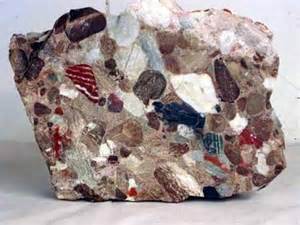
Sedimentary rocks may contain fossils.
a)
True
b)
False
2.
Rock made of layers of compressed sediments
a)
metamorphic rock
b)
igneous rock
c)
sedimentary rock
d)
school house rock
3.
The breakdown of rock into smaller particles from the effects of wind, water and ice
a)
erosion
b)
cementation 
c)
pressure
d)
weathering
4.
Wind, water, ice and gravity carry sediments away
a)
weathering
b)
deposition
c)
erosion
d)
cementation
5.
Sediment that is left behind in rivers lakes and oceans
a)
weathering
b)
erosion
c)
cementation
d)
deposition
6.
When the weight of new  sediment layers is deposited on top of older layers
a)
erosion
b)
compaction
c)
pressure
d)
weathering
7.
Force of objects pushing on other objects
a)
erosion
b)
pressure
c)
fighting
8.
The process of layers become stuck together forming sedimentary rocks
a)
sticking
b)
pressuring
c)
cementation
d)
deposition
9.
What causes rocks to break down?
a)
Weathering
b)
Erosion
c)
Deposition
d)
Cementation
10.
The sediment has been dropped off in a pile. What process happened last?
a)
weathering
b)
compaction
c)
cementation
d)
deposition
11.
Putting pressure on sediments underground is called . . . 
a)
cementation
b)
compaction
c)
weathering
d)
erosion
12.
When sediments stick together its called . . . 
a)
cementation
b)
compaction
c)
deposition
d)
erosion
13.
What are the three fossil fuels that form in sedimentary rock?
a)
solar, oil
b)
coal and oil
c)
coal, oil, natural gas
14.
How long does it take a complete sedimentary rock to form?
a)
millions of years
b)
thousands of years
15.
What characteristic to sedimentary rocks often have?
a)
weather patterns
b)
tiny crystals
c)
striped layers
d)
glassy surfaces
16.
Small pebbles, pieces of other rock, and sand are called?
a)
weathering
b)
sediment
17.
The process by which running water, wind, or ice carry away bits of broken-up rock
a)
weathering
b)
sediment
c)
erosion
d)
cememtation
18.

Which formation process do most sedimentary rocks follow?

a)

cementation, compaction, deposition, erosion

b)

erosion, compaction, cementation, deposition

c)

erosion, deposition, compaction, cementation

19.

Which process best describes compaction?

a)

particles are squeezed together under pressure

b)

particles glue together as minerals harden

c)

sediment settles

20.
What is the breaking down of rocks?
a)
Weathering
b)
Clastic
c)
Vesicular
21.
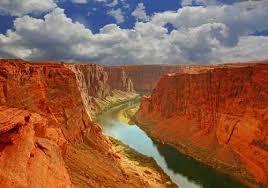
What landform is this?
a)
delta
b)
canyon
c)
valley
d)
sand dune
22.
What landform is this?
a)
delta
b)
mountain
c)
volcano
d)
sand dune
23.
What landform is this?
a)
canyon
b)
valley
c)
delta
d)
mountain
24.
How does a valley form?
a)
by a river flowing in between mountains
b)
it just appears
c)
by mountains separating
d)
by volcanoes erupting
25.
What does weathering mean?
a)
to move
b)
to settle in a new spot
c)
to break apart
d)
to sit still
26.

This landform is formed by

a)

water erosion

b)

wind erosion

c)

deposition

d)

glaciers

27.

What is this landform?

a)

delta

b)

canyon

c)

valley

d)

sand dune

28.

This landform is formed by

a)

water erosion

b)

weathering

c)

deposition of sediments

d)

glaciers

29.

A triangular landform where a river empties into another body of water.

a)

Landform

b)

Canyon

c)

Delta

d)

Valley

30.

Hills formed by wind blowing, moving and depositing sand.

a)

Valley

b)

Dune

c)

Delta

d)

Canyon

31.
a)
hill
b)
mountain
c)
sinkhole
d)
cave
32.
a)
hill
b)
island
c)
dune
d)
mountain
33.
a)
plateau
b)
island
c)
valley
d)
hill
34.
What land form is this?
a)
valley
b)
canyon
c)
mountain
d)
plain
35.
What land form is this?
a)
plain
b)
valley
c)
mountain
d)
canyon
36.

What are the natural shapes that make up the Earth's surface called?

a)

earthquakes

b)

volcanoes

c)

landforms

d)

erosion

37.
Water getting into cracks, freezing, and breaking the rocks or pavement apart
a)
Weathering
b)
Erosion
c)
Deposition
38.
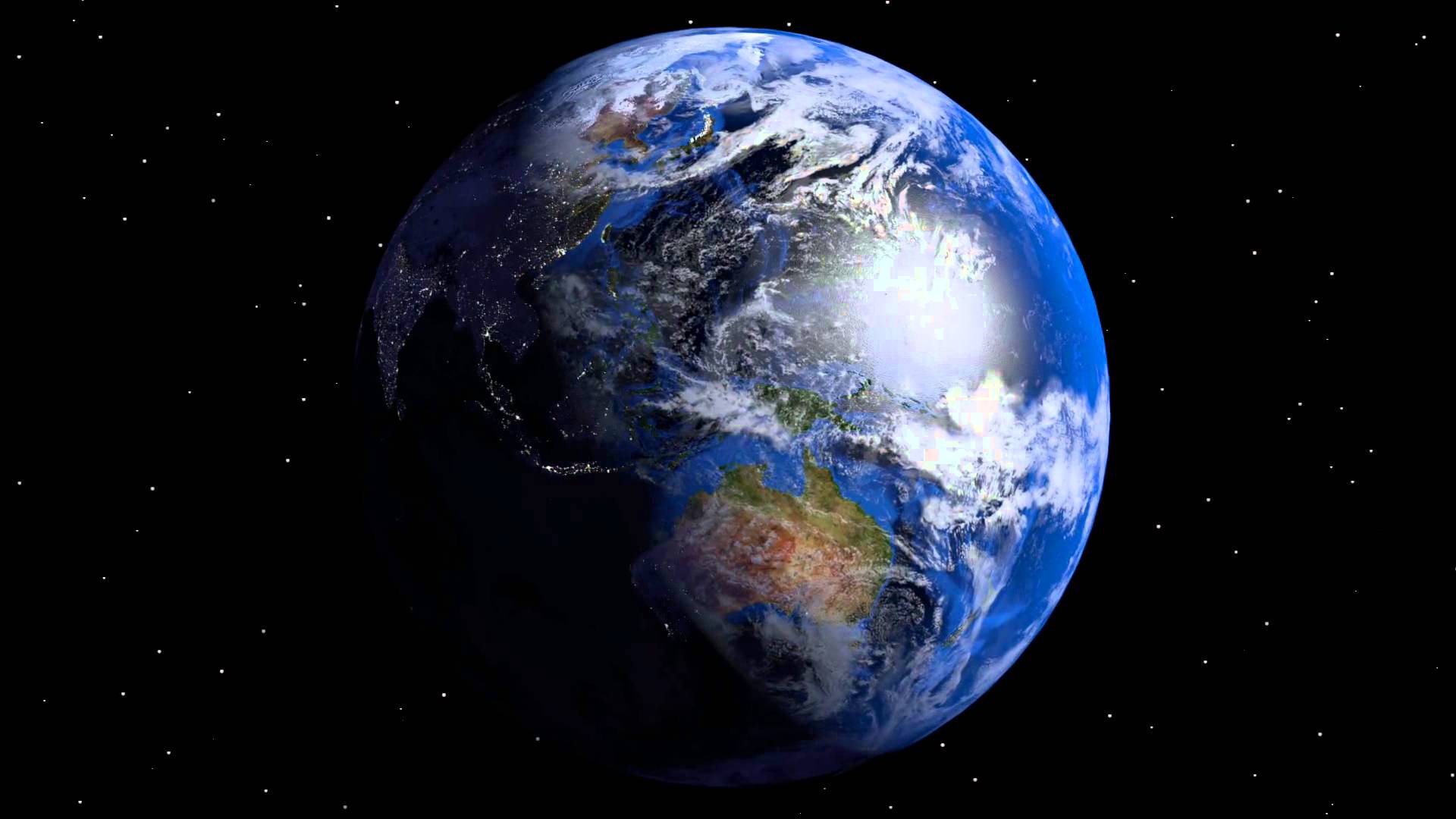
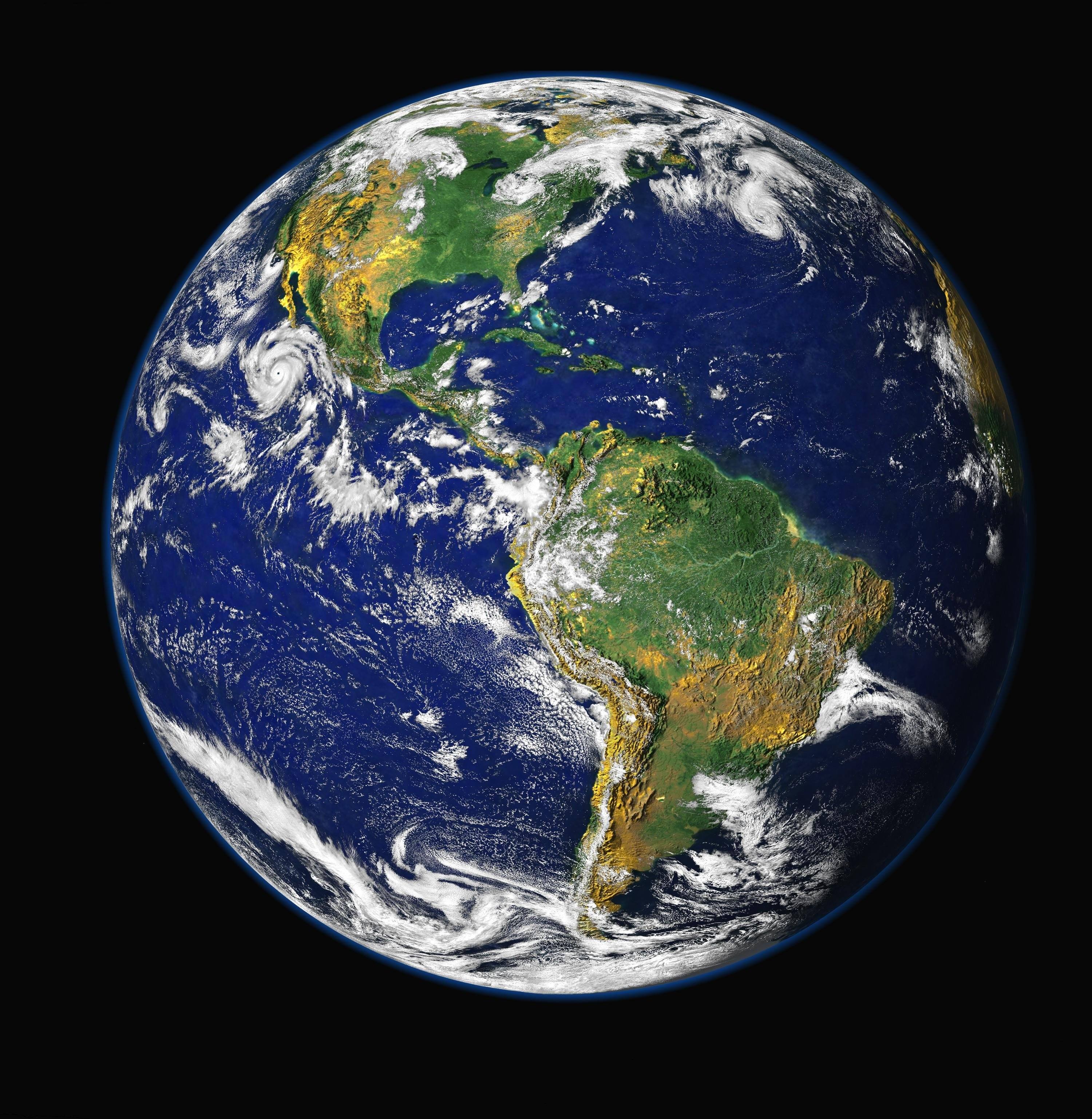
Spinning of the Earth on its axis is called...
a)
rotation
b)
revolution
c)
orbit
d)
double axis
39.
The EARTH REVOLVES around the:
a)
Sun
b)
Moon
c)
The Earth doesn't revolve
d)
The sun rotates
40.
What does ROTATION mean?
a)
To SPIN
b)
To ORBIT or GO AROUND
41.
Day and night is caused by the _____________ of earth on its axis.
a)
revolution
b)
orbit
c)
rotation
d)
space
42.
What motion of the Earth takes 365 days?
a)
Rotation
b)
Tilting 
c)
Revolution
d)
Spinning
43.
Rotation of the earth takes
a)
One day
b)
One year
c)
One summer
d)
One winter
44.
The Earth spins on a tilted angle called a (an) 
a)
Axis
b)
Invert
c)
Revolution
d)
Bounce
45.
Earth's rotation on its axis is what causes ______________________________.
a)
seasons
b)
moon phases
c)
day and night
d)
weather
46.
What does REVOLUTION mean?
a)
To SPIN
b)
To ORBIT or GO AROUND
47.
Which movement of Earth causes day and night?
a)
rotation
b)
revolution
48.
The earth orbits around the _________
a)
sun
b)
moon
c)
other planets
d)
solar system
49.
What happens when the area in which you live tilts away from the sun?
a)
It is summer.
b)
It is spring.
c)
It is winter.
d)
It is fall.
50.
Why is it warmer in the summer?
a)
Closer to the sun
b)
More direct light from Earth's tilt
c)
Stronger light from the sun
d)
Earth spins slower
51.
In spring/fall, the axis of the earth is pointed away or toward the sun?
a)
towards
b)
Neither away or toward
c)
away
52.
What direction does Earth rotate and revolve?
a)
clockwise
b)
counterclockwise
53.

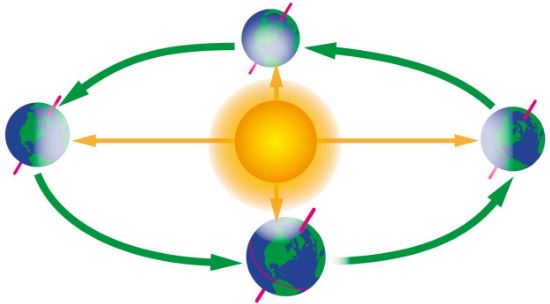
What season is the northern hemisphere experiencing in the photo?

a)

Fall

b)

Spring

c)

Winter

d)

Summer

54.
About how many days does it take to moon to go through a complete cycle?
a)
7 days
b)
365 days
c)
29 days
d)
20 days
55.
When the visible (lit) portion of the moon is increasing, the moon is:
a)
waning
b)
full
c)
waxing
d)
new
56.
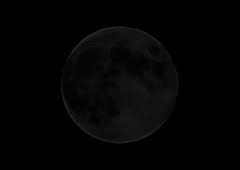
Name the moon phase
a)
First Quarter
b)
Last Quarter
c)
New Moon
d)
Full Moon
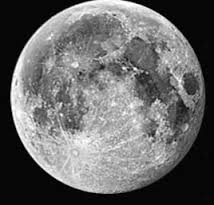
57.
Name the moon phase
a)
First Quarter
b)
Last Quarter
c)
New Moon
d)
Full Moon
58.
As the moon's shape appears to get smaller, we say that the moon is _.
a)
swelling
b)
waxing
c)
waning
d)
disappearing
59.

The moon ____________ around the Earth.

a)

revolves

b)

rotates

c)

up

d)

down

60.
What does "Waxing" mean?
a)
Appears like the moon is getting larger
b)
Appears like the moon is getting smaller