Wayground logo

Free Printable Worksheets

Font size

S
M
L
XL
Worksheets

Q4 Exam Review

Total questions: 83

Worksheet time: 57mins

Name
Class
Date
1.

What does the Big Bang Theory tell us

a)

About the popular television show.

b)

the entire universe was once condensed in the form of primeval atom, or a dense mass.

c)

how the universe began.

2.

Most scientists believe the Big Bang Theory explains which of the following questions?

a)

How our planets and moons formed

b)

How our universe began

c)

How the sun turns hydrogen into helium

d)

How fast light travels through space

3.

The Big Bang Theory is the most widely accepted theory about the origin of the universe.

a)

true

b)

false

4.

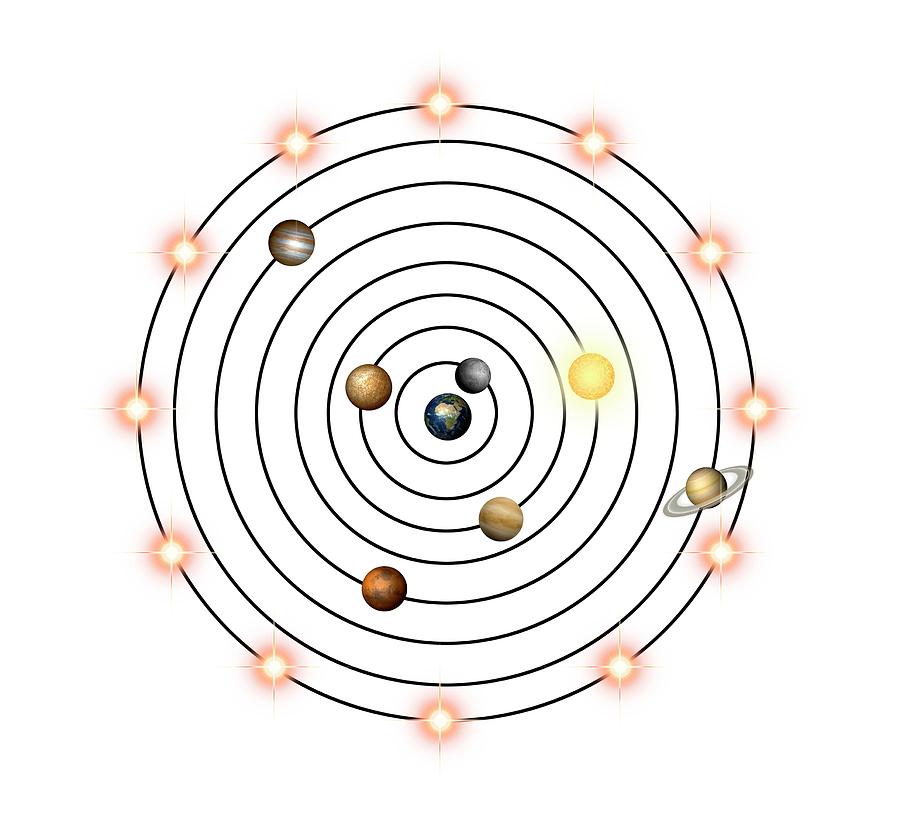
What is at the middle of a Heliocentric system?

a)

Mars

b)

Moon

c)

Sun

d)

Earth

5.

What is at the middle of a Geocentric system?

a)

Sun

b)

Neptune

c)

Earth

d)

The Universe

6.

What does the Geocentric system look like?
a)
b)
c)
d)
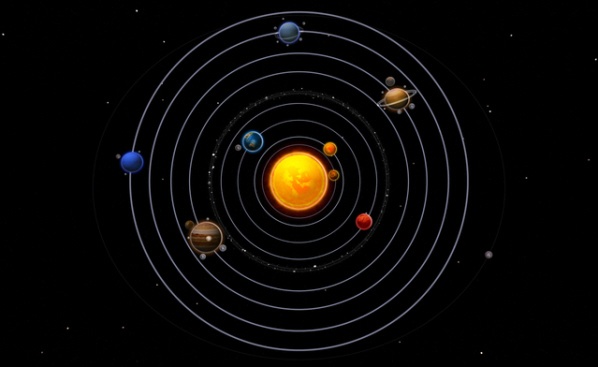
7.

What does the Heliocentric system look like?

a)
b)
c)
d)
8.
  What does "geo-" mean?
a)
Earth
b)
sun
c)
Center
9.
Objects made of ice, gas and dust and orbit our sun are called:
a)
Asteroids
b)
Comets
c)
moon
d)
Meteors
10.
When a meteoroid STRIKES the surface of the earth scientists refer to them as:
a)
Asteroids
b)
Comets
c)
Meteors
d)
Meteorites 
11.
The luminous celestial body (a bright space object) around which Earth and other planets revolve and from which they receive heat and light.
a)
satellite
b)
planet
c)
sun
d)
galaxy
12.
Large and small rocks or metallic masses orbiting the Sun; made up of materials similar to those that formed the planets.
a)
asteroid
b)
comet
c)
meteor
d)
meteroid
13.
A small object that enters Earth's atmosphere from space and burns due to friction, emitting light.
a)
meteor
b)
comet
c)
asteroid
d)
star
14.
Pieces of asteroids that land on other planets including earth's surface.
a)
meteorite
b)
meteor
c)
moon
d)
Cannot happen. What happens in space stays in space.
15.
Which object is essentially stationary compared to all other objects in the solar system?
a)
comet
b)
asteroid
c)
star
d)
moon
16.
This round celestial body does not produce its own light, orbits the sun, and is larger than an asteroid.
a)
meteoroid
b)
moon
c)
planet
17.
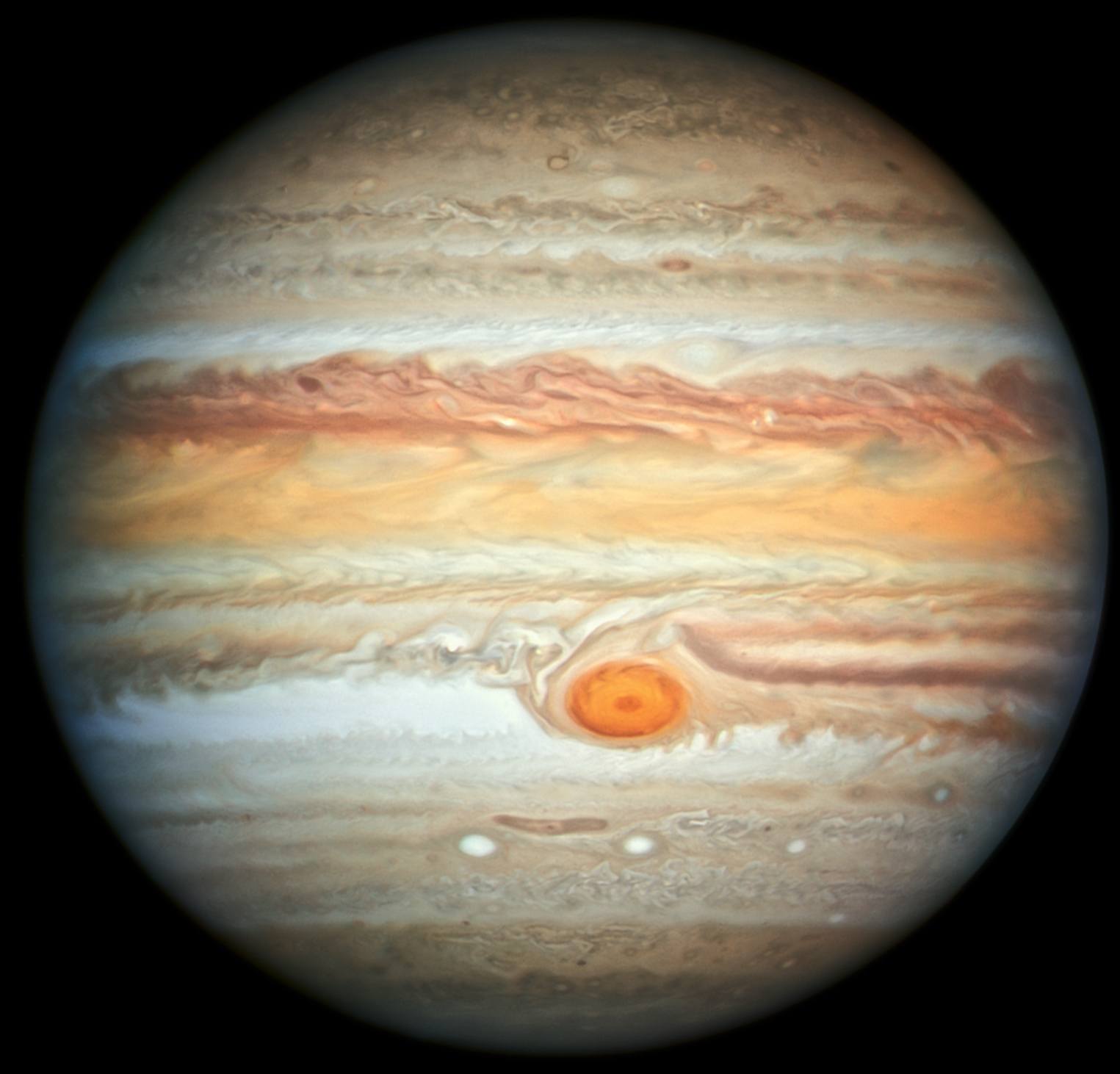
This is the largest planet in the solar system.
a)
Saturn
b)
Jupiter
c)
Uranus
d)
Venus
18.
This is the smallest planet in the solar system
a)
Mercury
b)
Venus
c)
Earth
d)
Mars
19.
The earth orbits around...
a)
the sun.
b)
the moon
c)
other planets
d)
the Milky Way
20.
What divides the inner planets from the outer planets?
a)
Kuiper Belt
b)
Oort Cloud
c)
Asteroid Belt
21.
Which planet is Mercury?
a)
1
b)
2
c)
3
d)
4
22.
The order of the planets is:
a)
Mars,Venus,Earth,
Mercury,Saturn
Jupiter, Uranus, Neptune
b)
Earth,Venus,Mars
Jupiter, Neptune,
Mercury,Saturn,
Uranus
c)
Mercury,Venus,Earth
Mars,Jupiter,
Saturn,Uranus
Neptune
23.
What force keeps the planets orbiting the sun?
a)
Gravity
b)
Magnetism
c)
Electricity
d)
Friction
24.
Fill in the blank:
Mars is the ________ planet from the sun
a)
5th
b)
4th
c)
3rd
25.

What causes the moon's phases

a)

Where you are standing on Earth

b)

the amount of sunlight reflected onto the moon from the sun

c)

The tilt of Earth

d)

how fast the moon is moving

26.
Define Waxing
a)
Moon is increasing and light part appears to be growing
b)
Completely illuminated
c)
dark side is facing earth
d)
Moon is decreasing and light part appears to be shrinking
27.
How many phases does the moon go through?
a)
4
b)
8
c)
10
d)
16
28.
As the moon's shape appears to get smaller, we say that the moon is _.
a)
swelling
b)
waxing
c)
waning
d)
disappearing
29.
The cycle of the moon lasts about a _.
a)
day
b)
year
c)
week
d)
month
30.

It takes about _____ for the earth to complete one rotation.

a)

28 days

b)

24 hours

c)

365 hours

d)

365 days

31.
Name the moon phase
a)
First Quarter
b)
Last Quarter
c)
New Moon
d)
Full Moon
32.
What part of the moon do we see from Earth?
a)
all of it
b)
the same side
c)
none of it
d)
only one quarter
33.
CHALLENGE
When the moon is lined up exactly between the sun and Earth, it is called a ______ ______. 
a)
Solar Eclipse
b)
Lunar Eclipse
34.
TRUE or FALSE
We can see the moon during the day. 
a)
True
b)
False
35.
A lunar eclipse occurs when the Moon casts a shadow on Earth.
a)
True
b)
False
36.
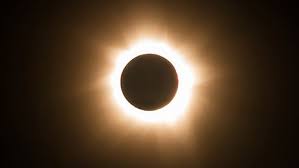
During a solar eclipse...
a)
The sun is blocked by the moon
b)
The Earth is blocked moon
c)
The moon is blocked by the sun
d)
You are blocked
37.
Where did Einstein born?
a)
America
b)
Britain
c)
Germany
d)
France
38.

What are Wormholes?

a)

A wormhole is a speculative structure linking points in spacetime.

b)

Wormhole are dug up by worms.

39.

What do Wormholes do?

a)

They help farmers.

b)

They give shelter for worms.

c)

Wormholes connect with space and time that means we could travel in time as well as space.

40.
A wormhole is a ______ in spacetime
a)
bend
b)
fold
c)
edge
d)
hole
41.

does black holes have gravity

a)

it has a lot

b)

it doesent

c)

kind of

d)

no one knows

42.

The Milky Way is a___.

a)

galaxy

b)

star

c)

planet

d)

moon

43.
What is the charge of an electron?
a)
negative
b)
neutral
c)
no charge
d)
positive
44.
Which subatomic particle(s) makes up the majority of the mass of an atom?
a)
Protons
b)
Electrons
c)
Electrons and Neutrons
d)
Protons and Neutrons
45.
Which best describes the location and charge of a neutron?
a)
nucleus, neutral (no charge)
b)
electron cloud neutral
c)
nucleus, positive
d)
nucleus, negative
46.
How many atoms are present in the following compound?
a)
3
b)
48
c)
4
d)
47
47.
How many protons does chlorine have?
a)
35
b)
17
c)
18
d)
4
48.
Which is not evidence of a chemical change?
a)
Bubbling or fizzing
b)
Unexpected temperature change
c)
Fire or smoke
d)
Phase change
49.
When a new substance is formed, what kind of change has taken place?
a)
Physical change
b)
Chemical change
c)
Phase change
d)
None of the options
50.
Which is the best example of a chemical change?
a)
A wall was painted red
b)
A piece of paper was cut into 36 pieces
c)
A bike rusted in the rain over time
d)
Ice melted and turned into water
51.
In a balanced equation the number of atoms in the _____________ and _____________ must be equal.
a)
Product, reactant
b)
product, quotient
c)
product, sum
d)
reactant, reaction
52.
The group of elements and/or compounds after a chemical reaction has taken place are called
a)
reactions
b)
processes
c)
products
d)
reactants
53.
How many total atoms are in the compound above?
a)
3
b)
4
c)
5
d)
12
54.
How many total atoms are in the compound above?
a)
1
b)
3
c)
4
d)
8
55.
How many elements are in the formula above?
a)
1
b)
3
c)
4
d)
8
56.
Is this an element, mixture, or compound?
a)
element
b)
mixture
c)
compound
57.
Is this an element, mixture, or compound?
a)
element
b)
mixture
c)
compound
58.
The scientific study of the structure, properties, and reactions of the chemical elements and the compounds they form.
a)
Chemistry
b)
Theory
c)
Law
d)
Control
59.
Balance this equation 
Ca + H2O --> CaO + H
2
a)
Ca + 2H2O --> CaO + 2H2
b)
2Ca + H2O --> CaO + H2
c)
It is already balanced
d)
Cannot be balanced
60.
Which of the following contains one oxygen atom?
a)
H2O
b)
CO2
c)
2N2O
d)
Co
61.
A scientist carries out a reaction in a test tube. After the bubbling stops, she notices that the test tube is very warm. What might she conclude about the reaction?
a)
The reaction happened very quickly.
b)
The reaction is endothermic.
c)
The reaction is exothermic.
d)
No reaction took place.
62.
If a chemical reaction is EXOTHERMIC, the temperature would....
a)
Stay the same
b)
Increase
c)
Decrease
63.
Baking bread and cooking an egg are examples of....?
a)
Endothermic processes
b)
Exothermic processess
64.

What does a represent?

a)

Proton

b)

Neutron

c)

Electron

65.

What is the symbol of this element?

a)

Calcium

b)

P

c)

Ca

d)

C

66.

What is the charge of a proton and where is it found?

a)

negative charge, nucleus

b)

positive charge, shells

c)

positive charge , nucleus

d)

neutral charge, nucleus

67.
Balloons can be twisted into shapes because
a)
the force exerted changes the number of particles
b)
the volume of a gas is constant
c)
particles of gas can be compressed
68.
A gas
a)
has a definite shape but no definite volume
b)
has a definite volume but no definite shape
c)
has fast-moving particles
69.
Which of the following is a physical property?
a)
melting point
b)
flammability
c)
ability to rust
70.
Some clues of a chemical change include..
a)
Melting, Breaking, Crushing
b)
Bending,Boiling, Foaming
c)
Evaporating, Cutting, production of heat
d)
Fizzing, Foaming, Change in color
71.
If a Carbon atom has 6 protons, how many electrons will it have?
a)
2
b)
4
c)
6
d)
8
72.
What charge does a neutron have?
a)
+1
b)
-1
c)
No charge
73.
The blue numbers in the image below represent ________
a)
I don't know, and don't want to try
b)
coefficients
c)
subscripts
d)
none of the answers are correct
74.
How many atoms of carbon (C) are in C6H12O6?
a)
3
b)
6
c)
12
d)
24
75.
In chemical reactions, what does the principle of conservation of mass mean?
a)
Matter is not created or destroyed.
b)
The total mass of the reactants is greater than the total mass of the products.
c)
The total mass of the reactants is less than the total mass of the products.
d)
Matter is not changed.
76.
The substances at the beginning of a chemical equation are called the ____
a)
product
b)
yield
c)
chemical symbol
d)
reactants
77.
What is the right part of a chemical equation called...
2H2 + O2 --> 2H2O
a)
Reactants
b)
Products 
c)
Yields 
d)
Chemical Equation 
78.

a copper penny turning greenish after a few years.

a)

Physical change

b)

Chemical change

79.
During an exothermic reaction, what happens to energy in relation to the surroundings?
a)
released to
b)
absorbed from
c)
 mixed with
80.

A compound is

a)

2 or more atoms of different elements chemically combined

b)

2 or more atoms chemically combined

c)

a mixture

d)

hydrogen

81.

A compound is

a)

2 or more atoms of different elements chemically combined

b)

2 or more atoms chemically combined

c)

a mixture

d)

hydrogen

82.

Carbon dioxide and sodium chloride are examples of

a)

elements

b)

homogeneous mixtures

c)

compounds

d)

heterogeneous mixtures

83.

If 4g of salt is dissolved in 200g of water, what would the mass of the solution be?

a)

200g

b)

204g

c)

208g

d)

196g