wayground logo

Free Printable Worksheets

Font size

S
M
L
XL
Worksheets

Ecology

Total questions: 45

Worksheet time: 29mins

Name
Class
Date
1.
An organism that needs to eat other organisms to obtain energy is known as a:
a)
Autotroph
b)
Producer
c)
Consumer
d)
Mutualist
2.
Consumer that eats plants
a)
heterotroph
b)
herbivore
c)
producer
d)
community
3.
What does a food web represent?
a)
All connections of energy flow throughout all organisms in a habitat.
b)
The specific ways that mutualism is carried out.
c)
A single pathway or energy flow between organisms. 
d)
How carnivores get their food. 
4.
The rabbit in this food web would be considered a:
a)
Decomposer
b)
Producer
c)
Secondary Consumer
d)
Primary Consumer
5.
In this Food Web Pyramid Which type of consumer gets only 10% of the energy stored in plants?
a)
Herbivore
b)
Carnivore
c)
Omnivore
d)
Secondary Consumer
6.
What is the term for each step in the transfer of energy and matter within a biological community?
a)
energy path
b)
food web
c)
trophic level
d)
food pyramid
7.
The image provided is an example of a(n):
a)
Carnivore
b)
Herbivore
c)
Producer
d)
Autotroph
8.
The amount of energy that usually transfers from one trophic level to the next...
a)
10%
b)
20%
c)
80%
d)
50%
9.
An illustration that uses arrows to show the MANY possible directions in which matter and energy can pass through the organisms in an ecosystem.
a)
Food chain
b)
Food web
c)
Energy Pyramid
d)
Succession Map
10.
The living portions of the ecosystem.
a)
Biotic factors
b)
Abiotic factors
11.
A graphic illustration that shows each trophic level and the amount of useable energy contained within.
a)
Food chain
b)
Food web
c)
Energy Pyramid
d)
All of these
12.
A collection of organisms that make up a community as well as all of the nonliving aspects of the environment.
a)
Population
b)
Community
c)
Habitat
d)
Ecosystem
13.
As you move upward, from level to level, in an energy pyramid, energy _____.
a)
increases
b)
decreases
c)
stays the same
d)
increases exponentially
14.
 plants that convert energy from the sun
a)
decomposer
b)
primary consumer
c)
secondary consumer
d)
producer
15.
What are the Abiotic factors in this image? 
a)
water, sunlight, dirt, air
b)
birds and plants
c)
birds, water, dirt
d)
plants, water
16.

How do biodiversity and stability work together?

a)

The lower the biodiversity the greater the stability of an ecosystem.

b)

The higher the biodiversity, the less stable the ecosystem

c)

The higher the biodiversity, the greater the stability of the ecosystem.

d)

Biodiversity has nothing to do with ecosystem stability.

17.
High biodiversity is 
a)
having a lot of the same organism.
b)
having a few of the same organism.
c)
having a lot of variety of different organisms.
d)
only having one of each organism. 
18.

Which ecosystem is more likely to survive a change in the environment?

a)

One with High biodiversity

b)

One with Low biodiversity

19.

In this food web example you can see that rain forests have many producers consumer and predators. How would you describe the rain forest biome?

a)

It has high biodiversity

b)

It has low biodiversity.

20.

The level of biodiversity that involves a variety of habitats is _____ diversity.

a)

ecosystem

b)

population

c)

genetic

d)

species

21.

Which ecosystem below has the HIGHEST biodiversity?

a)
b)
c)
22.

What are the 3 types of biodiversity (SELECT 3)

a)

Genetic

b)

Species

c)

Ecosystem

d)

Size

e)

Biotic

23.

Click on the picture to answer the question. What is true about a food chain?

a)

It is just 1 path of energy.

b)

It is all possible energy paths.

24.

Click on the picture to answer the question. What is true about a food web?

a)

It is just 1 path of energy.

b)

It is all possible energy paths.

25.

According to the image, what is the producer?

a)

plant

b)

insect

c)

mouse

d)

snake

26.

The word "primary" means "first."

If that's true, what does primary consumer mean?

Hint: look carefully at the food chain!

a)

the first organism in a food chain

b)

the first organism that consumes something else for energy

27.

According to the image, what is the primary consumer in the food chain?

a)

plant

b)

insect

c)

mouse

d)

snake

28.

According to the image, what is the secondary consumer?

a)

plant

b)

insect

c)

mouse

d)

snake

29.

This question is confusing! Look carefully at the image. What trophic (energy) level is the secondary consumer?

a)

1st

b)

2nd

c)

3rd

d)

4th

30.

True or false: smaller organisms are at higher trophic (energy) levels.

a)

True

b)

False

31.

This question is confusing! Look CAREFULLY at the image. What trophic level is the PRIMARY consumer?

a)

1st

b)

2nd

c)

3rd

d)

4th

32.

What kind of organisms are usually primary consumers?

a)

plants

b)

herbivores

c)

carnivores

33.

What kind of organisms are usually at the top of the food chain?

a)

producers

b)

herbivores

c)

omnivores

d)

carnivores

34.

Look carefully at the image. If energy is lost as it moves up the food chain, what trophic level has the most amount of energy?

a)

1st level - producers

b)

2nd level - primary consumers

c)

3rd level - secondary consumers

d)

4th level - tertiary consumers

35.
Which of the following symbiotic relationships is considered parasitic?
a)
Ticks feeding on a dog
b)
Bees transporting pollen from flowers
c)
Pilotfish swimming under sharks
d)
Birds eating the insects fromo the back of hippo
36.
Which of these describes a mutually beneficial relationship between two organisms?
a)
A dog with worms in its intestine
b)
A turtle and a snail that both eat grass live in a river
c)
A honeybee pollinating a plant and receiving nectar for food
d)
A small fish attached to a shark, eating tiny pieces of the shark's food as it floats
37.
Which pair of organisms listed below are competitors for the same natural resources?
a)
Ticks and dogs
b)
Lions and leopards
c)
Honeybees and flowers
d)
Salmon and brown bears
38.
An organism that kills and eats another for food
a)
Predator
b)
Prey
c)
Parasite
d)
Plant
39.
An organism that is killed and eaten by another organism
a)
Predator
b)
Prey
c)
Parasite
d)
Host
40.
Occurs when 2 or more organism use the same resource
a)
Competition
b)
Mutualism
c)
Commensalism
d)
Parasitism
41.
Cattle egrets forage (feed) in fields among cattle. The egret gets easy access to flying insects stirred up by the cattle, and the cattle don't care if they are there or not.
a)
mutualism
b)
commensalism
c)
competition
d)
parasitism
42.
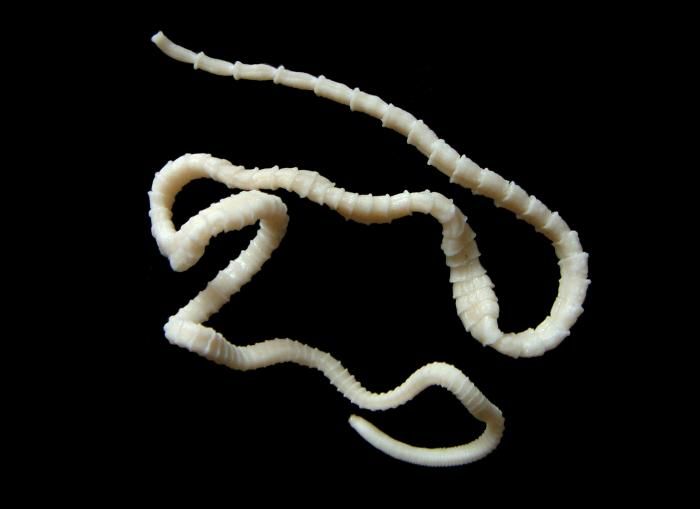
A tapeworm and a cat have this type of relationship.
a)
mutualism
b)
parasitism
c)
commensalism
d)
competition
43.
Mistletoe extracts water and nutrients from the spruce tree to the tree's detriment (harm). 
a)
Mutualsim 
b)
Parasitism 
c)
Commensalism 
44.
Barnacles create home sites by attaching themselves to whales.  The whale is unaffected.  
a)
commensalism
b)
mutualism
c)
predation
d)
laziness
45.
A frog eats a fly. The frog and fly are demonstrating ________.
a)
mutualism
b)
competition
c)
predator/prey
d)
parasitism