
NEW
Font size
S
M
L
XL
 Worksheets
Natural Selection Practice
Total questions: 20
Worksheet time: 25mins
Name
Class
Date
1.
What was the name of the scientist who had the Theory of Evolution?
a)
Lamarck
b)
Einstein
c)
Washington
d)
Darwin
2.
Finches on the Galapagos Islands all come from a common ancestor. Over millions of years, the beaks on the finches living on each island changed. Why did this happen?
a)
They wanted to look different to help them blend in
b)
They adapted to eat the food available on their island
c)
They wanted to protect themselves against predators
d)
Their beaks didn't actually change
3.
Natural selection is when ____________ decides who survives and who doesn't.
a)
nature
b)
humans
c)
animals
d)
years
4.
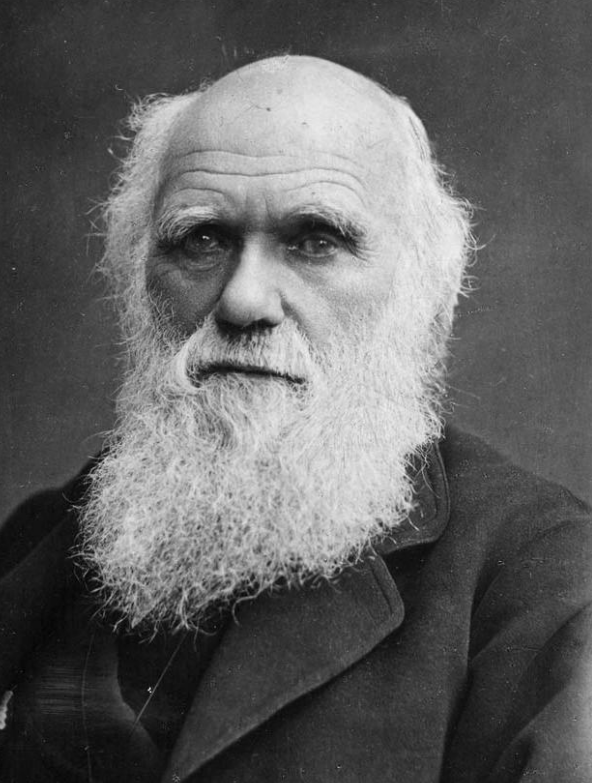
What did Charles Darwin think about natural selection?
a)
organisms change their traits to the trait that will help them
b)
breeding 2 similar animals get the best traits
c)
breeding 2 animals with different traits give the best results
d)
organisms with better traits for their environment will survive and reproduce
5.
What word describes a trait that helps an organism survive in its environment?
a)
natural selection
b)
mutation
c)
camouflage
d)
adaptation
6.
Which organisms are most likely to survive?
a)
the best adapted
b)
the fastest
c)
the strongest
d)
the most domesticated (tamed)
7.
Why are advantageous traits more likely to be passed onto offspring?
a)
Because they are more likely to survive and reproduce.
b)
Because they come from dominant alleles.
c)
Because they come from recessive alleles.
d)
Because the trait is an acquired phenotype.
8.
The differences among a species, like different bird beaks, are called
a)
genes
b)
variations
c)
traits
d)
theories
9.
Mutations are a change in what?
a)
DNA
b)
tRNA
c)
genotype
d)
phenotype
10.
Which of the following would NOT be an adaptation?
a)
Long, strong running legs
b)
Claws with a powerful grip
c)
camouflage
d)
A scar from a car accident
11.
An organism that cannot adapt to changes in the environment will most likely -
a)
produce more offspring
b)
die
c)
change its traits to survive
d)
store more food
12.

This picture is an example of
a)
homologous structures
b)
embryological similarities
c)
analogous structures
d)
vestigial structures
13.
You look at two species and see very similar DNA. What does this likely tell you?
a)
These are the same animal.
b)
These animals have a common ancestor.
c)
These animals are not likely related.
d)
These animals are likely becoming one species.
14.
What do the similar embryos of human and chickens tell us?
a)
We both use our bones for the same things, leading to similar structures.
b)
They had a common ancestor.
c)
Humans are descendants of wolves.
d)
It is impossible to tell.
15.
Which two organisms are the most closely related according to their DNA sequence?
Critter A--> ATG CTT AAC CCG TTA
Critter B--> ATC CTT TTC CCG TAA
Critter C--> ATG CTA TAG GCG TAA
Critter A--> ATG CTT AAC CCG TTA
Critter B--> ATC CTT TTC CCG TAA
Critter C--> ATG CTA TAG GCG TAA
a)
Critter A and B
b)
Critter A and C
c)
Critter B and C
d)
They are all equally related
16.
Individuals who are considered fit, have:
a)
Stronger genes
b)
Fewer mutations
c)
More food
d)
More offspring
17.

Organisms with the most beneficial traits will survive and reproduce. This is commonly known as
a)
DNA
b)
variations.
c)
survival of the fittest.
d)
ecosystems.
18.
Humans evolved from monkeys
a)
True
b)
False
19.
Do organisms "decide" to adapt?
a)
Yes, if they don't adapt they will die
b)
No, they can't adapt. They either have adaptations or they don't
c)
No, they adapt by random mutations during their lifetime
d)
Yes, they can force mutations in one lifetime
20.
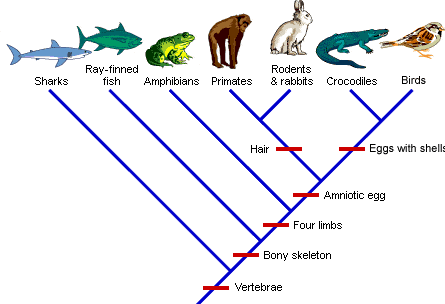
According to this cladogram, sharks are MOST closely related to which organism?
a)
Amphibians
b)
Ray finned fish
c)
Crocodiles
d)
Birds
Reset

