wayground logo

Free Printable Worksheets

NEW

Font size

S
M
L
XL
Worksheets

US History B Semester Final Review

Total questions: 72

Worksheet time: 3610secs
Name
Class
Date
1.
The Great Depression began in
a)
1925
b)
1929
c)
1932
d)
1940
2.
In the 1930's, people would line up at ____________ to get food.  These were normally run by charities.
a)
churches
b)
businesses
c)
soup kitchens
d)
work
3.
Who was president at the time of the Stock Market Crash of 1929?
a)
Abraham Lincoln
b)
Franklin D. Roosevelt
c)
Theodore Roosevelt
d)
Herbert Hoover
4.
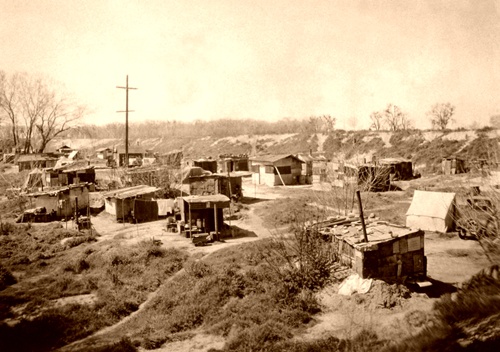
What were the villages full of shacks located in cities filled with unemployed Americans called?
a)
Hoovervilles
b)
Okies
c)
Bonus Army Bases
d)
Rooseveltowns
5.
What natural disaster of the 1930s added insult to injury?
a)
Flooding along the Mississippi River
b)
The Dust Bowl
c)
Tornadoes called the Helen Hunt Twisters
d)
Hurricanes along the Gulf Coast
6.
Pick the best answer.  Over-production of what led to the Great Depression?
a)
farm goods
b)
consumer goods
c)
farm and consumer goods
d)
iPhones
7.
When President Roosevelt talked to the American people directly over the radio, they called it ____ ____.
a)
Fireside Chats
b)
the President talking
c)
Chats with me
d)
Campfire chats
8.
The ____ was an agency formed to insure bank deposits up to a certain amount.
a)
Social Security
b)
SEC
c)
FDIC
d)
Tennessee Valley Authority
9.
A major reason for creating the Tennessee Valley Authority in 1933 was to-
a)
Provide health care benefits to southerners
b)
Encourage African-Americans to settle in the valley
c)
Improve economic conditions in a poor rural region
d)
Evacuate farmers from the impoverished region
10.
One difference between the administrations of President Roosevelt and President Hoover was that Roosevelt was-
a)
more willing to use government intervention to solve economic problems
b)
unwilling to allow government agencies to establish jobs
c)
able to ignore economic issues for most of his first term in office
d)
opposed to any type of government regulation of financial institutions
11.
Which New Deal program employed young men to work on various projects to improve the country?
a)
Social Security Act
b)
Fair labor Standards Act
c)
Rural Electrification Act
d)
Civilian Conservation Corps
12.

The Agricultural Adjustment Act tried to help farmers by

a)

helping them become more efficient

b)

paying them not to grow crops

c)

buying up their surpluses

d)

making land available for farming

13.
Which "R" does NOT belong?
a)
Relief
b)
Recovery
c)
Reform
d)
Redemption
14.
The ____ was an agency formed to insure bank deposits up to a certain amount.
a)
Social Security
b)
SEC
c)
FDIC
d)
Tennessee Valley Authority
15.
Name the three major countries that formed the alliance known as the Allied Powers.
a)
Great Britain, Soviet Union, United States
b)
Great Britain, Japan, United States
c)
Germany, France, United States
d)
Japan, Germany, Italy
16.

Who was the leader of the United States during World War II?

a)

Mussolini

b)

Stalin

c)

Roosevelt (FDR)

d)

Hitler

17.

Who was the leader of Russia during World War II?

a)

Mussolini

b)

Stalin

c)

Roosevelt (FDR)

d)

Hitler

18.
Leader of Germany during World War II.
a)
Mussolini
b)
Stalin
c)
Roosevelt
d)
Hitler
19.

Name the three countries that formed the alliance known as the Axis powers (it was also known as the Rome-Berlin-Tokyo Axis)

a)

Japan, U.S., Russia

b)

Japan, Germany, Soviet Union

c)

Japan, Great Britain, Soviet Union

d)

Japan, Germany, Italy

20.

What was the policy called that continually gave in to Hitler's demands in order to prevent conflict with Germany?

a)

policy of appeasement

b)

policy of nullification

c)

policy of aggression

d)

policy of enactment

21.
Location of the U.S. Navy's Pacific Fleet?
a)
Pearl Harbor, Hawaii
b)
Norfolk, Virginia
c)
San Diego, California
d)
Seattle, Washington
22.
The first African-American flying unit in the United States military?
a)
Tuskegee Airmen
b)
Rough Riders
c)
7th Calvary
d)
82nd Airborne
23.
What event led to the US joining World War II? 
a)
Germany invaded Poland. 
b)
Germany sent Mexico a secret telegram. 
c)
Japan bombed Pearl Harbor.
d)
Germany bombed Pearl Harbor. 
24.
During World War II, many Japanese Americans living on the West Coast were relocated to detention centers primarily because they
a)
were known spies for Japan
b)
were seen as a security threat
c)
refused to serve in the United States military
d)
expressed their support for Italy and Germany
25.

A political philosophy in which total power is given to a dictator and individual freedoms are denied is called

a)

direct democracy

b)

monarchy

c)

representative democracy

d)

fascism

26.

The systematic attempt to rid Europe of all Jews during

World War II was called

a)

the Progressive Movement

b)

Internment camps

c)

the Marshall Plan

d)

the Holocaust

27.

What was the turning point in Eastern Europe during World War II?

a)

Battle of Midway

b)

Battle of Britain

c)

Battle of Stalingrad

d)

D-Day Invasion

28.

In the World War II poster, what did Rosie the Riveter

symbolize to Americans?

a)

American women who were placed in internment camps

b)

American women who fought for the right to vote

c)

American women who were opposed to the war

d)

American women who took jobs in defense plants

29.

The Cold War refers to the period of tension between the United States and the Soviet Union from

a)

the end of World War II to the fall of the Soviet Union.

b)

the end of World War I to the bombing of Pearl Harbor.

c)

the Cuban Missile Crisis to the fall of the Berlin Wall.

d)

the Bolshevik Revolution to the end of World War I.

30.

Which of the following is most characteristic of the Cold War?

a)

The growth of nuclear arsenals in the United States and the Soviet Union

b)

The expansion of national borders by imperialistic European countries

c)

The implementation of isolationist foreign policies in Great Britain and China

d)

The rapid industrialization of many Southeast Asian countries

31.

Which of these was a cause of the Korean War?

a)

NATO air and naval forces blocked ships sailing to North Korea.

b)

United Nations inattention allowed guerrillas to infiltrate South Korea.

c)

North Korean forces, with Soviet approval, invaded South Korea.

d)

Widespread anti-colonial riots forced the Korean government to begin the war.

32.

Which of these was a cause of the Korean War?

a)

NATO air and naval forces blocked ships sailing to North Korea.

b)

United Nations inattention allowed guerrillas to infiltrate South Korea.

c)

North Korean forces, with Soviet approval, invaded South Korea.

d)

Widespread anti-colonial riots forced the Korean government to begin the war.

33.

During the Cold War, in which country would the city of West Berlin be inside of?

a)

East Germany

b)

West Germany

c)

Soviet Union

d)

France

34.

What was the purpose of the Berlin Airlift, between the years 1948 and 1949?

a)

To bring necessary supplies to assist the Communists after World War II.

b)

It was designed to help citizens in France to resist Communism.

c)

Moving Allied soldiers to help fight the Nazis during World War II.

d)

To supply the citizens of West Berlin while the Soviet blockade continued.

35.

During the Korean War, what prevented the southern part of the peninsula from falling permanently to the invading forces?

a)

The threat of a Soviet naval blockade

b)

The use of atomic weapons on northern cities

c)

The assistance of the Chinese military

d)

The involvement of UN forces under the command of the United States

36.

The United States Foreign Policy after World War II was the policy of Containment, which was?

a)

The U.S. would try to restrict the spread of Fascism in Europe.

b)

The U.S. would help to rebuild the nations of Japan and Germany.

c)

Due to the importance, the U.S. would increase spending into the Space Race.

d)

The U.S. would try to prevent the spread of Communism anywhere in the world.

37.

U.S. intervention in Vietnam came as a result of the Cold War policy of

a)

détente

b)

appeasement

c)

containment

d)

brinkmanship

38.

Which of these events was the closest the United States and the Soviet Union actually came to fighting each other during the Cold War?

a)

Cuban Missile Crisis, 1962

b)

Gulf of Tonkin, 1964

c)

Bay of Pigs, 1961

d)

Suez Crisis, 1956

39.

During the Cold War, what bill did the U.S. Congress pass to provide financial assistance to western European countries?

a)

Truman Doctrine

b)

Open Door Policy

c)

Marshall Plan

d)

Domino Theory

40.

Which individual/group contributed to the Red Scare by accusing American citizens of being communist spies?

a)

McCarthy/HUAC

b)

NAACP/Farm Workers Union

c)

Nativists/Muckrakers

d)

Philanthropists/Entrepreneurs

41.

During the Cuban Missile Crisis, what did President J.F. Kennedy do when he heard that the Soviet Union was constructing nuclear missile sites in Cuba.

a)

He launched a nuclear missile at the Kremlin in Moscow.

b)

He gave into the demands of the Soviet & Cuban government.

c)

He ordered a naval blockade around Cuba to prevent Soviet ships from bringing the necessary materials.

d)

He declared war on the Soviet Union & Cuba.

42.
What was the result of the Brown v. Board of Education case?
a)
Segregation in public schools became illegal
b)
African-Americans began playing profession sports
c)
Rosa Parks refused to give up her seat on the bus
d)
MLK led a March on Washington
43.
What was the purpose of the Civil Rights Act of 1964?
a)
It made Jim Crow Laws illegal
b)
It allowed African-Americans to run for political office
c)
It ended segregation in school
d)
It made poll taxes illegal
44.
What was the purpose of the Voting Rights Act of 1965?
a)
It gave African-American women the right to vote
b)
It made literacy tests to vote illegal
c)
It made Jim Crow Laws illegal
d)
It allowed all African-Americans to vote
45.
The March on Washington is most famous for...
a)
causing race riots in Washington, D.C.
b)
200,000 people worked together to get the right to vote
c)
the KKK became an illegal organization
d)
MLK gave his famous "I Have a Dream" speech
46.
Which of the following best describes the Montgomery Bus Boycott?
a)
Segregation on buses became illegal after a couple of days of boycotting
b)
Segregation on buses became illegal after months of boycotting
c)
African-Americans blocked the streets preventing buses from operating
d)
Martin Luther King was arrested for not giving up his seat
47.

What kind of marches did Martin Luther King Jr. lead?

a)

large

b)

mad

c)

nonviolent

d)

violent

48.

The Freedom Riders were a group of African Americans and Whites who rode buses to..?

a)

Encourage A.A.'s to leave the south and move north

b)

to protest racial segregation throughout the south

c)

to promote membership in the KKK

d)

to gain support for the Vietnam war

49.
To separate one group from another is ___________________.
a)
integration
b)
segregation
c)
Civil Rights Movement
Jim Crow
50.
Which civil rights leader advocated separation  for African Americans and was opposed to integration ?
a)
Martin Luther King
b)
Medgar Evers
c)
Malcolm X
d)
Eldrige Cleaver
51.
which supreme court case ruled that separation is okay so long as it is equal? 
a)
Plessy V. Ferguson
b)
Dred Scott v. Sanford
c)
Marbury v. Madison
d)
Miranda v. Arizona
52.
The ____ granted the president broad military powers in Vietnam
a)
Geneva Accords
b)
Tonkin Gulf Resolution
c)
Marshall Plan
d)
Operation Rolling Thunders
53.
Napalm
a)
A chemical herbicide used to clear out forests and tall grasses
b)
A type of lotion soldiers would use to get rid of the sent on their clothing
c)
Another name for a flamethrower
d)
An intensely burning explosive used to destroy jungle growth
54.
Guerrilla Warfare
a)
Fighting by small groups using tactics such as the ambush
b)
Using gorillas to fight against enemy soldiers
c)
Dressing up as gorillas and fighting while hitting your chest
55.
Lyndon Johnson did which of the following?
a)
Decreased American Involvement 
b)
Increased American Involvement
56.
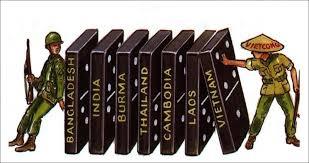
The idea that if South Vietnam fell to communism, other nations would soon follow...
a)
Vietnamization 
b)
Communism
c)
Domino Theory
d)
Imperialism
57.
Allowed the public to be negatively influenced concerning the  Vietnam war?
a)
Television and media bias
b)
Radio 
c)
Telegraph
d)
Internet
58.
Which side ended up winning the war, if not militarily, politically due to the lack of support of the civilian population?
a)
United states
b)
South Vietnam
c)
North Vietnam
d)
North korea
59.
Shifting the burden of actual combat from American troops to S. Vietnamese forces.
a)
Vietminization
b)
Vietcong
c)
Internationalism
d)
Linkage
60.
What event caused a negative shift in U.S. public opinion during the Vietnam War?
a)
The Geneva Accords
b)
Operation Rolling Thunder
c)
The Tet Offensive
d)
Gulf of Tonkin
61.
Networks of jungle paths used by N. Vietnam to transport supplies to the Vietcong?
a)
Saigon Route
b)
Bataan Death March
c)
Trail of Tears
d)
Ho Chi Minh Trail
62.

The culture of the young people who rejected mainstream American society in the 1960's seeking to create an alternative society based on peace, love and individual freedom.

a)

Counterculture

b)

Feminism

c)

Woodstock

d)

United Hippie Movement

63.

A free music festival that attracted more that 400,000 young people to a farm in upstate New York in August 1969.

a)

Counterculture

b)

Hippie Parade

c)

Woodstock

d)

La Raza Concerto

64.
The counter culture movement was an extension of what earlier movement from the 50s?
a)
Beat Movement
b)
Conservative Coalition
c)
Flappers
d)
Lost Generation
65.

Which of the following did "hippies" disagree with most ?

a)

Communism

b)

War

c)

World peace

d)

Marriage

66.

The increased use of ________ was common in this era ?

a)

School grants

b)

Telephones

c)

Computers

d)

Drugs

67.
When they were arrested, the Watergate burglars were breaking into
a)
the republican office.
b)
the Democratic Party HQ.
c)
The Embassy.
d)
the congress headquarters.
68.
What role did the Nixon tapes play in discovering the truth about the Watergate scandal? 
a)
The tapes revealed that President Nixon had nothing to do with the cover-up. 
b)
Because Nixon was President he did NOT have to turn over the tapes to the Supreme Court. 
c)
Nixon refused to hand over the tapes, which told of how he was covering up the break-in. 
d)
Nixon told his vice-President to take the blame for the break-in. 
69.
Which statement most accurately depicts why president Nixon had to resign from office in 1974?
a)
He had an affair with an intern
b)
He pulled troops out of Vietnam in 1973
c)
He opened relations with China and the Soviet Union
d)
He led a criminal conspiracy from the White House, which mislead the nation
70.
In August 1974, Richard Nixon becomes the first president to do what?
a)
Resign
b)
Die while in office
c)
Flee the country
d)
Own a cat
71.

He gave the official approval for the 9/11 attacks.

a)

Ramzi Yousef

b)

Osama bin Laden

c)

Dzhokhar Tsarnaev

d)

Tamerlan Tsarnaev

72.

This terrorist group was responsible for the 9/11 attacks.

a)

Hamas

b)

Taliban

c)

Al-Qaeda

d)

Hezbollah