wayground logo

Free Printable Worksheets

NEW

Font size

S
M
L
XL
Worksheets

Ecology and Food Webs

Total questions: 41

Worksheet time: 33mins

Name
Class
Date
1.
All of the living and nonliving things in an area that interact with each other are called a/an ______.
a)
community
b)
habitat
c)
population
d)
ecosystem
2.
The living part of an ecosystem
a)
Biotic
b)
Abiotic
c)
Mother Earth
d)
Flowers
3.
The non-living part of an ecosystem
a)
Ocean
b)
Lava Flow
c)
Birds
d)
Abiotic
4.
The study of how living things interact with one another and with their environment.
a)
Biology
b)
Lithology
c)
Ecology
d)
Farmacology
5.

Two or more members of a particular species living and interacting in the same area at the same time

a)
Community
b)
Population
c)
Organisms
d)
Biosphere
6.
What does every food chain start with? (Even if it's not drawn or written there!)
a)
producers
b)
sun
c)
consumer
d)
decomposers
7.
An organism that needs to eat other organisms to obtain energy is known as a:
a)
Autotroph
b)
Producer
c)
Consumer
d)
Mutualist
8.
Consumer that eats plants
a)
heterotroph
b)
herbivore
c)
producer
d)
community
9.
What does a food web represent?
a)
All connections of energy flow throughout all organisms in a habitat.
b)
The specific ways that mutualism is carried out.
c)
A single pathway or energy flow between organisms. 
d)
How carnivores get their food. 
10.
What is the term for each step in the transfer of energy and matter within a biological community?
a)
energy path
b)
food web
c)
trophic level
d)
food pyramid
11.
The image provided is an example of a(n):
a)
Carnivore
b)
Herbivore
c)
Producer
d)
Autotroph
12.
The amount of energy that usually transfers from one trophic level to the next...
a)
10%
b)
20%
c)
80%
d)
50%
13.
An illustration that uses arrows to show the MANY possible directions in which matter and energy can pass through the organisms in an ecosystem.
a)
Food chain
b)
Food web
c)
Energy Pyramid
d)
Succession Map
14.
What are the Abiotic factors in this image? 
a)
water, sunlight, dirt, air
b)
birds and plants
c)
birds, water, dirt
d)
plants, water
15.

A tick feeding off a dog; the tick benefits and the dog is harmed. This relationship is called

a)
parasitism 
b)
mutualism
c)
commensalism
d)
nonalism 
16.
symbiotic relationship in which both organisms benefit
a)
competition
b)
Mutualism
c)
nitrogen fixation
d)
energy pyramid
17.
a relationship between two in which one species, the predator, feeds on the other species, the prey
a)
chemosynthesis
b)
predation
c)
cellular respiration 
d)
commensalism
18.
symbiotic relationship in which one organisms benefits and the other organism is not affected
a)
invasive (non-native) species
b)
mutualism 
c)
nitrogen fixation
d)
commensalism
19.
Organisms that breaks down and absorbs nutrients from dead organisms 
a)
consumer
b)
trophic level
c)
decomposer
d)
species
20.

Biome with plants and grasses, but no trees.

a)

grassland

b)

desert

c)

forest

d)

arctic tundra

21.

Biome with many different species of cacti and reptiles and very little rainfall.

a)

Desert

b)

Temperate Rainforest

c)

Tropical Rainforest

d)

Arctic Tundra

22.
Type of forest biome near the equator; receives a lot of rain; temperatures are warm all year.
a)
desert
b)
tropical rain forest
c)
arctic
d)
temperate rain forest
23.
Which biome is the driest?
a)
Desert
b)
Tundra
c)
Taiga
d)
Rainforest
24.

Which biome is characterized by low temperatures, low amounts of rainfall and is the coldest?

a)
tundra
b)
desert
c)
temperate deciduous forest
d)
tropical rain forest
25.
One characteristic feature of tundra is that only the surface thaws in the summer and refreezes in the winter, leaving a layer of permanently frozen subsoil.  This characteristic is known as
a)
glaciation
b)
permafrost
c)
crystallization
d)
soilfrost
26.

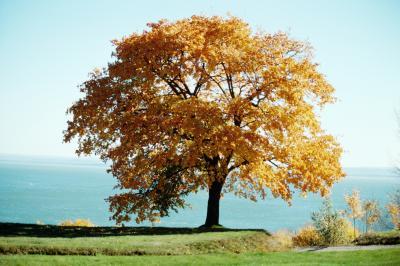
This biome contains mostly evergreen trees.  The winters are long and cold and the summers are short and rainy.  Moose and elk live here.  This biome is the largest land biome and is classified as a
a)
taiga
b)
tundra
c)
deciduous forest
d)
temperate forest
27.
Which biome, because of its climate, has the largest number of species of plants and animals?
a)
tundra
b)
desert
c)
tropical rainforest
d)
pine forest
28.

The biome known for trees with broad leaves that fall off the trees in the winter and has 4 seasons

a)
Coniferous Forests
b)
Deciduous Forests
c)
Deserts
d)
Tropical Rain Forests
29.
What are the 2 types of aquatic biomes?
a)
rivers and streams
b)
lakes and oceans
c)
marine and fresh water
d)
marine and oceanic
30.
Which of the following is considered a wetland?
a)
Swamps
b)
Marshes
c)
Bogs
d)
All of the above.
31.
Which of the following is the best definition for estuary?
a)
Narrow band of coastline that exists between high and low tide.
b)
Areas along the coast where fresh water from rivers mixes with salt water from the ocean.
c)
Flowing fresh water containing rapids.
d)
Freshwater aquatic areas that are saturated by water for at least part of the year.
32.
Aquatic biomes cover roughly how much of the Earth's surface
a)
10%
b)
25%
c)
50%
d)
75%
33.

The daily conditions including rainfall and temperature

a)

Climate

b)

Forecast

c)

Weather

34.
Fresh water referrers to which of the following
a)
oceans, rivers, lakes
b)
ponds, rivers, oceans
c)
lakes, ponds,  streams
d)
streams, lakes, oceans
35.

Wetland dominated by trees and shrubs

a)

benthic zone

b)

glade

c)

marsh

d)

swamp

36.

The area of an aquatic ecosystem that is near shallow, near shore, & has an abundance of sunlight & wildlife

a)

benthic zone

b)

littoral zone

c)

limnetic zone

d)

sunlight zone

37.

Aquatic biome dominated by grasses and does NOT have trees

a)

rivers

b)

lakes and ponds

c)

marshes

d)

all of these

38.

What is the largest ocean of the marine biomes?

a)

Southern ocean

b)

Pacific ocean

c)

Arctic ocean

d)

Indian ocean

e)

Atlantic ocean

39.

If you visited the savannah you would be likely to see

a)

a dense forest

b)

snow and ice

c)

a coastal ecosystem

d)

large herds of grazing animals such as rhinos, zebras, and gazelles

40.

Which of the following is a factor that influences where an organism lives in an aquatic ecosystem

a)

sunlight

b)

nutrient availability

c)

temperature

d)

all of the above

41.

The average weather over an extended period of time, including rainfall and temperature

a)

Weather

b)

Climate

c)

Zone

d)

Forecast