wayground logo

Free Printable Worksheets

NEW

Font size

S
M
L
XL
Worksheets

Chemistry Test Review

Total questions: 50

Worksheet time: 26mins

Name
Class
Date
1.
The heat from a lamp allows a lizard to remain warm. This is an example of which type of heat transfer?
a)
radiation
b)
conduction
c)
convection
d)
insulation
2.
Which will most likely occur when raw egg is placed on black pavement on a hot, summer day?
a)
The pavement will conduct the heat and cook the egg.
b)
The egg will reflect the heat and make the pavement hotter underneath.
c)
The egg will absorb the heat  and leave the pavement hotter underneath.
d)
The pavement will absorb the heat from the egg, and the egg will stay raw.
3.
Jordan places a hot spoon into a container of ice cream. How does this help him scoop  out the ice cream? 
a)
The coolness from the ice cream is conducted to the spoon making it easier to scoop out.
b)
The coolness from the ice cream is radiated to the spoon making it easier to scoop out.
c)
The warmth of the spoon is conducted to the ice cream  making it easier to scoop out.
d)
The warmth of the spoon is radiated  to the ice cream making it easier to scoop out.
4.
Which describes what can happen as a result of radiation?
a)
 A piece of wood burns in a fire.
b)
A shirt is hot after having been  ironed.
c)
A can of soup is heated in a pot on a stove.
d)
A car’s inside temperature rises  to over 100 degrees on a sunny day.
5.
John put a heat pack on his cold feet. What will most likely be the result?
a)
The cold from John’s feet will  be radiated into  the heat pack.
b)
The warmth of the heat pack will be radiated  onto John’s feet.
c)
The cold from John’s feet will be conducted  into the heat pack.
d)
The warmth of the heat pack will be conducted  onto John’s feet.
6.
Which best describes the process of convection?
a)
Convection is the primary way  heat travels  through rays.
b)
Convection is the primary way heat travels  through metals.
c)
Convection is the primary way heat travels  through appliances.
d)
Convection is the primary way heat travels  through liquids and gasses.
7.
How is heat transferred when boiling a pot of water on the stove?
a)
conduction
b)
convection
c)
combustion
d)
radiation
8.
Which is an example of heat being transferred by conduction?
a)
a furnace heating the air in a school
b)
an ice cube melting in a person’s hand
c)
a pot of water on a stove boiling
d)
the sun heating water in a swimming pool
9.

A group of friends gather around a fire to stay warm. This is an example of ________.

a)

conduction

b)

convection

c)

radiation

10.

In heat transfer, heat always flows from the _______________ substance to the _______________ substance.

a)

hotter to colder

b)

colder to hotter

c)

hotter to hotter

d)

colder to colder

11.

You get sunburned due to __________ from the sun.

a)

conduction

b)

convection

c)

radiation

12.

Near the ceiling of a room the air is warmer. The warm air rises because of ________.

a)

conduction

b)

convection

c)

radiation

13.
Which direction will the heat flow while this ice cap melts?
a)
there is no heat transfer
b)
from the icecap to the water
c)
from the water to the icecap
14.
Which direction will the heat flow while this person holds a hot cup of tea?
a)
from the cup to her hand
b)
from her hand to the cup
c)
no heat is transferred
15.
Particles in this state of matter are moving the fastest.
a)
solid
b)
liquid
c)
gas
16.
Particles in this state of matter are moving the slowest.
a)
solid
b)
gas
c)
liquid
17.
This state of matter keeps its shape and volume.
a)
gas
b)
solid
c)
liquid
18.
This state of matter takes both the shape and volume of it container.
a)
gas
b)
solid
c)
liquid
19.

This state of matter takes ONLY the shape of its container.

a)

liquid

b)

gas

c)

solid

20.

In this state of matter, the molecules can move around each other. Flowing particles

a)

liquid

b)

gas

c)

solid

21.
When water beads on the outside of a cold glass of water.
a)
vaperization
b)
condensation
c)
melting
d)
freezing 
22.

When boiling water creates steam.

a)

condensation

b)

melting

c)

freezing

d)

boiling

23.
When dripping water turns into icicles. 
a)
melting
b)
freezing
c)
vaporization
d)
condensation 
24.
When a scoop of ice cream drips down the side of the cone.
a)
freezing 
b)
vaporization
c)
melting
d)
condensation
25.
The state of matter in which the atoms are locked and vibrate in place. 
a)
solid
b)
liquid
c)
gas
26.

When a solid changes straight to a gas.

a)

condensation

b)

sublimation

c)

deposition

d)

freezing

27.
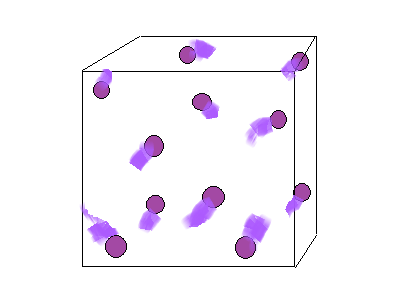
What state of matter does this picture show?
a)
Liquid
b)
Gas
c)
Solid
d)
Matter
28.
Water can become all 3 states of matter. 
a)
True
b)
False
29.
The amount of space a liquid takes up is ________
a)
Volume
b)
Matter
c)
Solid
d)
Liquid
30.

What is the difference between evaporation and boiling?

a)

evaporation and boiling are not different

b)

boiling only happens on the surface

c)

evaporation only happens on the surface

d)

evaporation from a gas to a liquid

31.
Which of these items is made up of one or more molecules?
a)
Gold
b)
Hydrogen
c)
Salt 
d)
Neon 
32.
Elements are made of 
a)
many types of atoms 
b)
the periodic table
c)
one type of atom 
d)
molecules 
33.
All matter is made of 
a)
energy 
b)
atoms 
c)
electrons 
d)
compounds 
34.
What is the basic unit of matter and is the smallest particle of an element?
a)
Atoms
b)
Elements
c)
Compounds
d)
Molecules
35.
Two or more atoms chemically bonded together are called a
a)
atom
b)
element
c)
molecule
d)
mixture
36.
How many carbon atoms are there in a methane molecule? 
a)
0
b)
1
c)
4
d)
5
37.
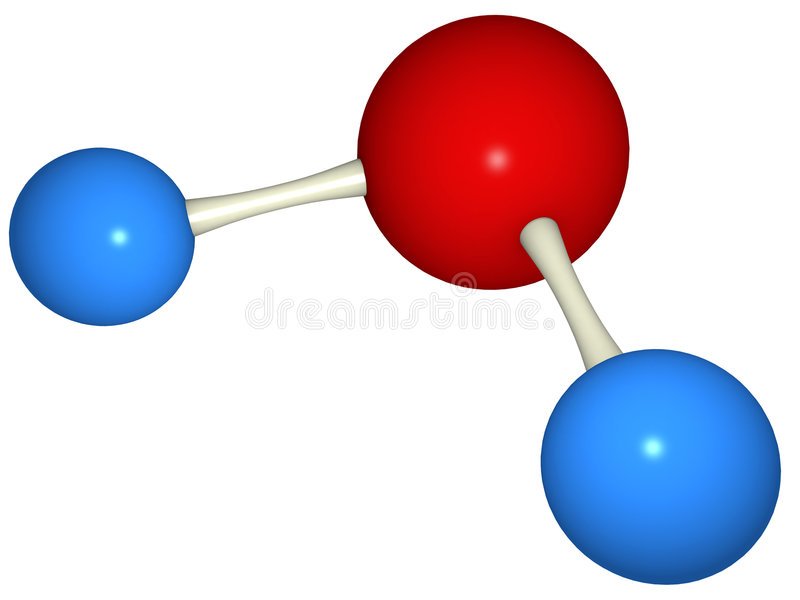
How many hydrogen atoms are there in a water molecule? 
a)
0
b)
1
c)
2
d)
3
38.
What is the total number of atoms in an ammonia (NH3) molecule?
a)
1
b)
2
c)
3
d)
4
39.
Carbon dioxide (CO2) contains how many atoms of oxygen?
a)
0
b)
1
c)
2
d)
3
40.
When there is no subscript after an element's symbol, it means there are how many atoms of that element?
a)
0
b)
1
c)
2
d)
unknown
41.
How many hydrogen atoms are in a molecule of glucose/sugar (C6H12O6)?
a)
6
b)
12
c)
18
d)
24
42.
How many Hydrogen are in 4H2O?
a)
6
b)
8
c)
2
d)
4
43.
How many Oxygen are in H2O?
a)
1
b)
2
c)
0
d)
4
44.
How many Magnesium are in 10MgCl2?
a)
10
b)
5
c)
20
45.
How many O's are in Al₂(SO₄)₃
a)
4
b)
12
c)
7
d)
24
46.
How many atoms are there TOTAL in:
H2SO4
a)
6
b)
5
c)
7
d)
3
47.
How many elements are in C6H12O6?
a)
1
b)
2
c)
3
d)
4
48.

How many different elements are present in this molecule?

3 NH4C2H3O2

a)

15

b)

36

c)

5

d)

4

49.

What does the 3 represent in the following: 3NaCl

a)

The number of sodiums

b)

The number of elements

c)

The number of chlorines

d)

The number of molecules

50.

How many molecules are in the following:

4Na2SO4

a)

1

b)

2

c)

4

d)

16