
 Worksheets
CLA-3 Comprehension III CSE-B
Total questions: 75
Worksheet time: 1hrs 15mins
What is the maximum length of a UTP cable?
1km
100m
50m
Unlimted
TCP/IP is used to...
make sure that web pages are transmitted and displayed correctly
upload and download files from one computer to another
split data into packets and make sure they get sent to the receiver.
ensure that the internet is working.
What does LAN stand for?
Local Area Network
Line Area Network
Local Around Network
Listed Area Network
If there is a problem with the ... then people on the network will be unable to access their files.
Internet server
File server
Mail server
Database server
Which of the following would normally be used to connect networks across different continents?
Fibre optic cables
Microwave links
Wi-Fi
The internet is owned by...
no one
the USA
NATO
the government
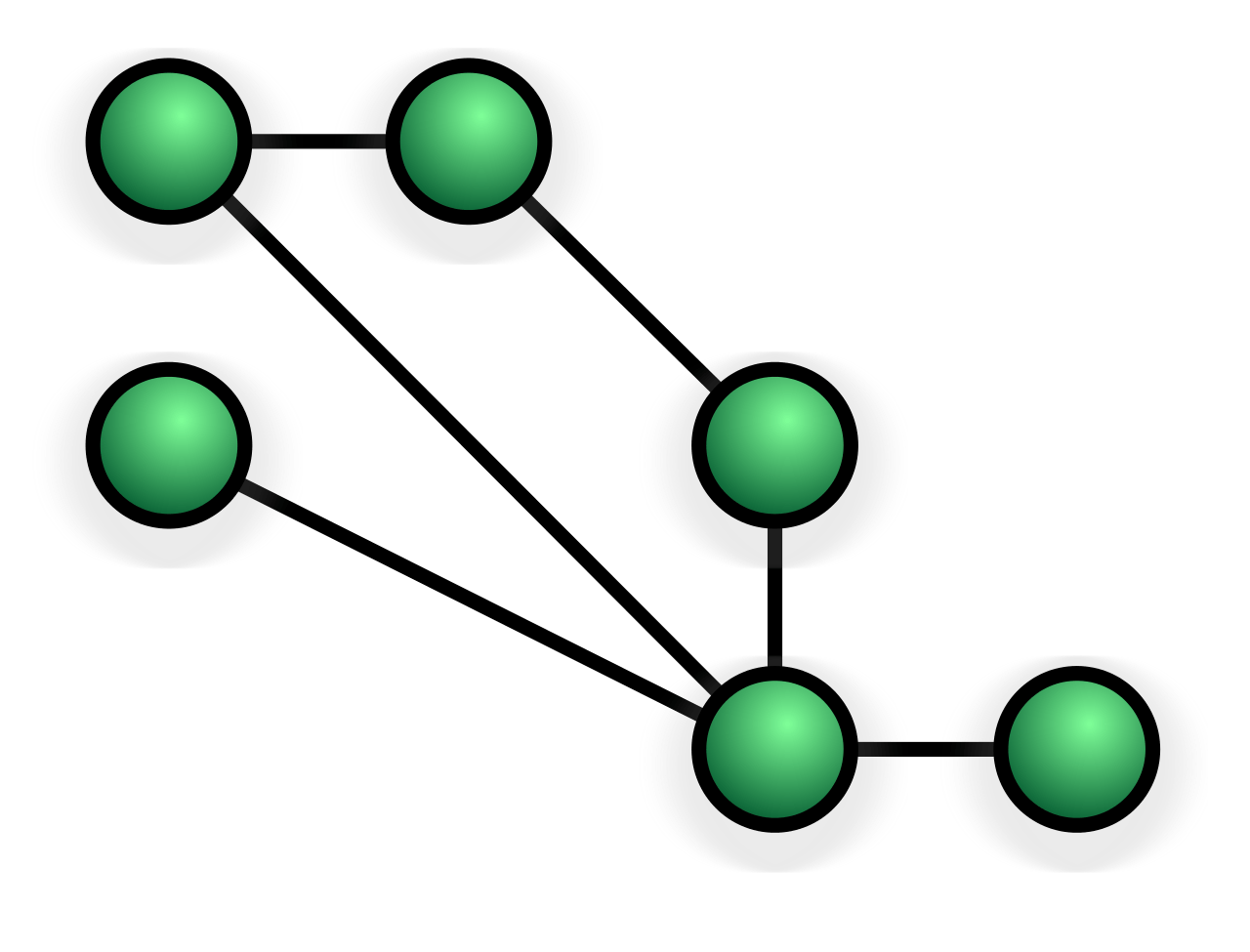
What type of topology is this?
Ring
Full Mesh
Partial Mesh
Line

What type of multiplexing?
FDM
FM
WDM
TDM

What type of multiplexing?
FDM
WDM
AM
TDM
•Multiple beams of light at different frequency
•Carried by optical fiber
•A form of FDM
TDM
FDM
WDM
FM
The main purpose of the twisting cable in Unshielded Twisted Pair (UTP) and Shielded Twisted Pair (STP) cable is _______
to reduce cost
to ensure easy handling during working with those cable
to help user in determining the correct colour codes of the cables
to reduce Electromagnetic Interference (EMI)
What is the purpose of cladding in an optical fiber?
Covert the electric current pulse to light pulse.
To keep the light reflecting in core instead of being refracted until its destination.
Preserve fiber strength, absorb shock and provide extra fiber protection.
Convert the received light pulses back to pulses of electrical current.
In microwave transmission system, circular waveguide is used for
Efficiency reasons
Ease of manufacture
Rotating section applications
Greater bandwidth
Identify the major factor that makes coaxial cable less susceptible to noise that twisted pair cable.
Inner conductor
Diameter of cable
Outer conductor
Insulating material
are independently sent, meaning that they can take different paths through the network to reach their intended destination
1. A local telephone network is an example of a _______ network.
Packet switched
Circuit switched
Bit switched
Line switched
In _________, there is no resource allocation for a packet.
circuit switching
datagram switching
frame switching
none of the above
A multiplexer__________several transmission streams while a demultiplexer__________________them
combines ; separates
compressed; decompressed
encrypts; decrypts
separates; combines
What is the most frequently used communications protocol?
IPv4
IPv6
IPv8
IPv10
What class is this IP address? 10.10.10.0
A
B
C
D
Which class of network addresses is used by government, ISPs and large universities.
Class A
Class B
Class C
Class D
What is the default subnet mask for a Class A ip address?
255.0.0.0
255.255.0.0
255.255.255.0
Oversees global IP address allocation and internet numbers.
VLSM
CIDR
IANA
ISP
Use a default subnet mask...
Classless IP Addresses
Classful IP Addresses
VLSM
CIDR
Process of dividing a large network into smaller networks...
Supernetting
CIDR
Classful IP Addressing
Subnetting
Standards used to create unique identifiers for networks and host devices.
Supernetting
Subnetting
Network ID
CIDR
Special server configured to pass out IP addresses and other IP configuration information to network clients. These ensure that each client is assigned a unique IP address.
DNS
Active Directory
DCHP
DHCP
Addressing means that IP configuration information is manually configured on each host.
DHCP
DNS
IPv6
Static
With which network type will OSPF establish router adjacencies but not perform the DR/BDR election process?
Point-to-point
Backbone area 0
Broadcast multi-access
Non-broadcast multi-access
Which of the following are true regarding OSPF areas?
- You must have separate loopback interfaces configured in each area.
- 2. The numbers you can assign an area go up to 65,535.
- The backbone area is also called area 0.
- If your design is hierarchical, then you don't need multiple areas.
- All areas must connect to area 0.
1 only
1 and 2 only
3 and 4 only
3, 4 and 5
Which two of the following commands will place network 10.2.3.0/24 into area 0?
- router eigrp 10
- router ospf 10
- network 10.0.0.0
- network 10.2.3.0 0.0.0.255 area0
- network 10.2.3.0 0.0.0.255 area 0
1 and 4
2, 4, and 5
2 and 5
3 and 4
OSPF is a hierarchical routing protocol that logically divides the network into subdomains referred to as _____
Broadcast Domain
VLAN
Areas
Loopbacks
The analysis phase ____________________
Determines what the program will do
Determines how the program will work
Determines whether or not the program works
Adds new features to the delivered program
The Rational Unified Process model __________
Completes each phase fully before advancing to the next phase
Iterates through the phases to develop prototypes with increasing functionality
Focuses on best practices and is informally structured
Begins the next phase before the current phase is completed
Responds quickly to change and has short, daily status meetings
The Agile Development model __________
Completes each phase fully before advancing to the next phase
Iterates through the phases to develop prototypes with increasing functionality
Focuses on best practices and is informally structured
Begins the next phase before the current phase is completed
Responds quickly to change and has short, daily status meetings
Which of the following is not a software development process model
Waterfall model
Risk Identification model
Spiral model
Non of the above
Software engineering involves quality measures to improve the quality of the software
False
True
Can't say
Non of the above
The reason for software bugs and failures is due to
Software companies
Software Developers
Both Software companies and Developers
Software
Which one of the following models is not suitable for accommodating any change?
Build & Fix Model
Prototyping Model
RAD Model
Waterfall Model
Identify the disadvantage of Spiral Model.
Doesn’t work well for smaller projects
High amount of risk analysis
Strong approval and documentation control
Additional Functionality can be added at a later date
The user system requirements are the parts of which document ?
SDD
SRS
DDD
SRD
COCOMO stands for
Constructive cost model
Comprehensive cost model
Constructive cost estimation model
Complete cost estimation model
Which of the following is an activity that distributes estimated effort across the planned project duration by allocating the effort to specific software engineering tasks?
Software Macroscopic schedule
Software Project scheduling
Software Detailed schedule
None of the mentioned
Which of the following process is concerned with analyzing the costs and benefits of proposed changes?
Change management
Version management
System building
Release management
The testing in which code is checked
Black box testing
White box testing
Red box testing
Green box testing
The process of evaluating work-products (not the actual final product) of a development phase to determine whether they meet the specified requirements for that phase. This statement refers to:
Validation
Verification
Which requirements are related to system attributes such as reliability and response time.
Non-functional requirements
Functional Requirements
Domain Requirements
Software Requirements
What is the process of analyzing, documenting, tracking, prioritizing and agreeing on the requirement and controlling the communication to relevant stakeholders?
Requirement Management
Requirement Elicitation
Requirement Analysis
Requirement verification
Which level of DFD is also known as Context Diagram.
0-Level
1-Level
2-Level
3-Level
Behavioral Model can be represented in which Diagram
Data Flow Diagram
State transition Diagram
None of the above
All of the above
Identify the correct order of the phases involved in Software Prototyping.
A) Developing the initial Prototype
B) Review of the Prototype
C) Basic Requirement Identification
D) Revise and Enhance the Prototype
A-B-C-D
C-A-D-B
C-A-B-D
A-B-D-C
Operational feasibility is for ________________
Organisational level
Unit level
Horizontal level of the company
None of the above
Characteristics of good testing:
User Acceptance testing is
White box testing
Black box testing
Gray box testing
None of the above
White Box Techniques are also called as:-
Structural Testing
Design-Based Testing
Error Guessing Technique
Experience-Based Techniqu
What is an Equivalence Partition (also known as an Equivalence class)?
A set of test cases for testing classes of objects
An input or output range of values such that only one value in the range becomes a test case
An input or output range of values such that each value in the range becomes a test case
An input or output range of values such that every tenth value in the range becomes a test case.
A Type of Functional Testing, which investigates the functions relating to the detection of threats, such as viruses from malicious outsiders.
Security Testing
Recovery Testing
Performance Testing
Functionality Testing
Functional system testing is:
testing that the system functions with other systems
testing that the components that comprise the system function together
testing the end to end functionality of the system as a whole
testing the system performs functions within specified response times

